Department of Preventive Environment and Nutrition, Institute of Biomedical Science, Tokushima University, Tokushima, Japan.
Graduate School of Technology, Industrial and Social Sciences, Tokushima University, Tokushima, Japan.
Front Cell Infect Microbiol. 2018 Jan 30;8:15. doi: 10.3389/fcimb.2018.00015. eCollection 2018.
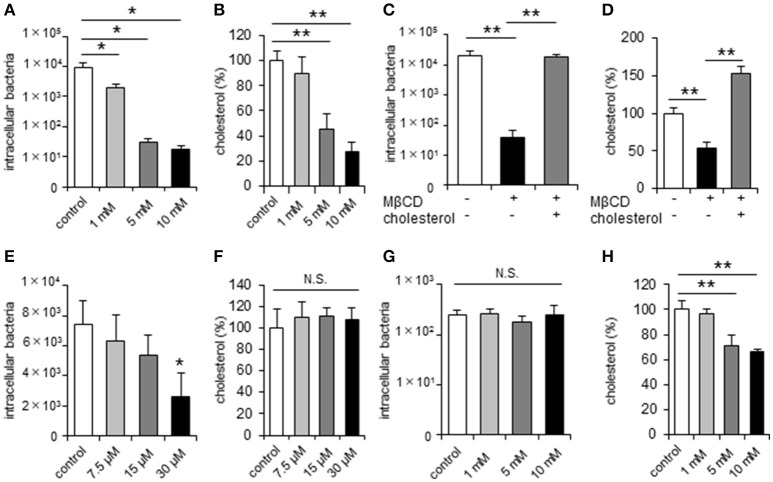
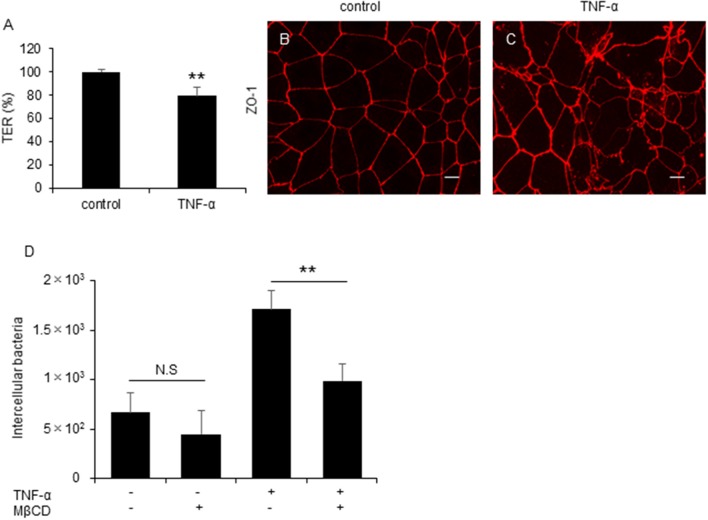
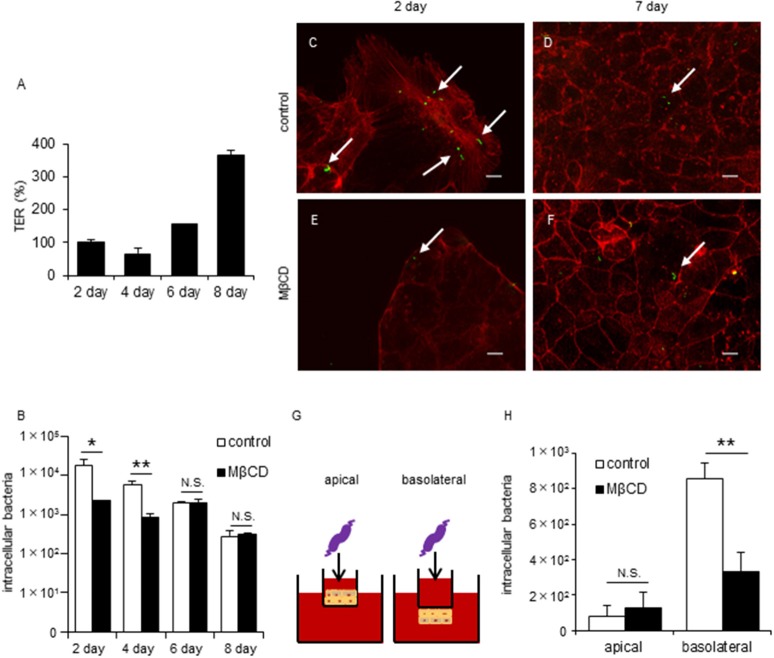
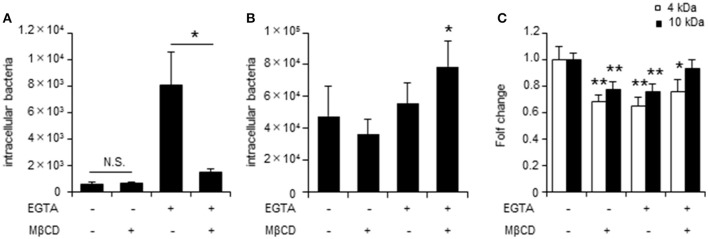
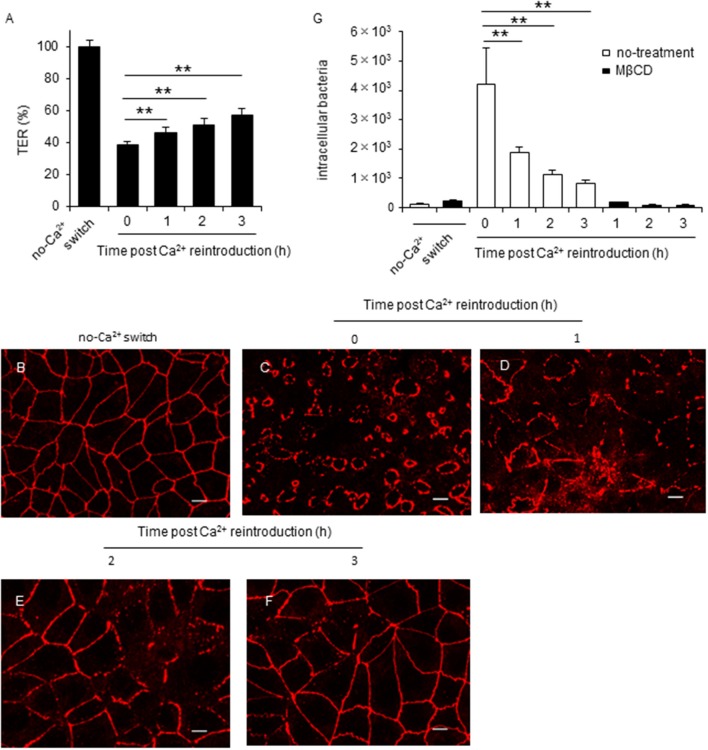
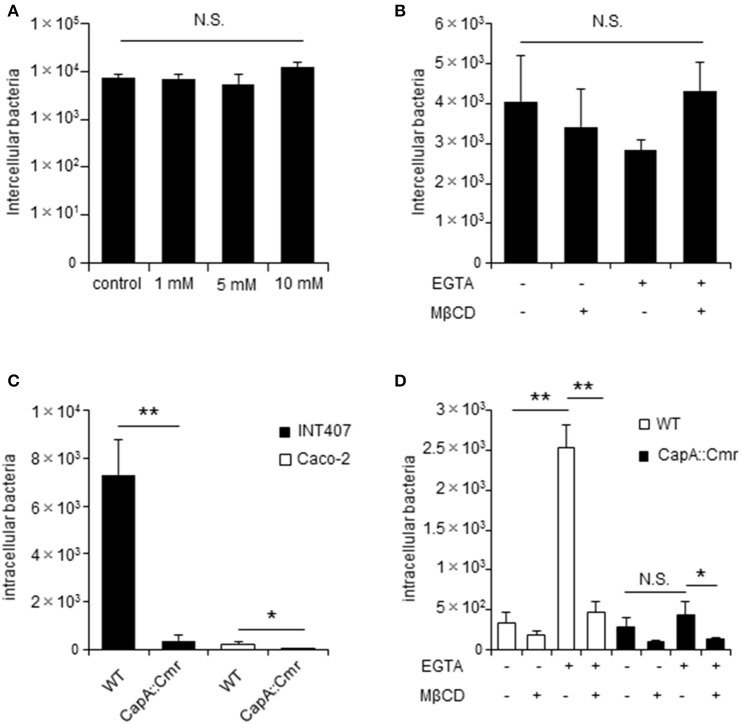
invasion is closely related to pathogenicity. The intestinal epithelium contains polarized epithelial cells that form tight junctions (TJs) to provide a physical barrier against bacterial invasion. Previous studies indicated that invasion of non-polarized cells involves several cellular features, including lipid rafts. However, the dynamics of invasion of polarized epithelial cells are not fully understood. Here we investigated the interaction between invasion and TJ formation to characterize the mechanism of invasion in polarized epithelial cells. In contrast to non-polarized epithelial cells, invasion was not affected by depletion of lipid rafts in polarized epithelial cells. However, depletion of lipid rafts significantly decreased invasion in TJ disrupted cells or basolateral infection and repair of cellular TJs suppressed lipid raft-mediated invasion in polarized epithelial cells. In addition, pro-inflammatory cytokine, TNF-α treatment that induce TJ disruption promote invasion and lipid rafts depletion significantly reduced invasion in TNF-α treated cells. These data demonstrated that TJs prevent invasion from the lateral side of epithelial cells, where they play a main part in bacterial invasion and suggest that invasion could be increased in inflammatory condition. Therefore, maintenance of TJs integrity should be considered important in the development of novel therapies for infection.
侵袭与致病性密切相关。肠上皮含有极化的上皮细胞,这些细胞形成紧密连接(TJ),以提供抵御细菌侵袭的物理屏障。先前的研究表明,非极化细胞的侵袭涉及几种细胞特征,包括脂筏。然而,极化上皮细胞侵袭的动力学尚不完全清楚。在这里,我们研究了侵袭与 TJ 形成之间的相互作用,以表征极化上皮细胞中侵袭的机制。与非极化上皮细胞不同,脂筏耗竭并不影响极化上皮细胞的侵袭。然而,脂筏耗竭显著降低 TJ 破坏细胞或基底外侧感染中的侵袭,并且细胞 TJ 的修复抑制极化上皮细胞中脂筏介导的侵袭。此外,促炎细胞因子 TNF-α处理诱导 TJ 破坏促进侵袭,并且脂筏耗竭显著降低 TNF-α处理细胞中的侵袭。这些数据表明 TJ 阻止了来自上皮细胞侧方的侵袭,在该部位它们在细菌侵袭中起主要作用,并提示在炎症条件下侵袭可能会增加。因此,维持 TJ 的完整性应被认为是开发新型治疗感染的重要因素。