Center for Systems and Synthetic Biology, Institute for Cellular and Molecular Biology, University of Texas at Austin, Austin, Texas, USA.
PLoS Biol. 2012;10(8):e1001379. doi: 10.1371/journal.pbio.1001379. Epub 2012 Aug 21.
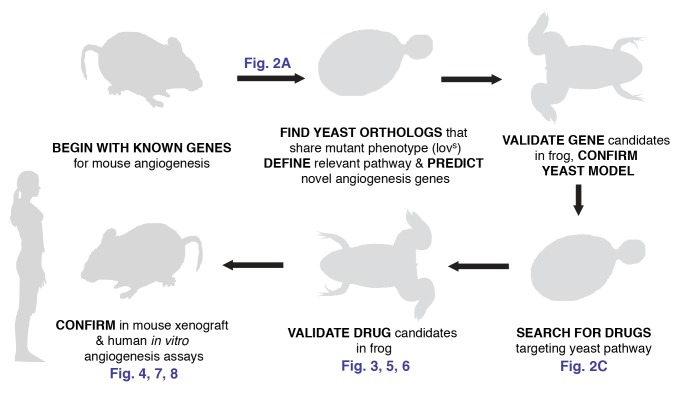
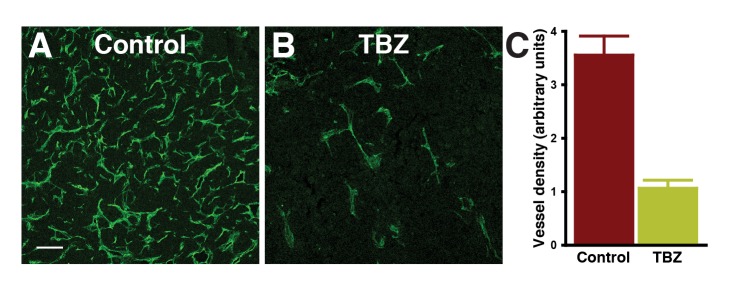
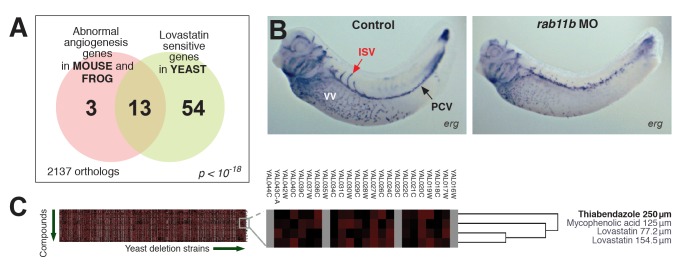
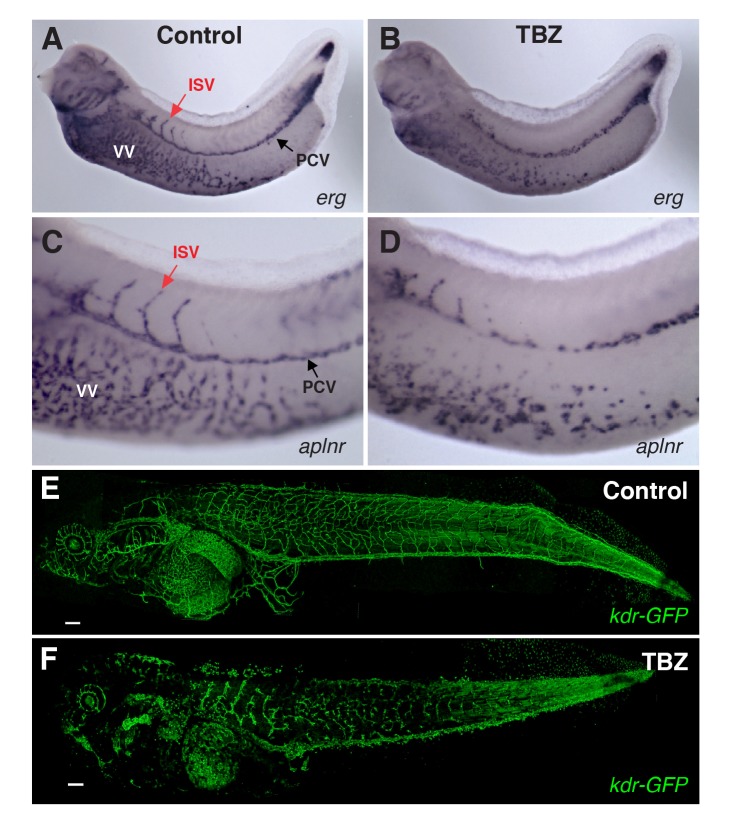
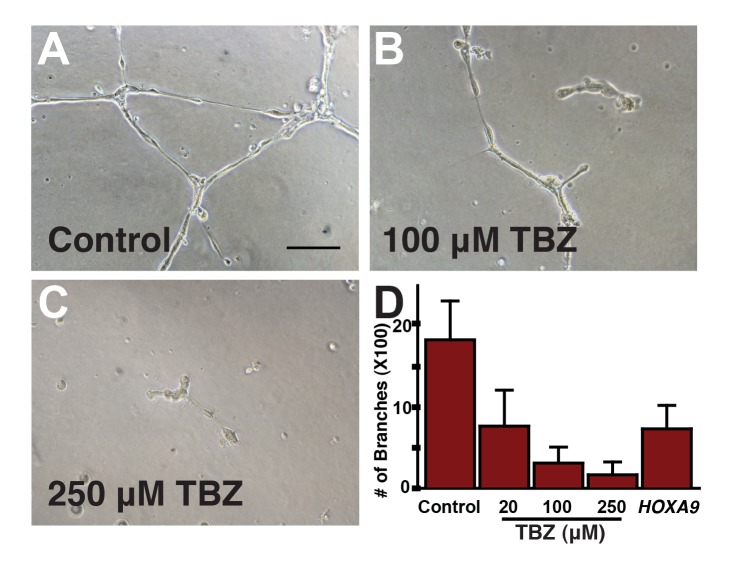
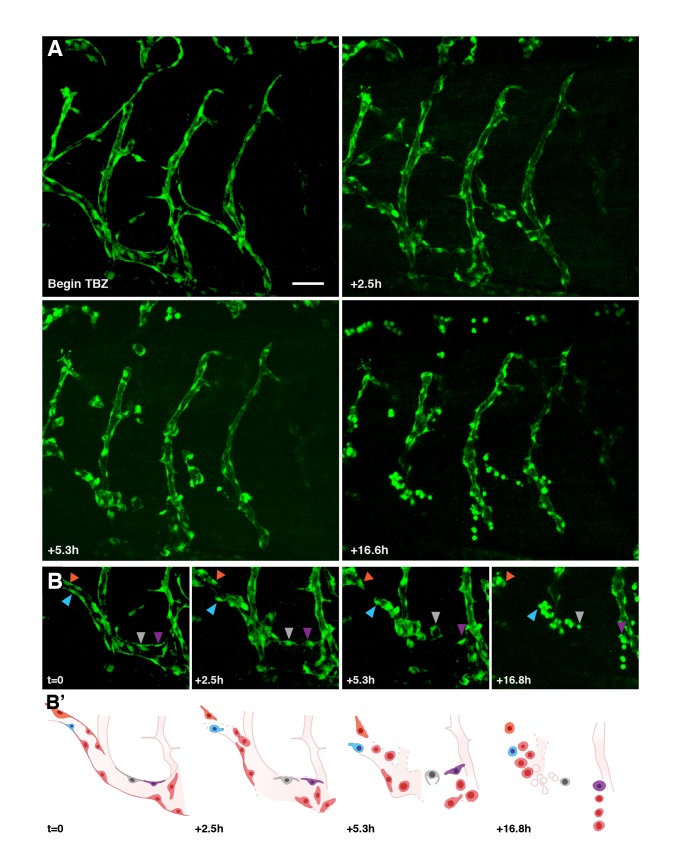
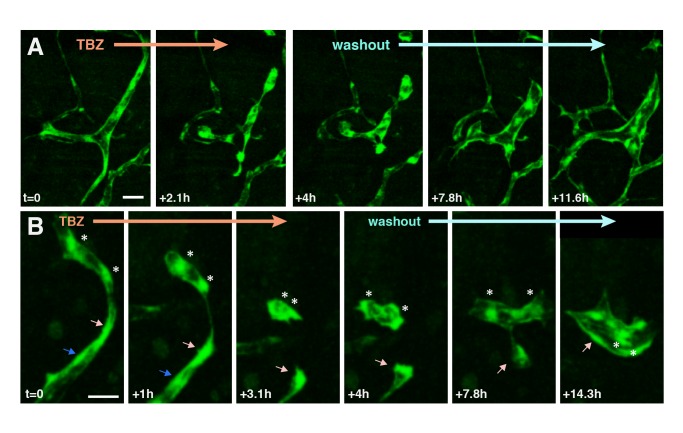
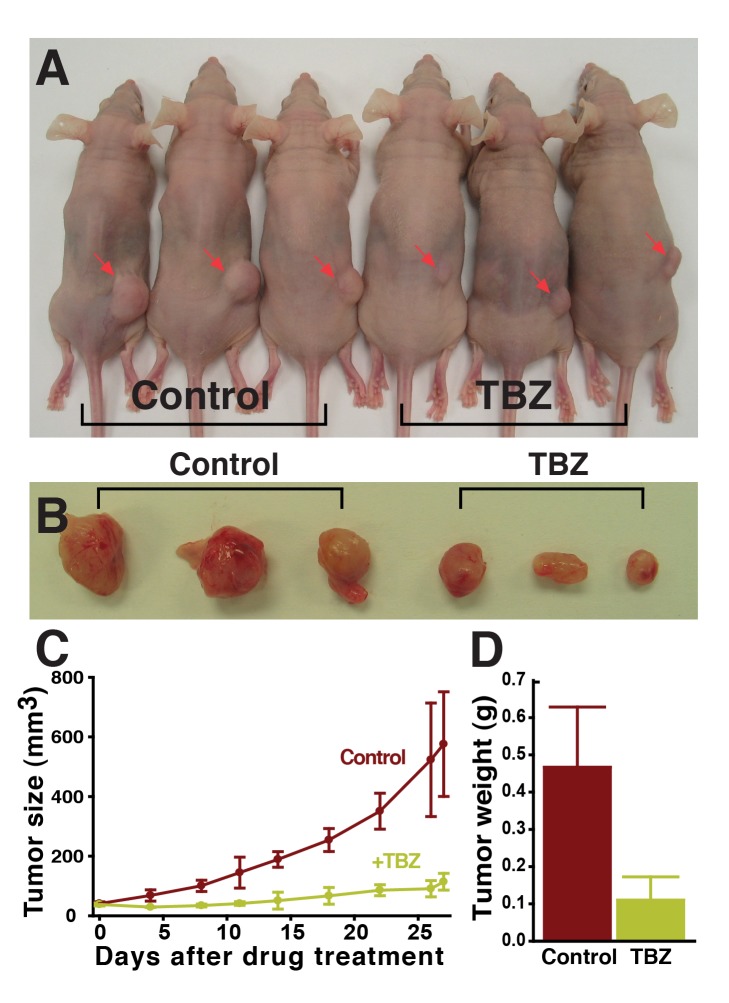
Studies in diverse organisms have revealed a surprising depth to the evolutionary conservation of genetic modules. For example, a systematic analysis of such conserved modules has recently shown that genes in yeast that maintain cell walls have been repurposed in vertebrates to regulate vein and artery growth. We reasoned that by analyzing this particular module, we might identify small molecules targeting the yeast pathway that also act as angiogenesis inhibitors suitable for chemotherapy. This insight led to the finding that thiabendazole, an orally available antifungal drug in clinical use for 40 years, also potently inhibits angiogenesis in animal models and in human cells. Moreover, in vivo time-lapse imaging revealed that thiabendazole reversibly disassembles newly established blood vessels, marking it as vascular disrupting agent (VDA) and thus as a potential complementary therapeutic for use in combination with current anti-angiogenic therapies. Importantly, we also show that thiabendazole slows tumor growth and decreases vascular density in preclinical fibrosarcoma xenografts. Thus, an exploration of the evolutionary repurposing of gene networks has led directly to the identification of a potential new therapeutic application for an inexpensive drug that is already approved for clinical use in humans.
对不同生物的研究揭示了遗传模块在进化上的惊人保守性。例如,最近对这种保守模块的系统分析表明,维持细胞壁的酵母基因已在脊椎动物中被重新用于调节静脉和动脉的生长。我们推断,通过分析这个特定的模块,我们可能会发现针对酵母途径的小分子,这些小分子也可以作为适用于化疗的血管生成抑制剂。这一见解导致了噻苯达唑的发现,这是一种临床上已使用 40 年的口服抗真菌药物,它也能在动物模型和人类细胞中强烈抑制血管生成。此外,体内延时成像显示,噻苯达唑可逆地分解新形成的血管,这标志着它是一种血管破坏剂(VDA),因此可能是一种潜在的互补治疗方法,可与当前的抗血管生成治疗联合使用。重要的是,我们还表明,噻苯达唑可减缓临床前纤维肉瘤异种移植瘤的肿瘤生长并降低血管密度。因此,对基因网络的进化再利用的探索直接导致了一种廉价药物的潜在新治疗应用的确定,这种药物已经在人类中获得临床批准。