Chalopin Domitille, Galiana Delphine, Volff Jean-Nicolas
Institut de Génomique Fonctionnelle de Lyon, Université de Lyon, Ecole Normale Supérieure de Lyon, CNRS, Université Lyon 1, 69364 Lyon Cedex 07, France.
Int J Evol Biol. 2012;2012:724519. doi: 10.1155/2012/724519. Epub 2012 Aug 13.
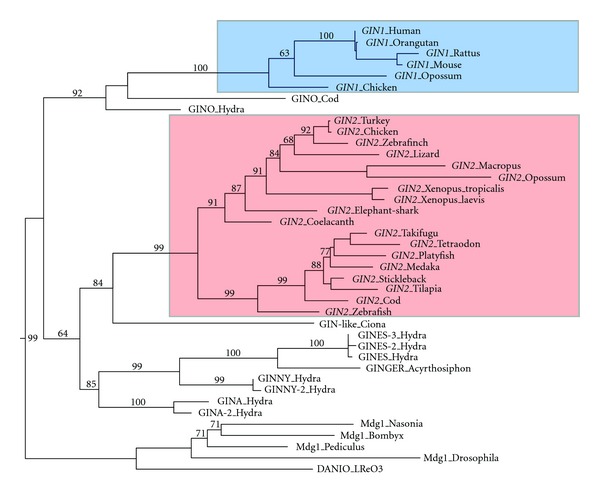
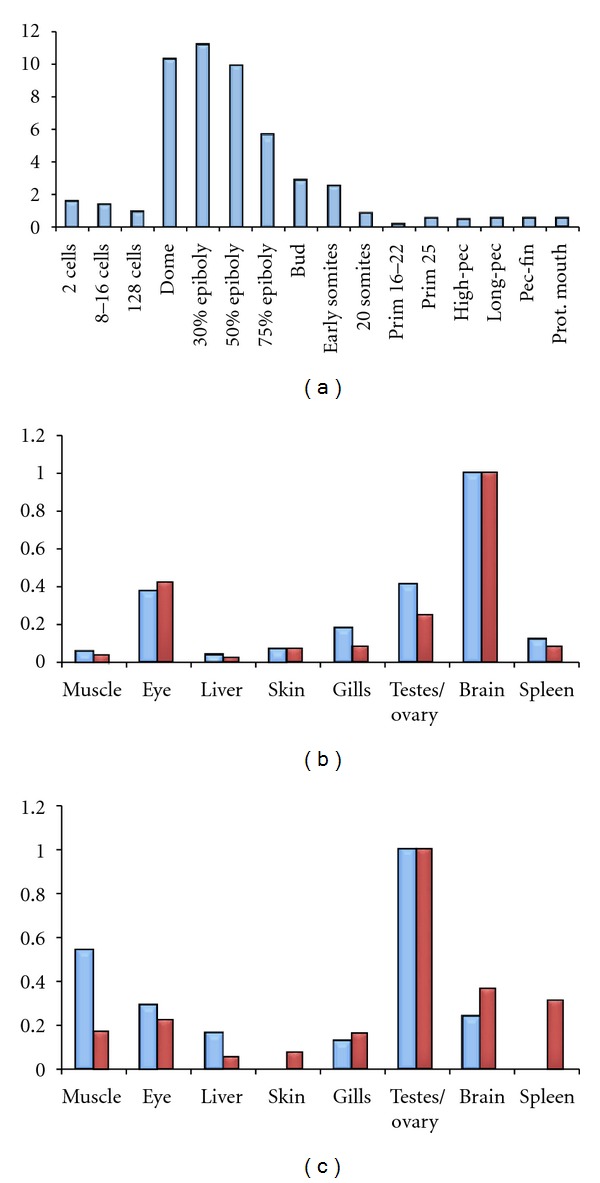
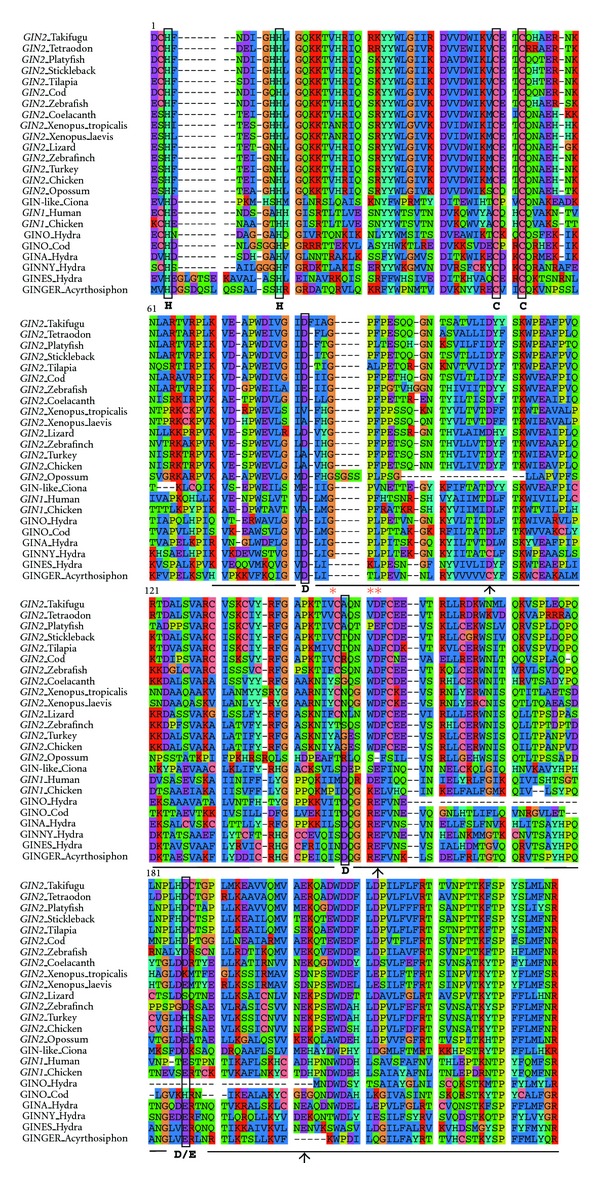
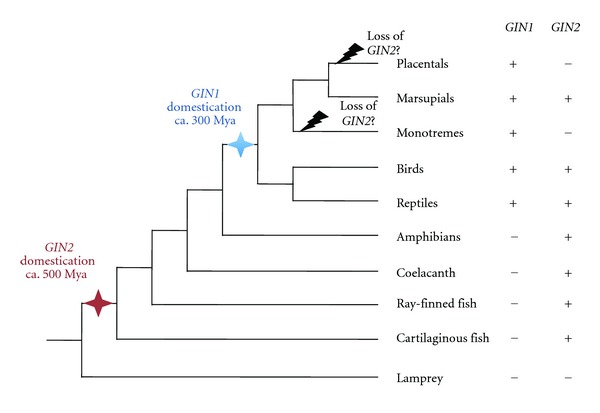
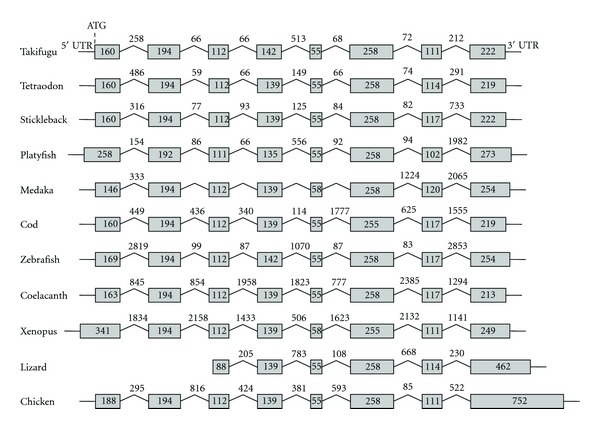
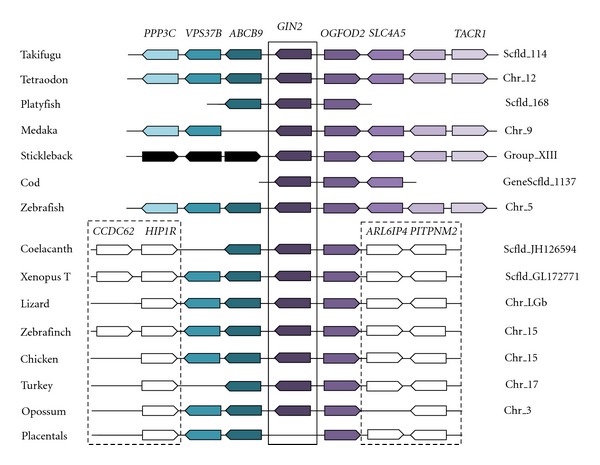
Due to their ability to drive DNA rearrangements and to serve as a source of new coding and regulatory sequences, transposable elements (TEs) are considered as powerful evolutionary agents within genomes. In this paper, we review the mechanism of molecular domestication, which corresponds to the formation of new genes derived from TE sequences. Many genes derived from retroelements and DNA transposons have been identified in mammals and other vertebrates, some of them fulfilling essential functions for the development and survival of their host organisms. We will particularly focus on the evolution and expression of Gypsy integrase (GIN) genes, which have been formed from ancient event(s) of molecular domestication and have evolved differentially in some vertebrate sublineages. What we describe here is probably only the tip of the evolutionary iceberg, and future genome analyses will certainly uncover new TE-derived genes and biological functions driving genetic innovation in vertebrates and other organisms.
由于具有驱动DNA重排以及作为新编码和调控序列来源的能力,转座元件(TEs)被视为基因组内强大的进化因子。在本文中,我们综述了分子驯化机制,其对应于源自TE序列的新基因的形成。在哺乳动物和其他脊椎动物中已鉴定出许多源自逆转录元件和DNA转座子的基因,其中一些基因对其宿主生物体的发育和存活发挥着重要功能。我们将特别关注吉普赛整合酶(GIN)基因的进化和表达,这些基因由古老的分子驯化事件形成,并在一些脊椎动物亚谱系中发生了不同的进化。我们在此描述的可能只是进化冰山的一角,未来的基因组分析肯定会发现新的源自TE的基因以及推动脊椎动物和其他生物体遗传创新的生物学功能。