Department of Biology, ETH Zurich, Zurich, Switzerland.
Mol Syst Biol. 2012;8:606. doi: 10.1038/msb.2012.39.
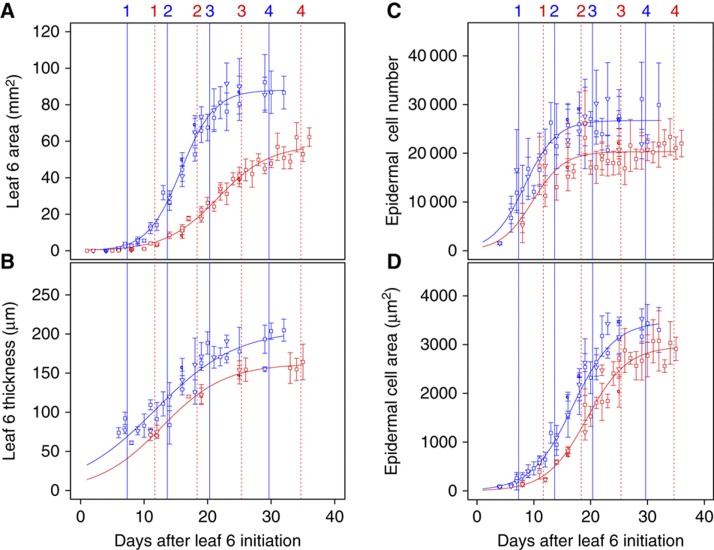
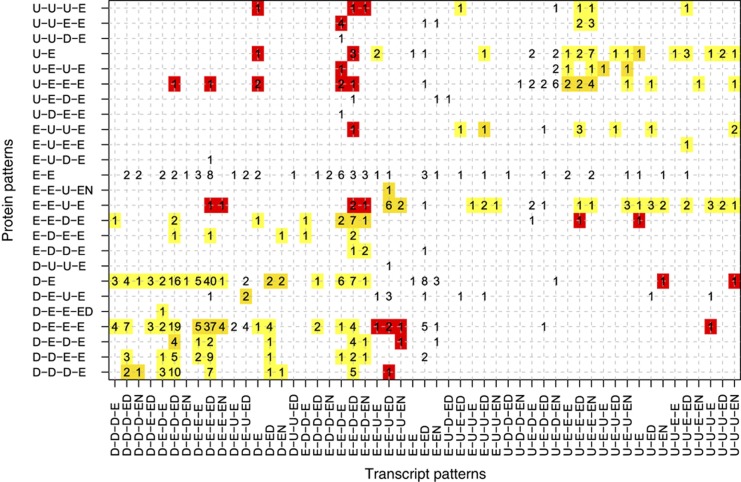
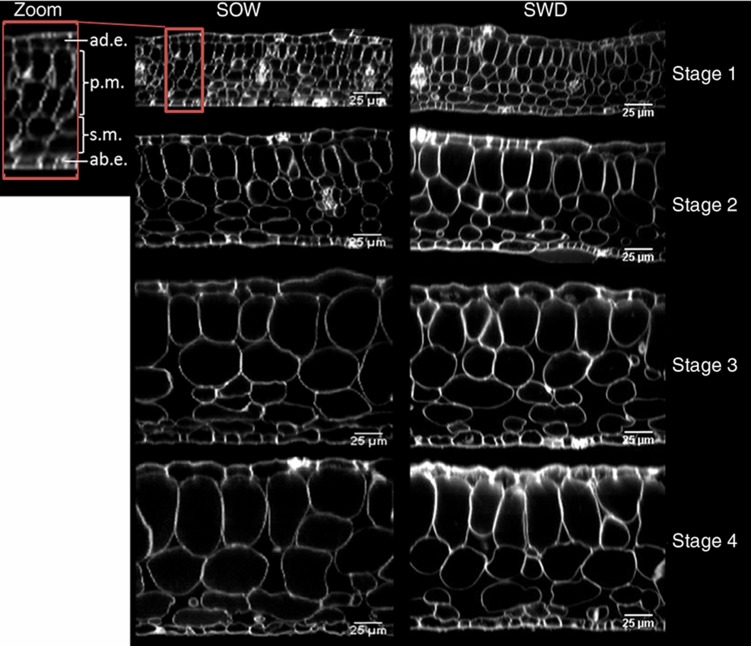
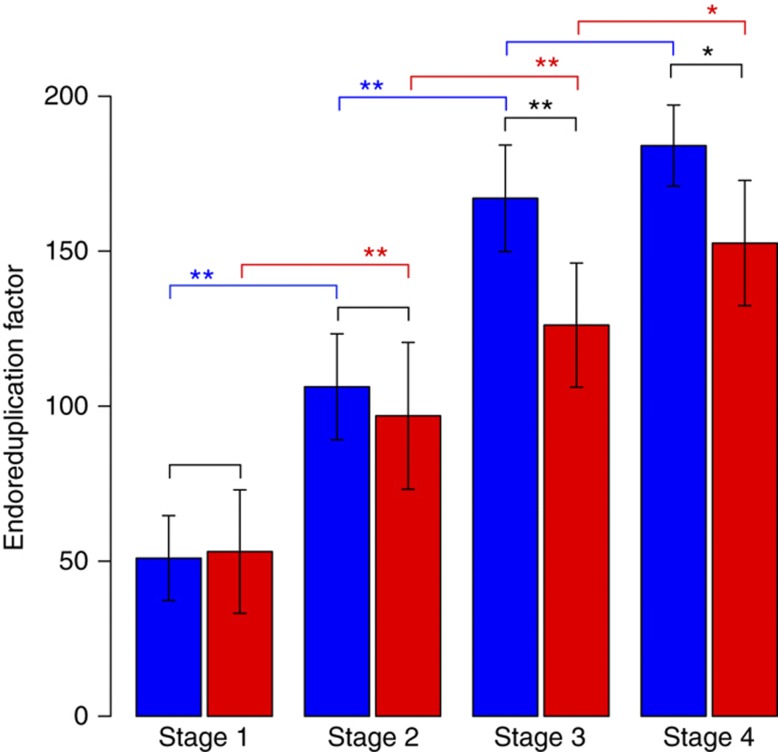
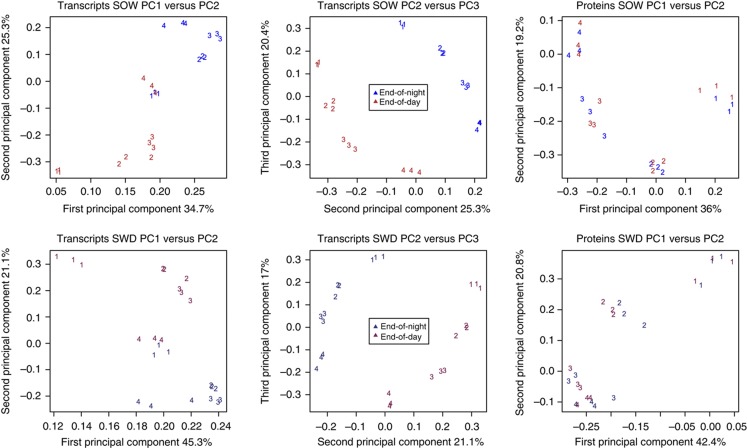
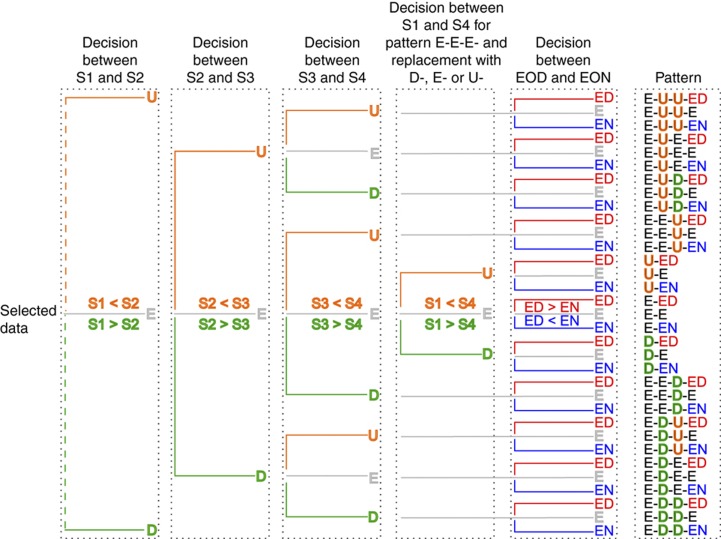
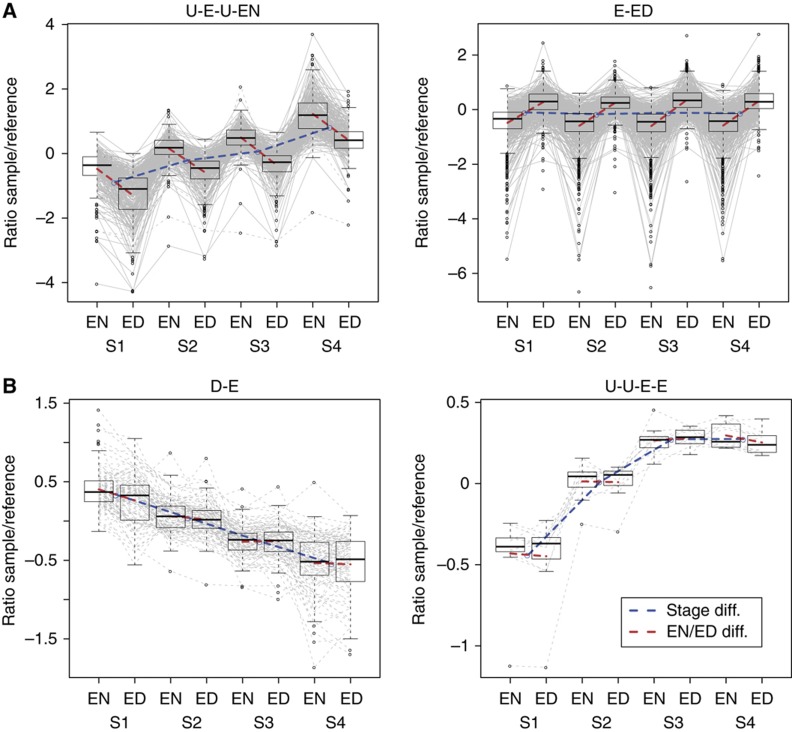
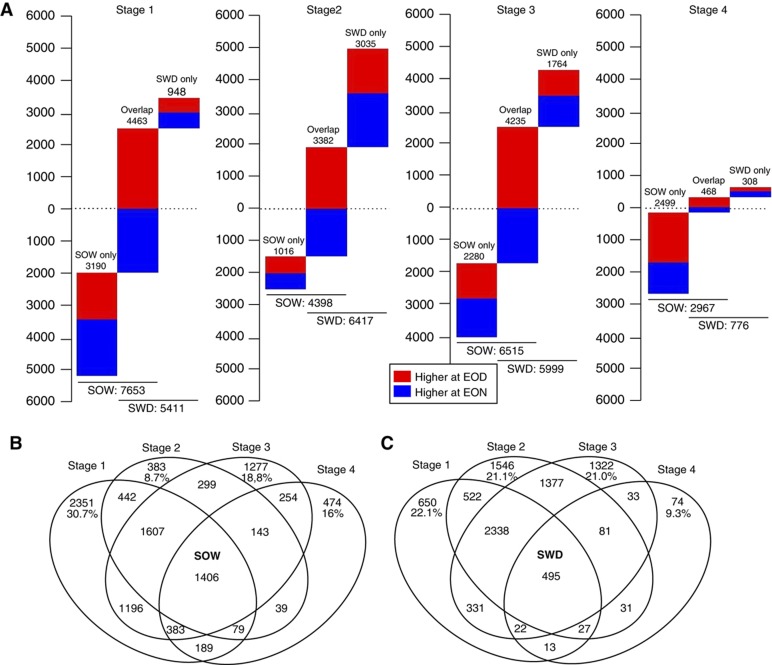
Leaves have a central role in plant energy capture and carbon conversion and therefore must continuously adapt their development to prevailing environmental conditions. To reveal the dynamic systems behaviour of leaf development, we profiled Arabidopsis leaf number six in depth at four different growth stages, at both the end-of-day and end-of-night, in plants growing in two controlled experimental conditions: short-day conditions with optimal soil water content and constant reduced soil water conditions. We found that the lower soil water potential led to reduced, but prolonged, growth and an adaptation at the molecular level without a drought stress response. Clustering of the protein and transcript data using a decision tree revealed different patterns in abundance changes across the growth stages and between end-of-day and end-of-night that are linked to specific biological functions. Correlations between protein and transcript levels depend on the time-of-day and also on protein localisation and function. Surprisingly, only very few of >1700 quantified proteins showed diurnal abundance fluctuations, despite strong fluctuations at the transcript level.
叶子在植物能量捕获和碳转化中起着核心作用,因此必须不断调整其发育以适应环境条件。为了揭示叶片发育的动态系统行为,我们在两种不同的控制实验条件下,在植物生长的四个不同生长阶段,在白天结束和夜晚结束时,对拟南芥叶片 6 号进行了深入的分析:在最佳土壤水分含量的短日照条件下和持续减少的土壤水分条件下。我们发现,较低的土壤水势导致生长减缓但时间延长,并且在分子水平上进行了适应,而没有发生干旱胁迫反应。使用决策树对蛋白质和转录本数据进行聚类,揭示了在生长阶段和白天结束和夜晚结束之间与特定生物学功能相关的丰度变化的不同模式。蛋白质和转录本水平之间的相关性取决于一天中的时间,也取决于蛋白质的定位和功能。令人惊讶的是,尽管转录本水平存在强烈波动,但超过 1700 种定量蛋白质中只有极少数表现出昼夜丰度波动。