Department of Animal Breeding and Genetics, Swedish University of Agricultural Sciences, SE-75124 Uppsala, Sweden.
Nature. 2012 Aug 30;488(7413):642-6. doi: 10.1038/nature11399.
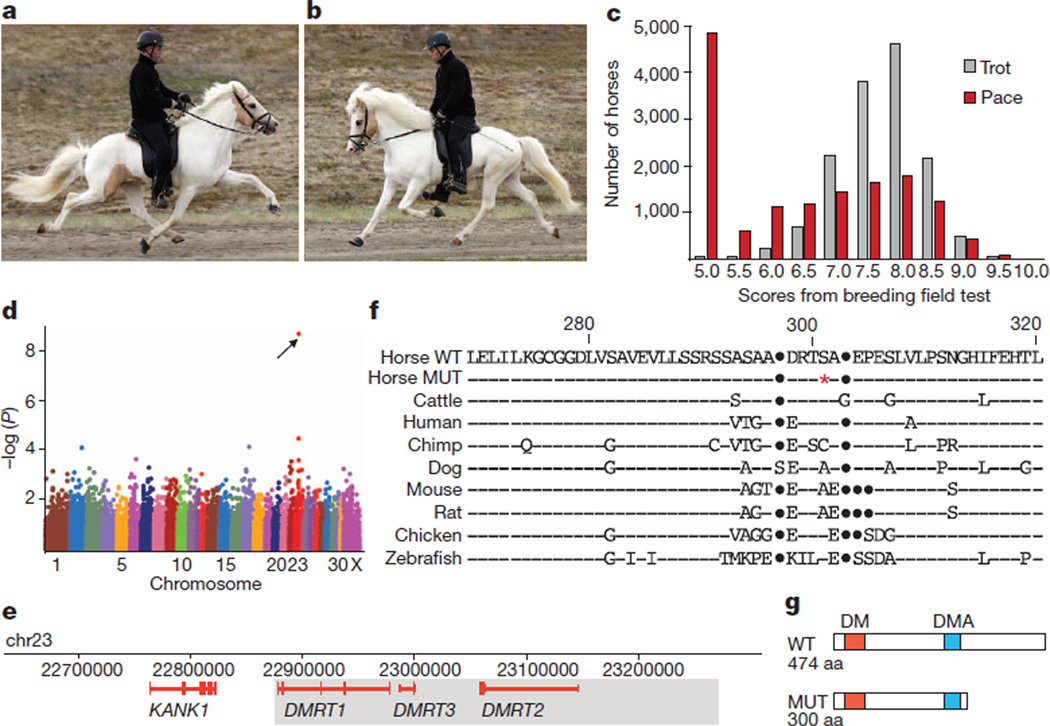
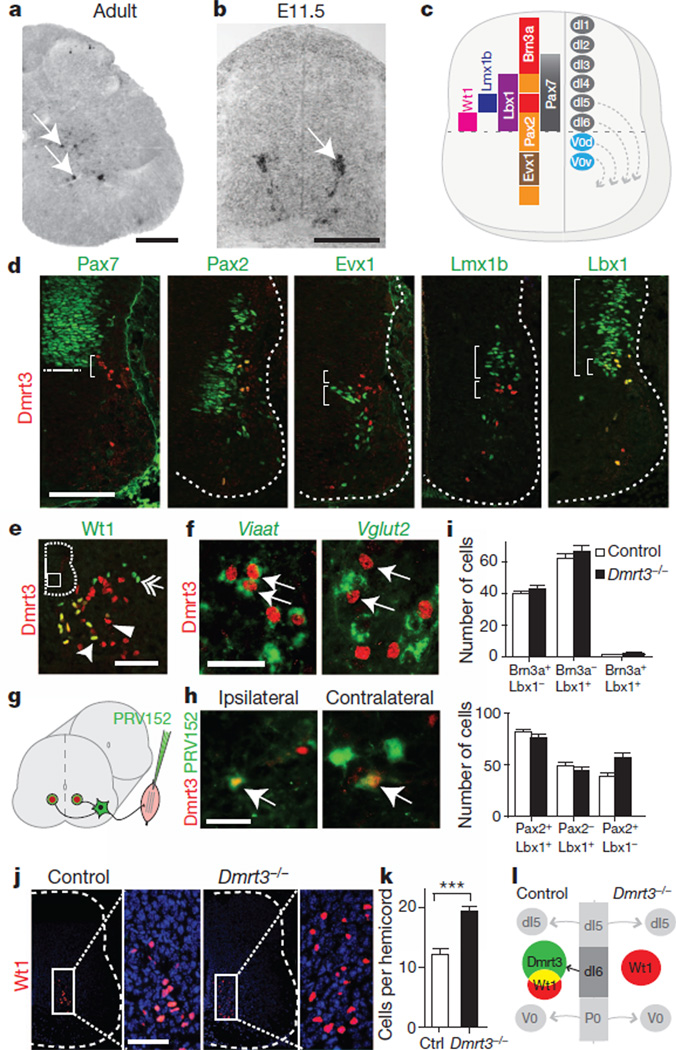
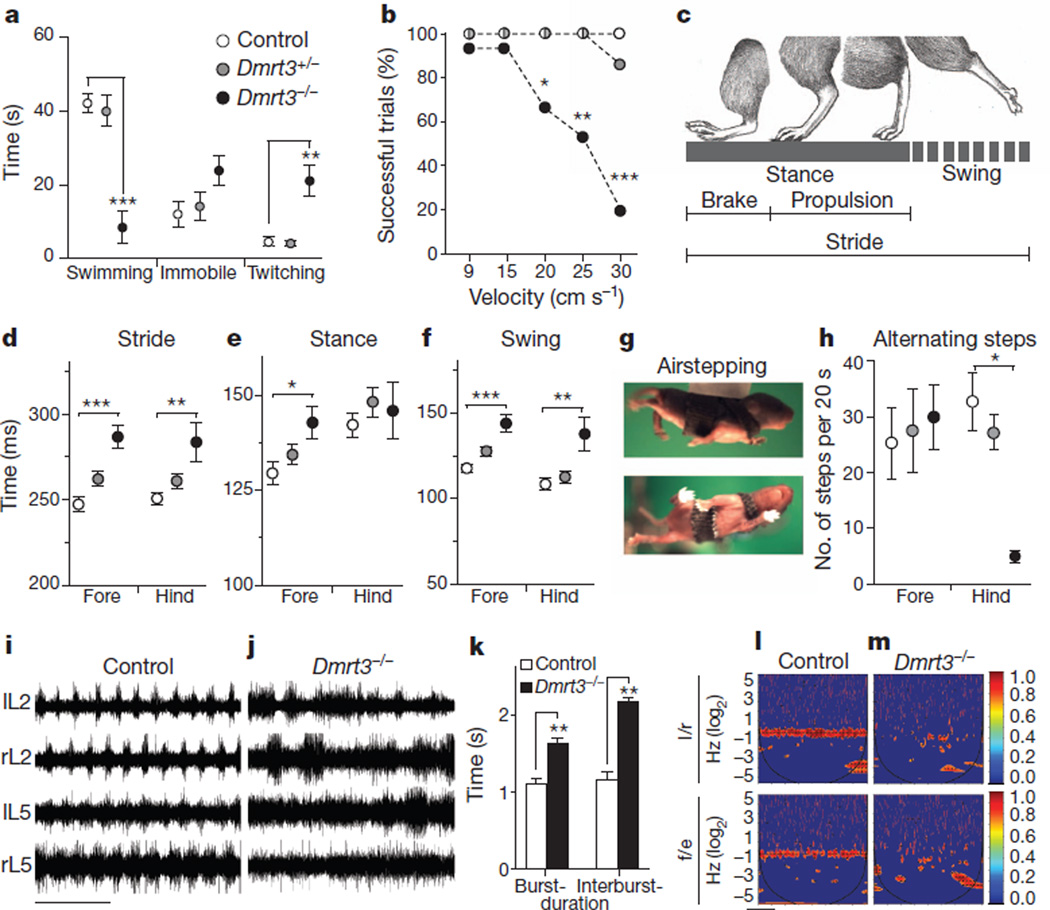
Locomotion in mammals relies on a central pattern-generating circuitry of spinal interneurons established during development that coordinates limb movement. These networks produce left-right alternation of limbs as well as coordinated activation of flexor and extensor muscles. Here we show that a premature stop codon in the DMRT3 gene has a major effect on the pattern of locomotion in horses. The mutation is permissive for the ability to perform alternate gaits and has a favourable effect on harness racing performance. Examination of wild-type and Dmrt3-null mice demonstrates that Dmrt3 is expressed in the dI6 subdivision of spinal cord neurons, takes part in neuronal specification within this subdivision, and is critical for the normal development of a coordinated locomotor network controlling limb movements. Our discovery positions Dmrt3 in a pivotal role for configuring the spinal circuits controlling stride in vertebrates. The DMRT3 mutation has had a major effect on the diversification of the domestic horse, as the altered gait characteristics of a number of breeds apparently require this mutation.
哺乳动物的运动依赖于发育过程中脊髓中间神经元建立的中央模式生成电路,该电路协调肢体运动。这些网络产生左右肢体交替以及屈肌和伸肌的协调激活。在这里,我们表明 DMRT3 基因中的过早终止密码子对马的运动模式有重大影响。该突变允许进行交替步态的能力,并对马具比赛表现有有利影响。对野生型和 Dmrt3 基因缺失小鼠的检查表明,Dmrt3 在脊髓神经元的 dI6 亚区表达,参与该亚区的神经元特化,并对控制肢体运动的协调运动网络的正常发育至关重要。我们的发现将 Dmrt3 置于控制脊椎动物步幅的脊髓回路配置中的关键作用。DMRT3 突变对家马的多样化产生了重大影响,因为许多品种的步态特征显然需要这种突变。