Stem Cell Institute, University of Minnesota, MTRF, 2001 6th Street SE, Minneapolis, Minnesota 55455, USA.
Anat Rec (Hoboken). 2012 Oct;295(10):1532-40. doi: 10.1002/ar.22437. Epub 2012 Aug 29.
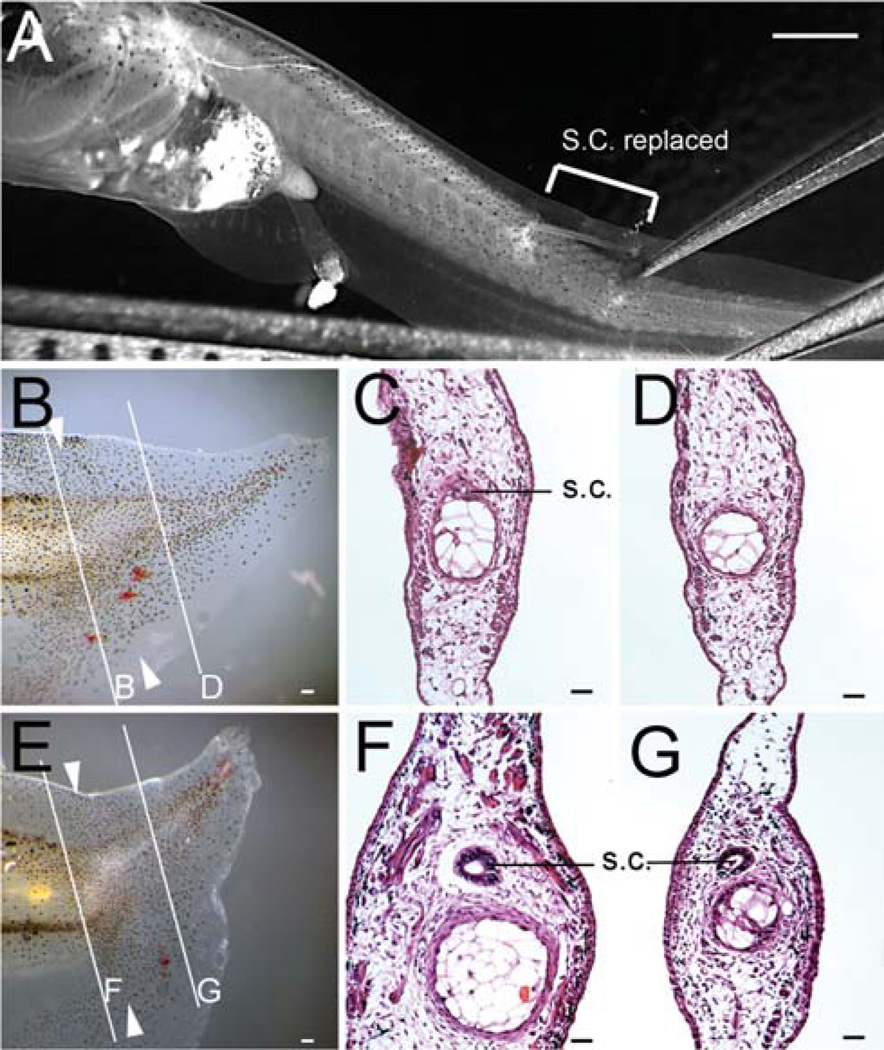
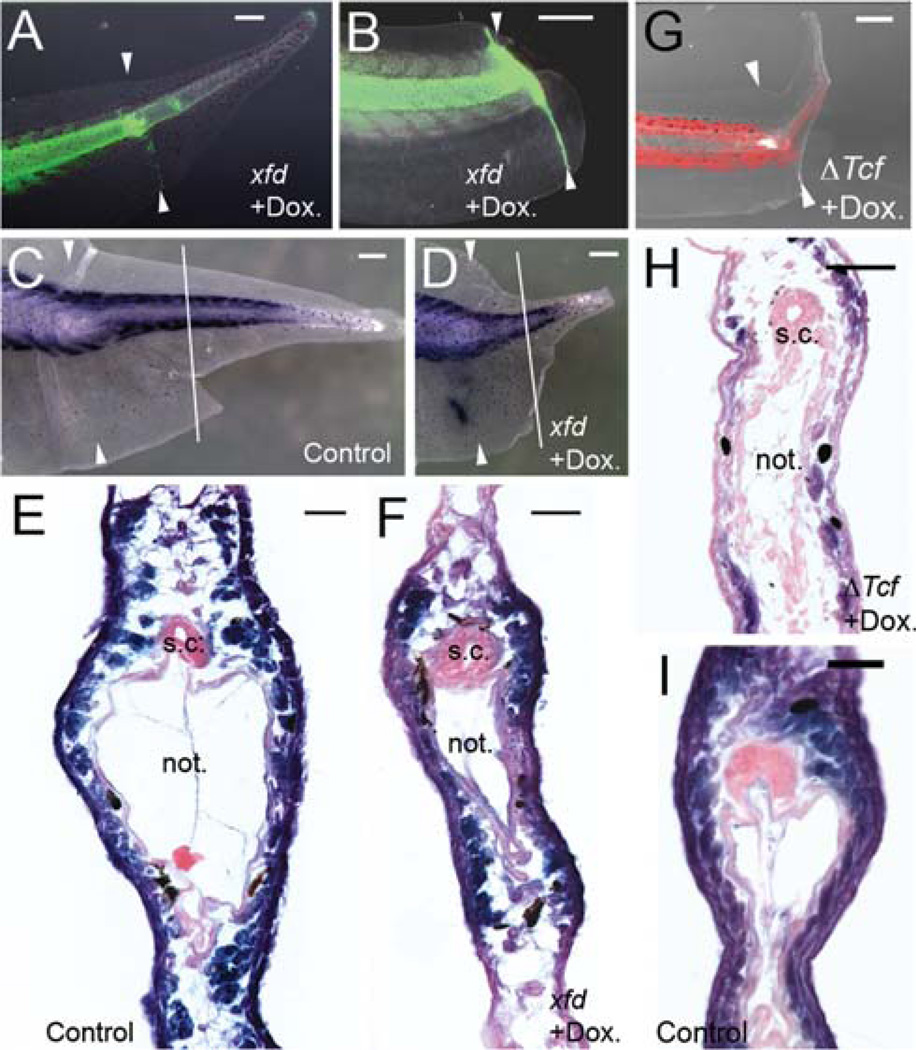
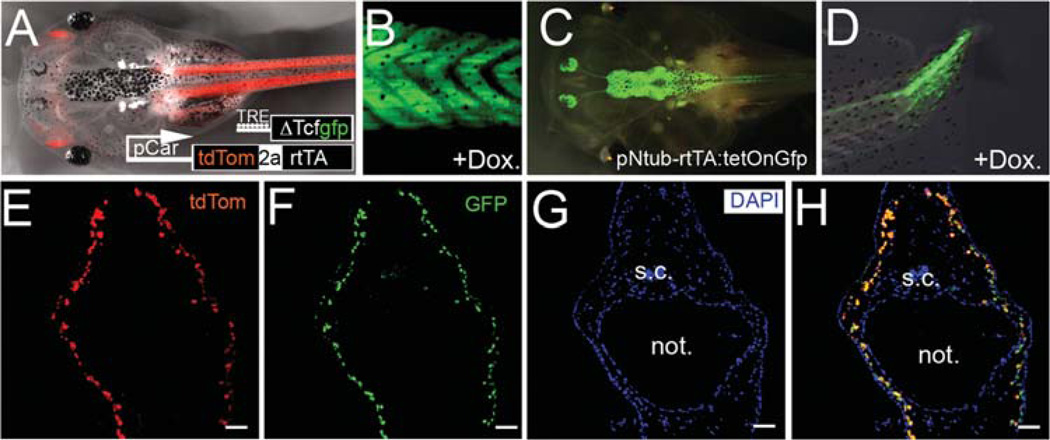
The Xenopus tadpole has the capacity fully to regenerate its tail after amputation. Previously, we have established that this regeneration process requires the operation of several signaling pathways including the bone morphogenic protein, Wnt, and Fgf pathways. Here, we have addressed the signaling requirements for spinal cord and muscle regeneration in a tissue-specific manner. Two methods were used namely grafts of transgenic spinal cord to a wild type host, and the use of the Tet-on conditional transgenic system to express inhibitors in the individual tissues. For the grafting experiments, the tail was amputated through the graft, which contained a temperature inducible inhibitor of the Wnt-β-catenin pathway. For the Tet-on experiments, treatment with doxycycline was used to induce cell autonomous inhibitors of the Wnt-β-catenin or the Fgf pathway in either spinal cord or muscle. The results show that both spinal cord and muscle regeneration depend on both the Wnt-β-catenin and the Fgf pathways. This experimental design also enables us to observe the effect of inhibition of regeneration of one tissue on the regeneration of the others. Regardless of the method of inhibition, we find that reduction of spinal cord regeneration reduces regeneration of other parts of the tail, including the myotomal muscles. In contrast, reduction of muscle regeneration has no effect on the regeneration of the spinal cord. In common with other regeneration systems, this indicates that soluble factors from the spinal cord are needed to promote the regeneration of the other tissues in the tail.
非洲爪蟾的幼体在尾部被截断后有能力完全再生。在此之前,我们已经证实这个再生过程需要几种信号通路的运作,包括骨形态发生蛋白、Wnt 和 Fgf 通路。在这里,我们以组织特异性的方式解决了脊髓和肌肉再生的信号要求。我们使用了两种方法,即转基因脊髓移植到野生型宿主,以及使用 Tet-on 条件性转基因系统在个别组织中表达抑制剂。对于移植实验,通过包含温度诱导的 Wnt-β-catenin 通路抑制剂的移植物截断尾部。对于 Tet-on 实验,使用强力霉素处理以诱导 Wnt-β-catenin 或 Fgf 通路的细胞自主抑制剂在脊髓或肌肉中表达。结果表明,脊髓和肌肉的再生都依赖于 Wnt-β-catenin 和 Fgf 通路。这种实验设计还使我们能够观察到抑制一种组织的再生对其他组织再生的影响。无论采用何种抑制方法,我们发现脊髓再生的减少都会减少尾部其他部分的再生,包括肌节肌肉。相比之下,肌肉再生的减少对脊髓的再生没有影响。与其他再生系统一样,这表明来自脊髓的可溶性因子对于促进尾部其他组织的再生是必要的。