Kranstuber Allyson L, Del Rio Carlos, Biesiadecki Brandon J, Hamlin Robert L, Ottobre Joseph, Gyorke Sandor, Lacombe Véronique A
College of Pharmacy, The Ohio State University Columbus, OH, USA.
Front Physiol. 2012 Jul 19;3:292. doi: 10.3389/fphys.2012.00292. eCollection 2012.
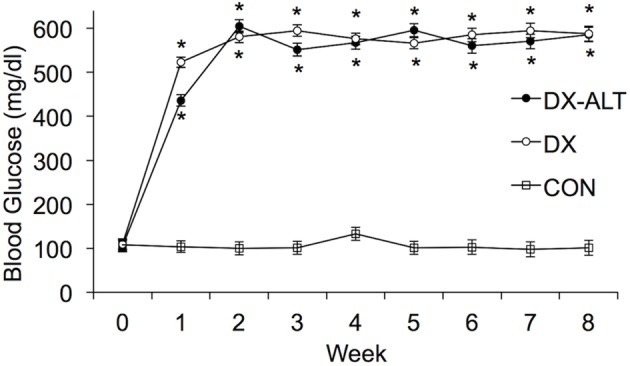
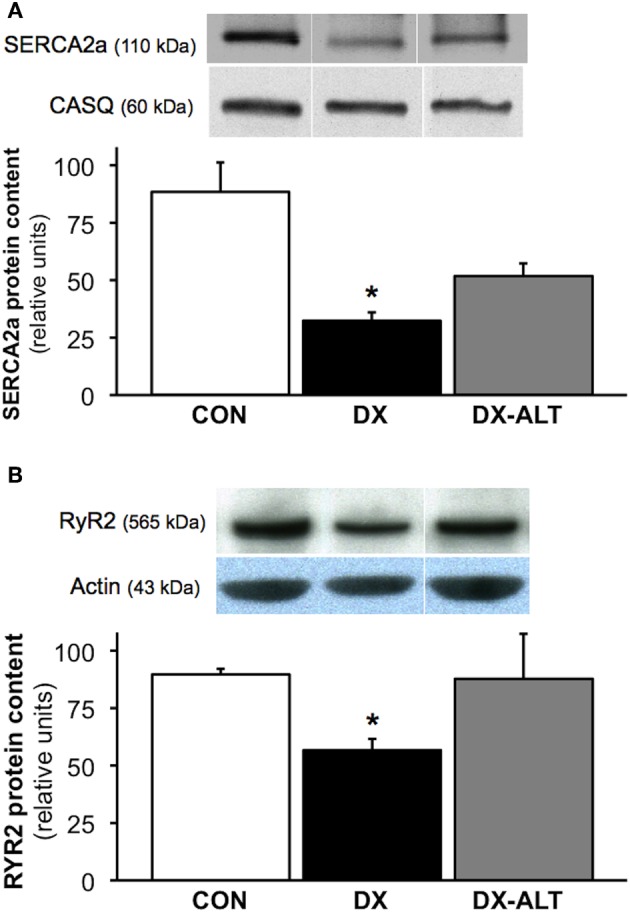
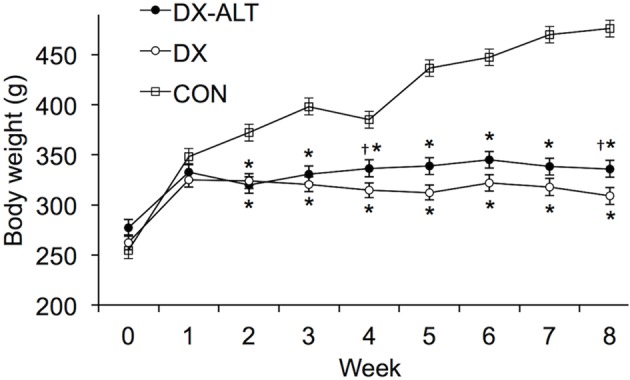
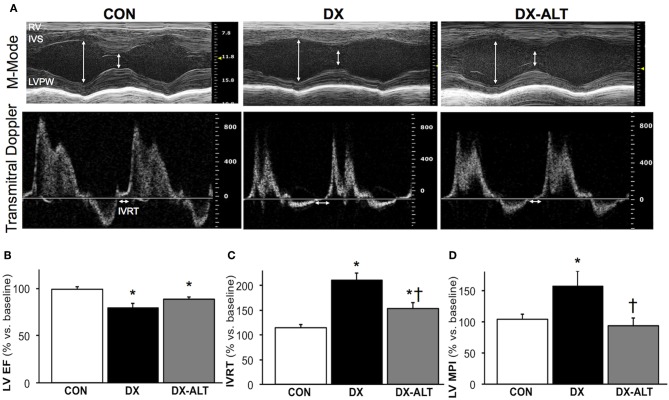
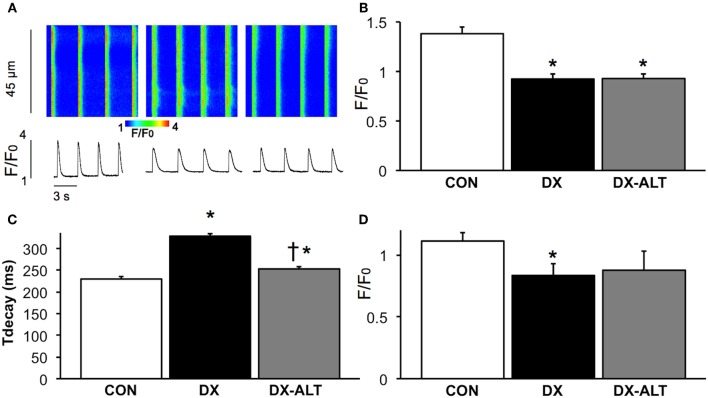
Diabetic heart disease is a distinct clinical entity that can progress to heart failure and sudden death. However, the mechanisms responsible for the alterations in excitation-contraction coupling leading to cardiac dysfunction during diabetes are not well known. Hyperglycemia, the landmark of diabetes, leads to the formation of advanced glycation end products (AGEs) on long-lived proteins, including sarcoplasmic reticulum (SR) Ca(2+) regulatory proteins. However, their pathogenic role on SR Ca(2+) handling in cardiac myocytes is unknown. Therefore, we investigated whether an AGE cross-link breaker could prevent the alterations in SR Ca(2+) cycling that lead to in vivo cardiac dysfunction during diabetes. Streptozotocin-induced diabetic rats were treated with alagebrium chloride (ALT-711) for 8 weeks and compared to age-matched placebo-treated diabetic rats and healthy rats. Cardiac function was assessed by echocardiographic examination. Ventricular myocytes were isolated to assess SR Ca(2+) cycling by confocal imaging and quantitative Western blots. Diabetes resulted in in vivo cardiac dysfunction and ALT-711 therapy partially alleviated diastolic dysfunction by decreasing isovolumetric relaxation time and myocardial performance index (MPI) (by 27 and 41% vs. untreated diabetic rats, respectively, P < 0.05). In cardiac myocytes, diabetes-induced prolongation of cytosolic Ca(2+) transient clearance by 43% and decreased SR Ca(2+) load by 25% (P < 0.05); these parameters were partially improved after ALT-711 therapy. SERCA2a and RyR2 protein expression was significantly decreased in the myocardium of untreated diabetic rats (by 64 and 36% vs. controls, respectively, P < 0.05), but preserved in the treated diabetic group compared to controls. Collectively, our results suggest that, in a model of type 1 diabetes, AGE accumulation primarily impairs SR Ca(2+) reuptake in cardiac myocytes and that long-term treatment with an AGE cross-link breaker partially normalized SR Ca(2+) handling and improved diabetic cardiomyopathy.
糖尿病性心脏病是一种独特的临床实体,可发展为心力衰竭和猝死。然而,糖尿病期间导致心脏功能障碍的兴奋 - 收缩偶联改变的机制尚不清楚。高血糖是糖尿病的标志性特征,会导致在包括肌浆网(SR)钙调节蛋白在内的长寿蛋白上形成晚期糖基化终末产物(AGEs)。然而,它们在心肌细胞中对SR钙处理的致病作用尚不清楚。因此,我们研究了一种AGE交联裂解剂是否可以预防糖尿病期间导致体内心脏功能障碍的SR钙循环改变。将链脲佐菌素诱导的糖尿病大鼠用氯胺酮(ALT - 711)治疗8周,并与年龄匹配的安慰剂治疗的糖尿病大鼠和健康大鼠进行比较。通过超声心动图检查评估心脏功能。分离心室肌细胞以通过共聚焦成像和定量蛋白质印迹评估SR钙循环。糖尿病导致体内心脏功能障碍,ALT - 711治疗通过减少等容舒张时间和心肌性能指数(MPI)部分缓解舒张功能障碍(分别比未治疗的糖尿病大鼠降低27%和41%,P <0.05)。在心肌细胞中,糖尿病导致胞质钙瞬变清除延长43%,SR钙负荷降低25%(P <0.05);ALT - 711治疗后这些参数得到部分改善。未治疗的糖尿病大鼠心肌中SERCA2a和RyR2蛋白表达显著降低(分别比对照组降低64%和36%,P <0.05),但与对照组相比,治疗组的表达得以保留。总体而言,我们的结果表明,在1型糖尿病模型中,AGE积累主要损害心肌细胞中的SR钙再摄取,并且用AGE交联裂解剂进行长期治疗可部分使SR钙处理正常化并改善糖尿病性心肌病。