Zahradníková Alexandra, Zahradník Ivan
Department of Muscle Cell Research, Institute of Molecular Physiology and Genetics, Slovak Academy of Sciences Bratislava, Slovakia.
Front Physiol. 2012 Aug 20;3:322. doi: 10.3389/fphys.2012.00322. eCollection 2012.
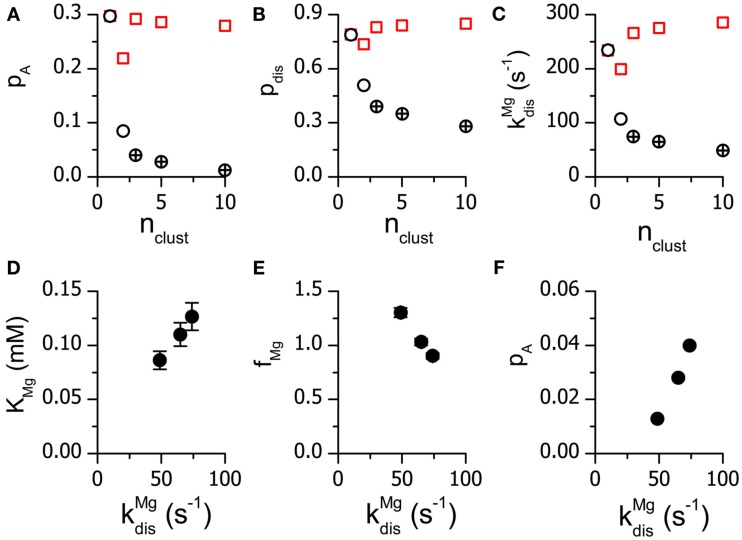
Local character of calcium release in cardiac myocytes, as defined by confocal recordings of calcium sparks, implies independent activation of individual calcium release sites based on ryanodine receptor (RyR) channel recruitment. We constructed virtual calcium release sites (vCRSs) composed of a variable number of RyR channels distributed in clusters in accordance with the experimentally observed cluster size distribution. The vCRSs consisted either of a single virtual calcium release unit (vCRU), in which all clusters shared a common dyadic space, or of multiple virtual calcium release units (CRUs) containing one cluster each and having separate dyadic spaces. We explored the stochastic behavior of vCRSs to understand the activation and recruitment of RyRs during calcium sparks. RyRs were represented by the published allosteric gating model that included regulation by cytosolic Ca(2+) and Mg(2+). The interaction of Mg(2+) with the RyR Ca(2+)-binding sites and the refractory period of vCRSs were optimized to accord with the experimentally observed calcium dependence of calcium spark frequency. The Mg(2+)-binding parameters of RyRs that provided the best description of spark frequency depended on the number of RyRs assembled in the vCRSs. Adequate inhibitory effect of Mg(2+) on the calcium dependence of RyR open probability was achieved if the vCRSs contained at least three clusters. For the distribution of the number of open RyRs in evoked calcium sparks to correspond to the experimentally observed distribution of spark calcium release fluxes, at least three clusters had to share a common virtual CRU, in which ∼3 RyRs open to form an average spark. These results reconcile the small cluster size and stochastic placement of RyRs in the release sites with the estimates of the amount of RyR protein, volume density of calcium release sites, and the size of calcium release sites in rat cardiac myocytes.
通过钙火花的共聚焦记录所定义的心肌细胞中钙释放的局部特征,意味着基于兰尼碱受体(RyR)通道募集的单个钙释放位点的独立激活。我们构建了虚拟钙释放位点(vCRS),其由可变数量的RyR通道组成,这些通道根据实验观察到的簇大小分布以簇的形式分布。vCRS要么由单个虚拟钙释放单元(vCRU)组成,其中所有簇共享一个共同的二联体空间,要么由多个虚拟钙释放单元(CRU)组成,每个CRU包含一个簇且具有单独的二联体空间。我们探索了vCRS的随机行为,以了解钙火花期间RyR的激活和募集。RyR由已发表的变构门控模型表示,该模型包括胞质Ca(2+)和Mg(2+)的调节。Mg(2+)与RyR Ca(2+)结合位点的相互作用以及vCRS的不应期经过优化,以符合实验观察到的钙火花频率的钙依赖性。能最好地描述火花频率的RyR的Mg(2+)结合参数取决于组装在vCRS中的RyR数量。如果vCRS包含至少三个簇,则Mg(2+)对RyR开放概率的钙依赖性具有足够的抑制作用。为了使诱发钙火花中开放RyR的数量分布与实验观察到的火花钙释放通量分布相对应,至少三个簇必须共享一个共同的虚拟CRU,其中约3个RyR开放以形成平均火花。这些结果使释放位点中RyR的小簇大小和随机排列与大鼠心肌细胞中RyR蛋白量、钙释放位点的体积密度以及钙释放位点大小的估计相协调。