Department of Cellular Cardiology, Institute of Experimental Endocrinology, Biomedical Research Center, Slovak Academy of Sciences, Bratislava, Slovakia.
Department of Muscle Cell Research, Institute of Molecular Physiology and Genetics, Centre of Biosciences, Slovak Academy of Sciences, Bratislava, Slovakia.
Sci Rep. 2020 May 15;10(1):8076. doi: 10.1038/s41598-020-64840-5.
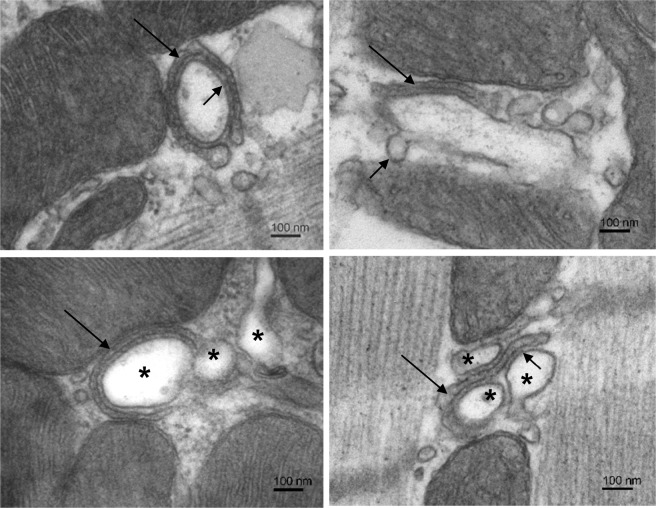
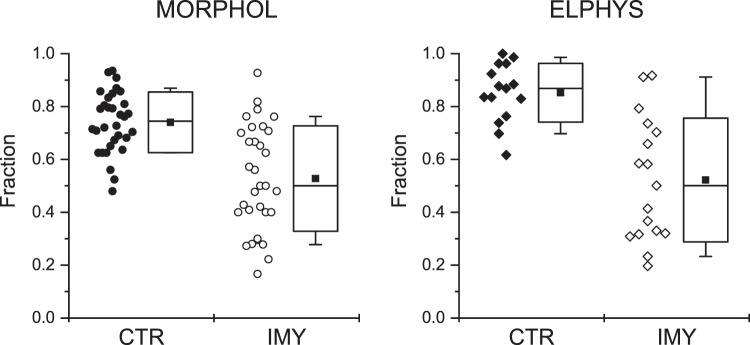
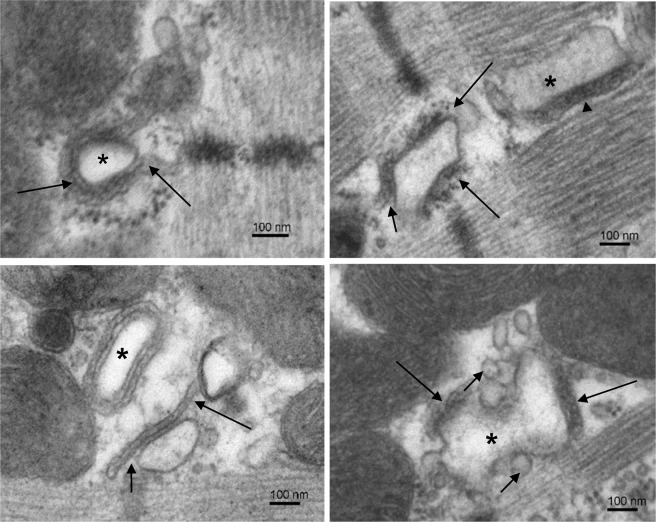
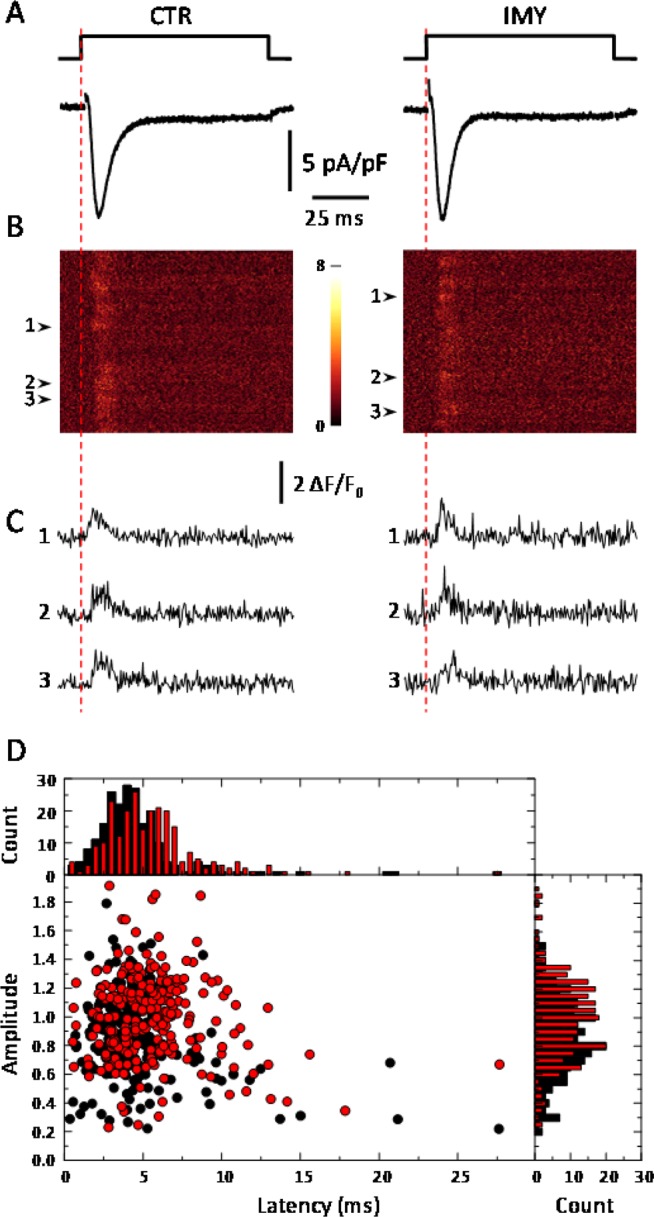
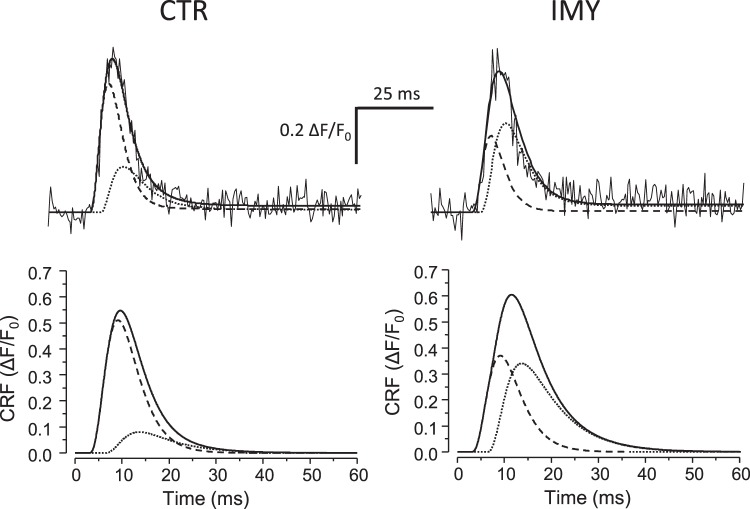
Cardiac excitation-contraction coupling relies on dyads, the intracellular calcium synapses of cardiac myocytes, where the plasma membrane contacts sarcoplasmic reticulum and where electrical excitation triggers calcium release. The morphology of dyads and dynamics of local calcium release vary substantially. To better understand the correspondence between the structure and the functionality of dyads, we estimated incidences of structurally different dyads and of kinetically different calcium release sites and tested their responsiveness to experimental myocardial injury in left ventricular myocytes of rats. According to the structure of dyads estimated in random electron microscopic images of myocardial tissue, the dyads were sorted into 'compact' or 'loose' types. The calcium release fluxes, triggered at local calcium release sites in patch-clamped ventricular myocytes and recorded by laser scanning confocal fluorescence microscopy, were decomposed into 'early' and 'late' components. ANOVA tests revealed very high correlation between the relative amplitudes of early and late calcium release flux components and the relative occurrences of compact and loose dyads in the control and in the injured myocardium. This finding ascertained the relationship between the structure of dyads and the functionality of calcium release sites and the responsiveness of calcium release sites to physical load in cardiac myocytes.
心肌兴奋-收缩偶联依赖于二联体,即心肌细胞的细胞内钙离子突触,在这里,细胞膜与肌浆网接触,电兴奋触发钙离子释放。二联体的形态和局部钙释放的动力学变化很大。为了更好地理解二联体的结构和功能之间的对应关系,我们估计了结构不同的二联体和动力学不同的钙释放位点的发生率,并在大鼠左心室心肌细胞中测试了它们对实验性心肌损伤的反应性。根据心肌组织随机电子显微镜图像中估计的二联体结构,将二联体分为“紧密”或“松散”型。在膜片钳夹心室肌细胞中局部钙释放位点触发的钙释放通量,并通过激光扫描共聚焦荧光显微镜记录,被分解为“早期”和“晚期”成分。方差分析测试显示,早期和晚期钙释放通量成分的相对幅度与紧密和松散二联体在对照和损伤心肌中的相对发生率之间存在非常高的相关性。这一发现确定了二联体的结构与钙释放位点的功能以及钙释放位点对心肌细胞物理负荷的反应性之间的关系。