Instituto de Medicina Molecular; Faculdade de Medicina; Universidade de Lisboa; Lisbon, Portugal.
Oncoimmunology. 2012 Aug 1;1(5):717-725. doi: 10.4161/onci.20068.
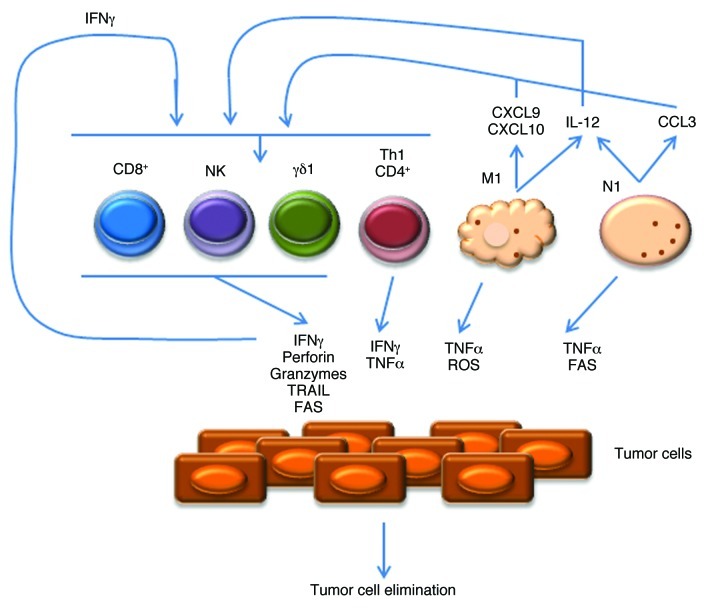
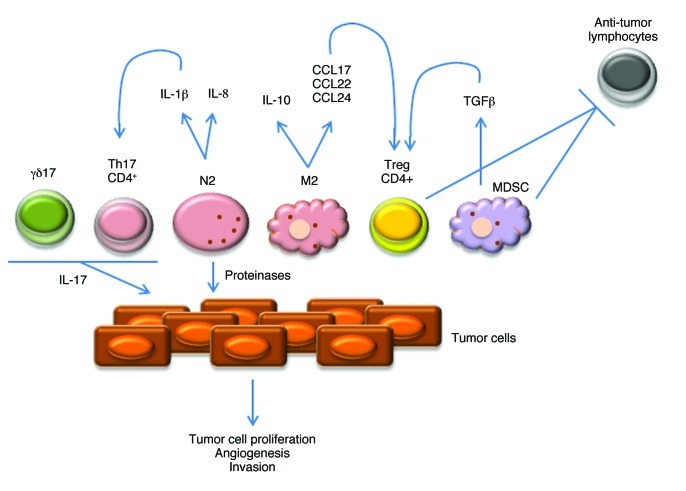
An important development in tumor immunology was the identification of highly diverse tumor-infiltrating leukocyte subsets that can play strikingly antagonistic functions. Namely, "anti-tumor" vs. "pro-tumor" roles have been suggested for Th1 and Th17 subsets of CD4(+) T cells, Type I or Type II NKT cells, M1 and M2 macrophages, or N1 and N2 neutrophils, respectively. While these findings are being validated in cancer patients, it is also clear that the balance between infiltrating CD8(+) cytotoxic and Foxp3(+) regulatory T cells has prognostic value. Here we review the pre-clinical and clinical data that have shaped our current understanding of tumor-infiltrating leukocytes.
肿瘤免疫学的一个重要进展是鉴定出高度多样化的肿瘤浸润白细胞亚群,这些亚群可以发挥明显拮抗的功能。具体而言,CD4(+) T 细胞的 Th1 和 Th17 亚群、I 型或 II 型 NKT 细胞、M1 和 M2 巨噬细胞或 N1 和 N2 中性粒细胞分别被认为具有“抗肿瘤”和“促肿瘤”作用。虽然这些发现正在癌症患者中得到验证,但浸润性 CD8(+)细胞毒性和 Foxp3(+)调节性 T 细胞之间的平衡具有预后价值,这一点也很清楚。在这里,我们回顾了形成我们目前对肿瘤浸润白细胞理解的临床前和临床数据。