Instituto de Biología Molecular y Celular de Plantas (CSIC-UPV), Ciudad Politécnica de la Innovación, Edf, 8E, C/Ingeniero Fausto Elio s/n, Valencia E-46011, Spain.
BMC Plant Biol. 2012 Aug 31;12:156. doi: 10.1186/1471-2229-12-156.
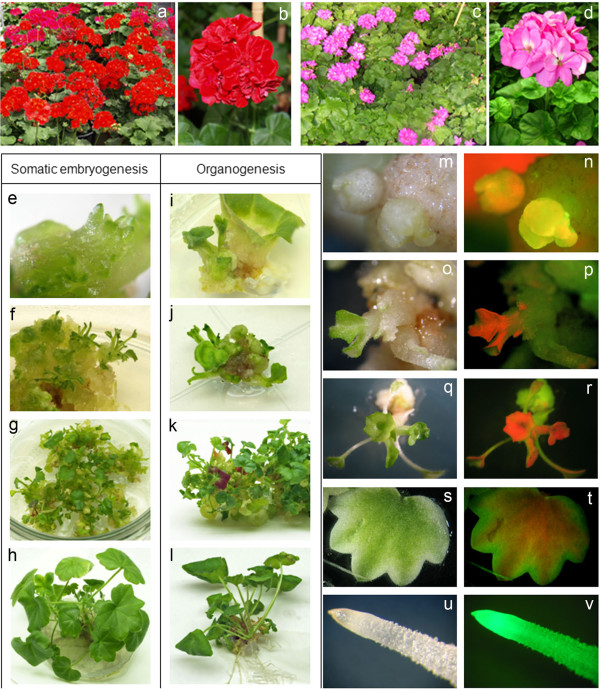
Pelargonium is one of the most popular garden plants in the world. Moreover, it has a considerable economic importance in the ornamental plant market. Conventional cross-breeding strategies have generated a range of cultivars with excellent traits. However, gene transfer via Agrobacterium tumefaciens could be a helpful tool to further improve Pelargonium by enabling the introduction of new genes/traits. We report a simple and reliable protocol for the genetic transformation of Pelargonium spp. and the production of engineered long-life and male sterile Pelargonium zonale plants, using the pSAG12::ipt and PsEND1::barnase chimaeric genes respectively.
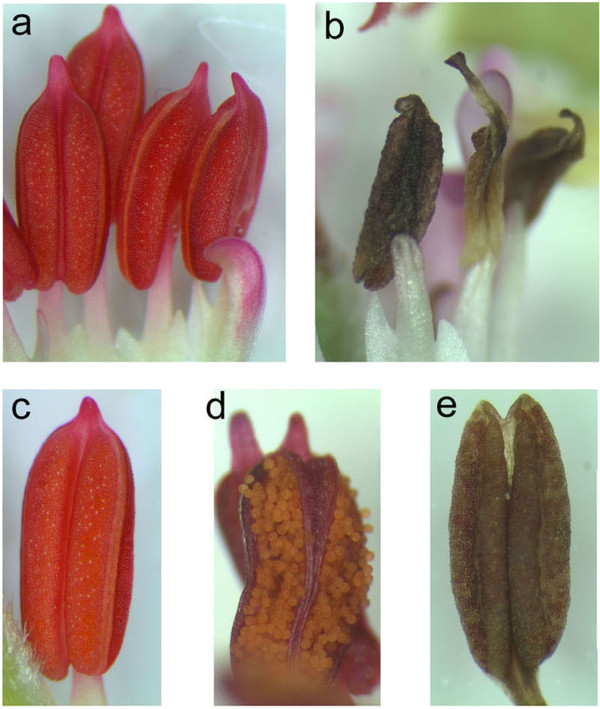
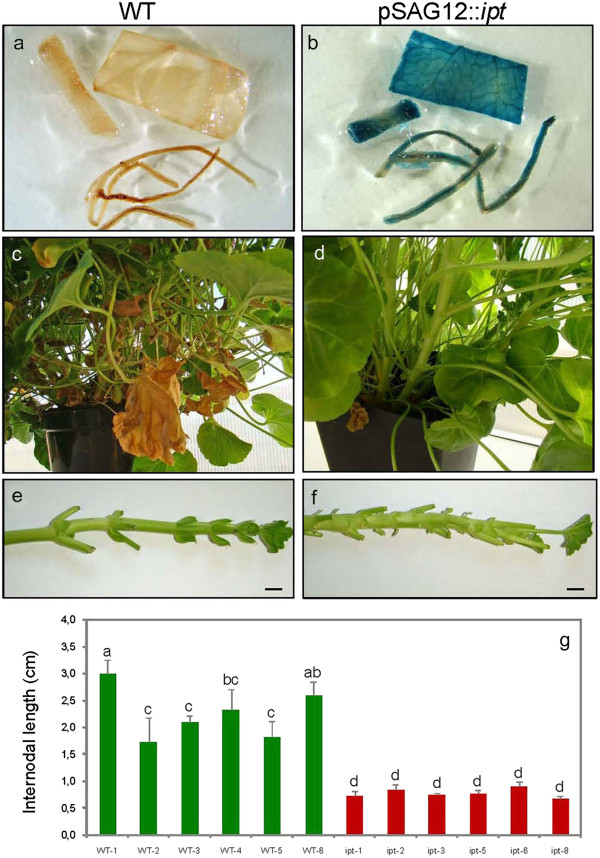
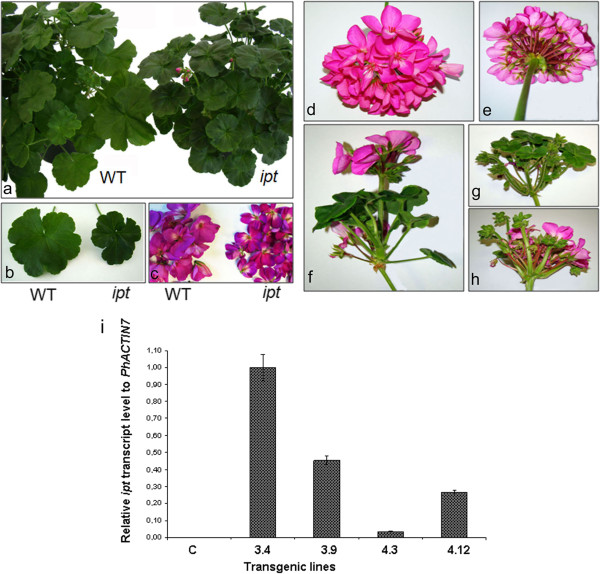
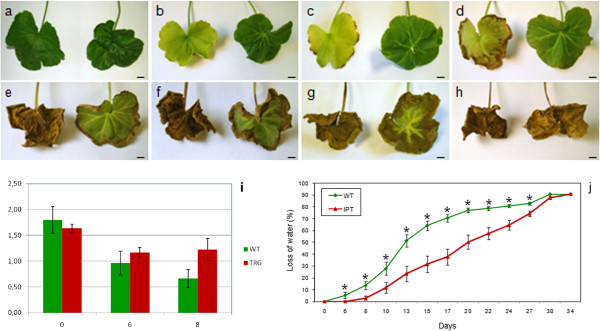
The pSAG12::ipt transgenic plants showed delayed leaf senescence, increased branching and reduced internodal length, as compared to control plants. Leaves and flowers of the pSAG12::ipt plants were reduced in size and displayed a more intense coloration. In the transgenic lines carrying the PsEND1::barnase construct no pollen grains were observed in the modified anther structures, which developed instead of normal anthers. The locules of sterile anthers collapsed 3-4 days prior to floral anthesis and, in most cases, the undeveloped anther tissues underwent necrosis.
The chimaeric construct pSAG12::ipt can be useful in Pelargonium spp. to delay the senescence process and to modify plant architecture. In addition, the use of engineered male sterile plants would be especially useful to produce environmentally friendly transgenic plants carrying new traits by preventing gene flow between the genetically modified ornamentals and related plant species. These characteristics could be of interest, from a commercial point of view, both for pelargonium producers and consumers.
天竺葵是世界上最受欢迎的花园植物之一。此外,它在观赏植物市场具有相当大的经济重要性。传统的杂交育种策略已经产生了一系列具有优良特性的品种。然而,通过根癌农杆菌进行基因转移可以成为进一步改善天竺葵的有用工具,使新的基因/特性得以引入。我们报道了一种简单可靠的天竺葵属植物遗传转化方法,并利用 pSAG12::ipt 和 PsEND1::barnase 嵌合基因分别生产了工程长寿命和雄性不育的天竺葵杂种植物。
与对照植物相比,pSAG12::ipt 转基因植物表现出叶片衰老延迟、分枝增加和节间长度缩短。pSAG12::ipt 植物的叶片和花朵变小,颜色更加鲜艳。在携带 PsEND1::barnase 构建体的转基因系中,改良的花药结构中没有观察到花粉粒,而是发育成正常花药。不育花药的小室在花前 3-4 天塌陷,并且在大多数情况下,未发育的花药组织发生坏死。
嵌合构建体 pSAG12::ipt 可用于天竺葵属植物,以延迟衰老过程并改变植物结构。此外,工程雄性不育植物的使用将特别有用,可通过防止转基因观赏植物与其相关植物物种之间的基因流,来生产携带新特性的环保型转基因植物。这些特性从商业角度来看,对天竺葵生产者和消费者都可能具有吸引力。