Grewe Felix, Zhu Andan, Mower Jeffrey P
Center for Plant Science Innovation, University of Nebraska, Lincoln, Nebraska.
Department of Agronomy and Horticulture, University of Nebraska, Lincoln, Nebraska.
Genome Biol Evol. 2016 Oct 30;8(10):3193-3201. doi: 10.1093/gbe/evw233.
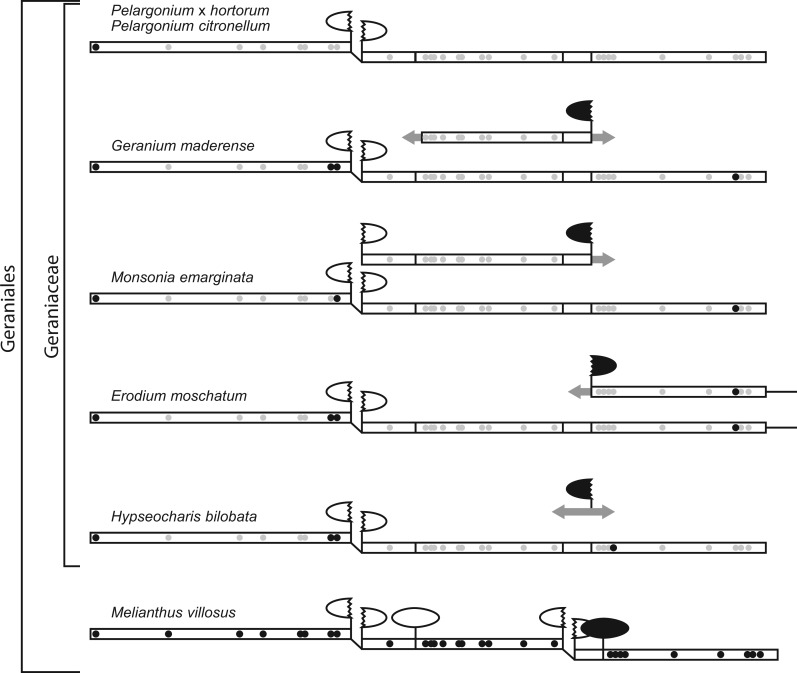
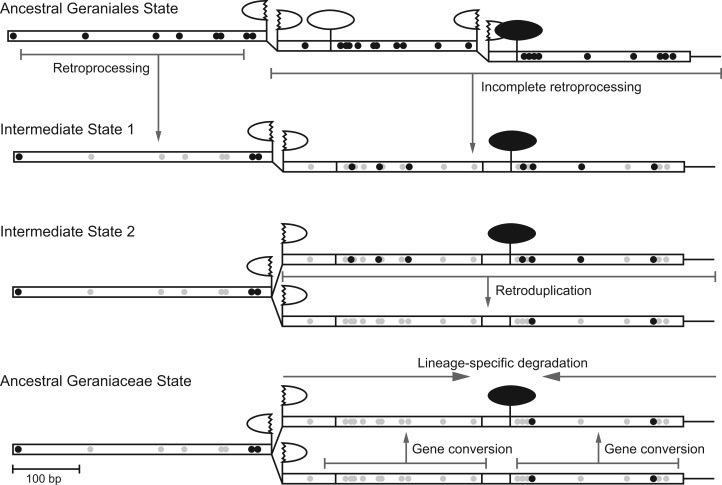
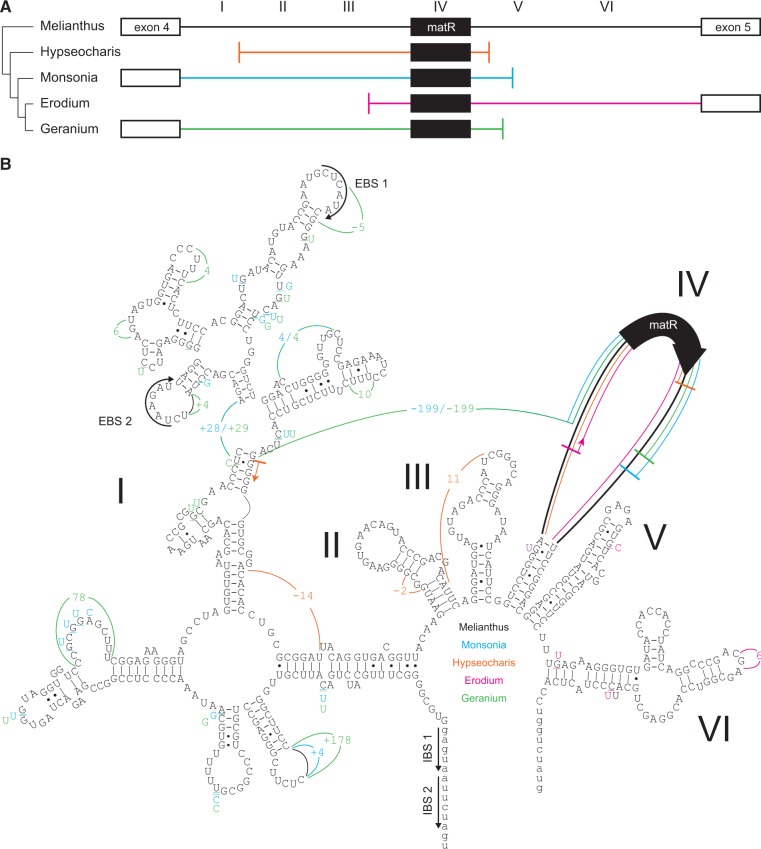
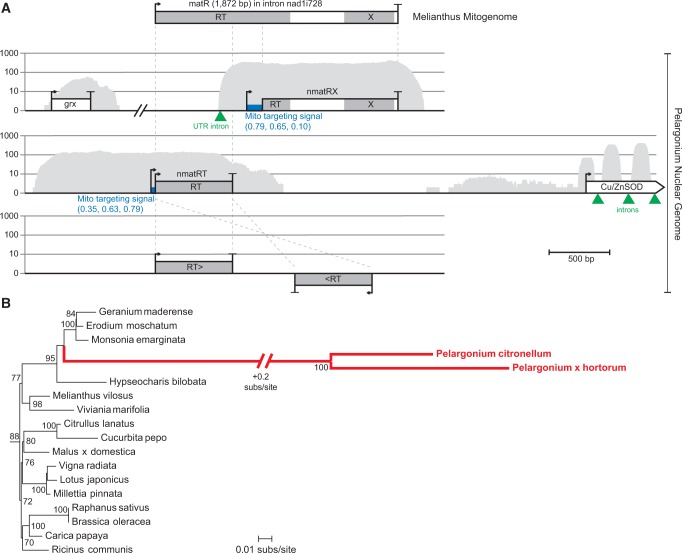
The mitochondrial nad1 gene of seed plants has a complex structure, including four introns in cis or trans configurations and a maturase gene (matR) hosted within the final intron. In the geranium family (Geraniaceae), however, sequencing of representative species revealed that three of the four introns, including one in a trans configuration and another that hosts matR, were lost from the nad1 gene in their common ancestor. Despite the loss of the host intron, matR has been retained as a freestanding gene in most genera of the family, indicating that this maturase has additional functions beyond the splicing of its host intron. In the common ancestor of Pelargonium, matR was transferred to the nuclear genome, where it was split into two unlinked genes that encode either its reverse transcriptase or maturase domain. Both nuclear genes are transcribed and contain predicted mitochondrial targeting signals, suggesting that they express functional proteins that are imported into mitochondria. The nuclear localization and split domain structure of matR in the Pelargonium nuclear genome offers a unique opportunity to assess the function of these two domains using transgenic approaches.
种子植物的线粒体nad1基因具有复杂的结构,包括处于顺式或反式构型的四个内含子以及位于最后一个内含子中的一个成熟酶基因(matR)。然而,在天竺葵科中,对代表性物种的测序表明,四个内含子中的三个,包括一个处于反式构型的内含子和另一个包含matR的内含子,在其共同祖先中从nad1基因中丢失了。尽管宿主内含子丢失了,但matR在该科的大多数属中仍作为一个独立的基因保留下来,这表明这种成熟酶除了其宿主内含子的剪接功能外还有其他功能。在天竺葵属的共同祖先中,matR转移到了核基因组中,在那里它被分成两个不相连的基因,分别编码其逆转录酶或成熟酶结构域。这两个核基因都被转录并含有预测的线粒体靶向信号,这表明它们表达的功能性蛋白质被导入线粒体。天竺葵属核基因组中matR的核定位和结构域分裂为使用转基因方法评估这两个结构域的功能提供了独特的机会。