TH Gosnell School of Life Sciences, Rochester Institute of Technology, Rochester, NY, USA.
Genome Biol Evol. 2012;4(9):954-65. doi: 10.1093/gbe/evs073. Epub 2012 Aug 30.
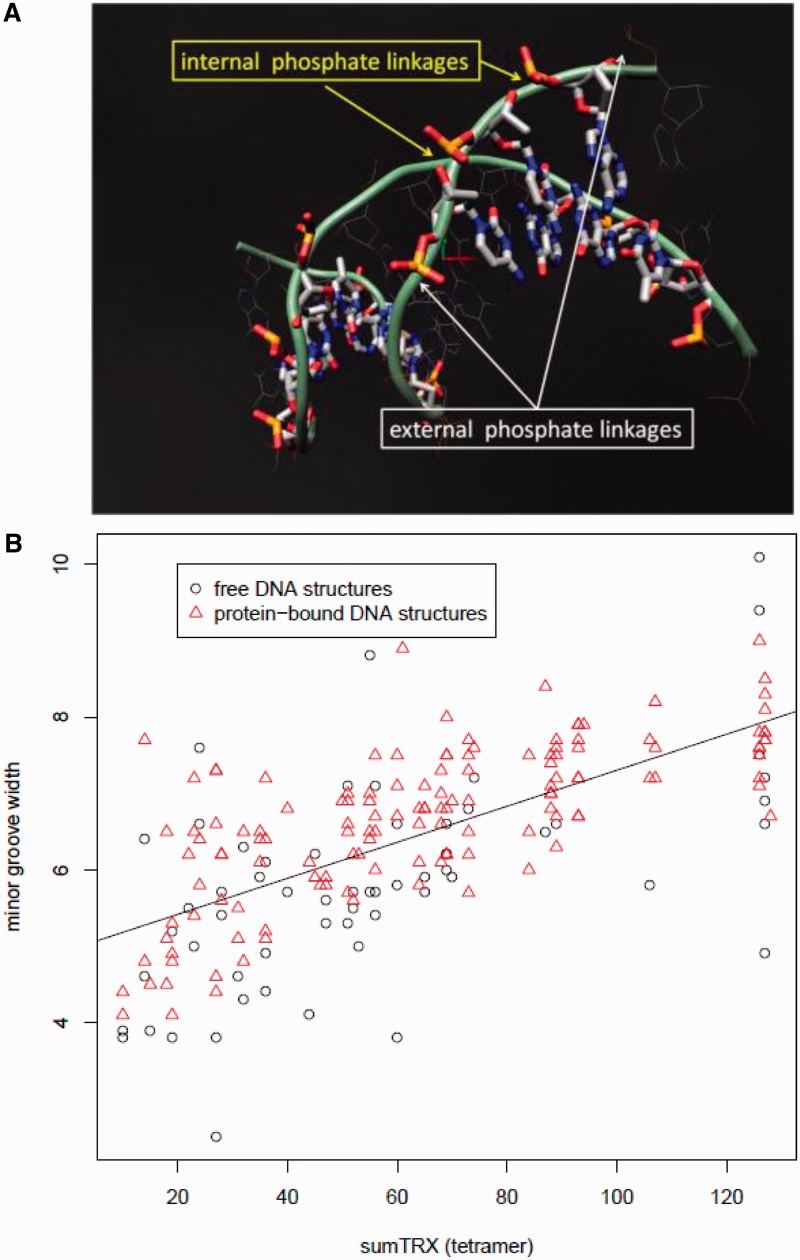
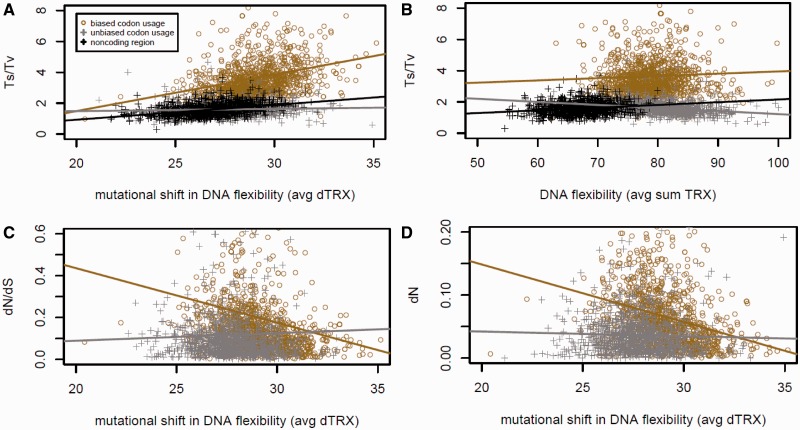
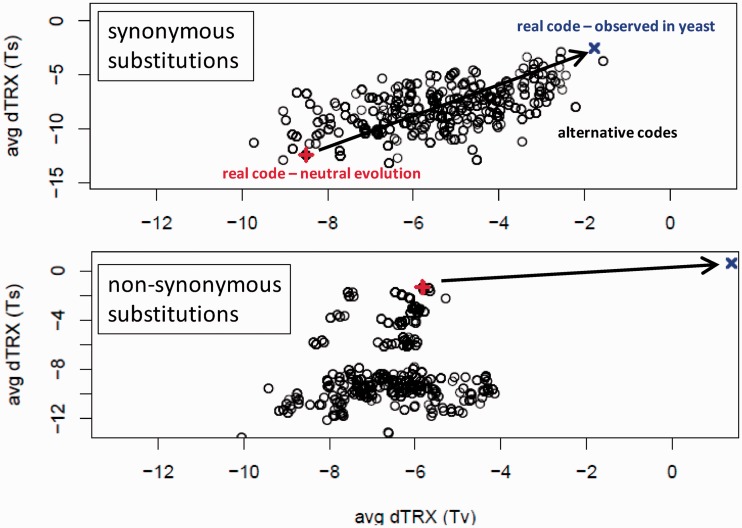
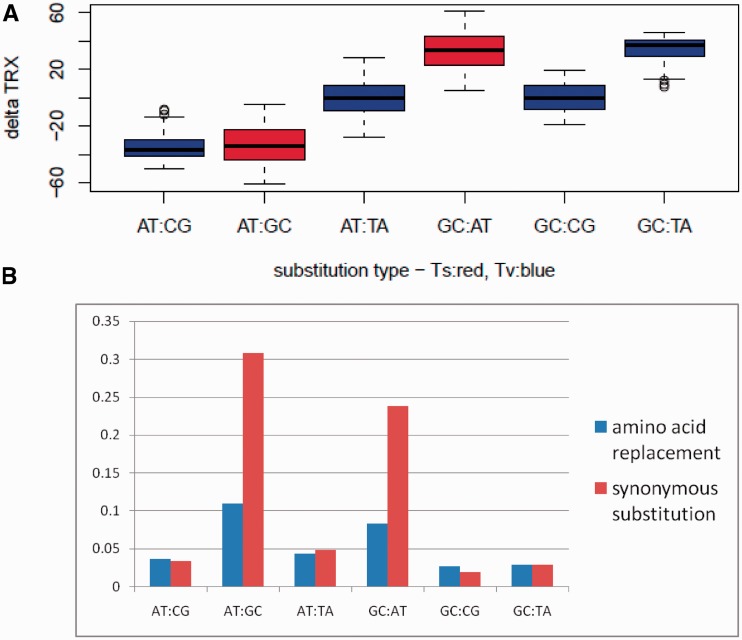
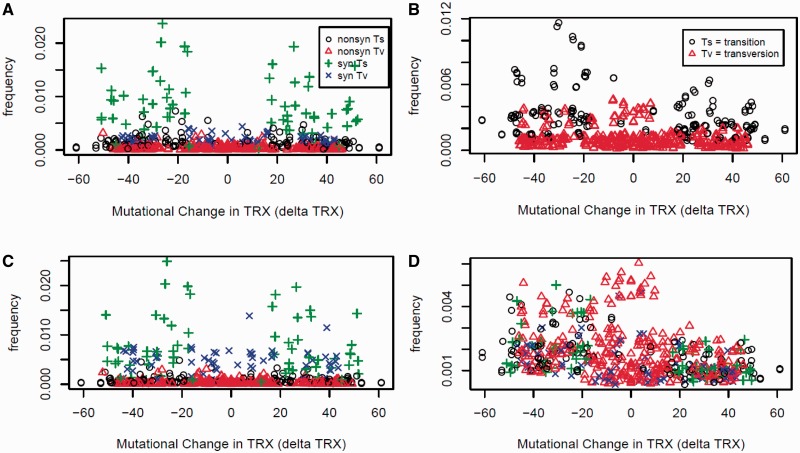
Despite our long familiarity with how the genetic code specifies the amino acid sequence, we still know little about why it is organized in the way that it is. Contrary to the view that the organization of the genetic code is a "frozen accident" of evolution, recent studies have demonstrated that it is highly nonrandom, with implications for both codon assignment and usage. We hypothesize that this inherent nonrandomness may facilitate the coexistence of both sequence and structural information in DNA. Here, we take advantage of a simple metric of intrinsic DNA flexibility to analyze mutational effects on the four phosphate linkages present in any given codon. Application of a simple evolutionary neutral model of substitution to random sequences, translated with alternative genetic codes, reveals that the standard code is highly optimized to favor synonymous substitutions that maximize DNA polymer flexibility, potentially counteracting neutral evolutionary drift toward stiffer DNA caused by spontaneous deamination. Comparison to existing mutational patterns in yeast also demonstrates evidence of strong selective constraint on DNA flexibility, especially at so-called "silent" sites. We also report a fundamental relationship between DNA flexibility, codon usage bias, and several important evolutionary descriptors of comparative genomics (e.g., base composition, transition/transversion ratio, and nonsynonymous vs. synonymous substitution rate). Recent advances in structural genomics have emphasized the role of the DNA polymer's flexibility in both gene function and whole genome folding, thereby implicating possible reasons for codons to facilitate the multiplexing of both genetic and structural information within the same molecular context.
尽管我们对遗传密码如何指定氨基酸序列已经非常熟悉,但我们仍然不太了解为什么它的组织方式是这样的。与遗传密码的组织是进化的“冻结事故”的观点相反,最近的研究表明,它高度非随机,这对密码子的分配和使用都有影响。我们假设这种固有的非随机性可能有助于在 DNA 中同时共存序列和结构信息。在这里,我们利用内在 DNA 灵活性的简单度量标准来分析突变对任何给定密码子中存在的四个磷酸键的影响。将替代遗传密码翻译成随机序列的简单进化中性替代模型的应用表明,标准密码子高度优化,有利于最大限度地提高 DNA 聚合灵活性的同义替换,潜在地抵消自发脱氨引起的 DNA 变僵硬的中性进化漂移。与酵母中现有的突变模式进行比较,也证明了 DNA 灵活性受到强烈的选择性约束,尤其是在所谓的“沉默”位点。我们还报告了 DNA 灵活性、密码子使用偏好以及比较基因组学的几个重要进化描述符(例如碱基组成、转换/颠换比以及非同义与同义替换率)之间的基本关系。最近结构基因组学的进展强调了 DNA 聚合物的灵活性在基因功能和整个基因组折叠中的作用,从而暗示了密码子可能有助于在同一分子环境中同时多路复用遗传和结构信息的原因。