• 文献检索
  • 文档翻译
  • 深度研究
  • 学术资讯
  • Suppr Zotero 插件Zotero 插件
  • 邀请有礼
  • 套餐&价格
  • 历史记录
应用&插件
Suppr Zotero 插件Zotero 插件浏览器插件Mac 客户端Windows 客户端微信小程序
定价
高级版会员购买积分包购买API积分包
服务
文献检索文档翻译深度研究API 文档MCP 服务
关于我们
关于 Suppr公司介绍联系我们用户协议隐私条款
关注我们

Suppr 超能文献

核心技术专利:CN118964589B侵权必究
粤ICP备2023148730 号-1Suppr @ 2026

文献检索

告别复杂PubMed语法,用中文像聊天一样搜索,搜遍4000万医学文献。AI智能推荐,让科研检索更轻松。

立即免费搜索

文件翻译

保留排版,准确专业,支持PDF/Word/PPT等文件格式,支持 12+语言互译。

免费翻译文档

深度研究

AI帮你快速写综述,25分钟生成高质量综述,智能提取关键信息,辅助科研写作。

立即免费体验

仅从基因组数据估算基因表达、密码子特异性翻译效率、突变偏好和选择系数。

Estimating Gene Expression and Codon-Specific Translational Efficiencies, Mutation Biases, and Selection Coefficients from Genomic Data Alone.

作者信息

Gilchrist Michael A, Chen Wei-Chen, Shah Premal, Landerer Cedric L, Zaretzki Russell

机构信息

Department of Ecology & Evolutionary Biology, University of Tennessee, Knoxville National Institute for Mathematical and Biological Synthesis, Knoxville, Tennessee

Department of Ecology & Evolutionary Biology, University of Tennessee, Knoxville Center for Biologics Evaluation and Research, Food and Drug Administration, Silver Spring, Maryland.

出版信息

Genome Biol Evol. 2015 May 14;7(6):1559-79. doi: 10.1093/gbe/evv087.

DOI:10.1093/gbe/evv087
PMID:25977456
原文链接:https://pmc.ncbi.nlm.nih.gov/articles/PMC4494061/
Abstract

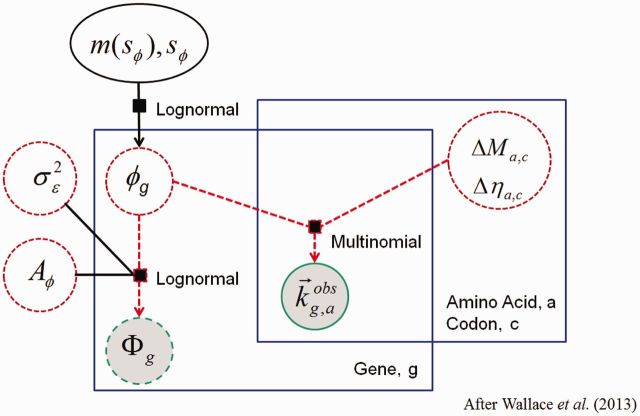
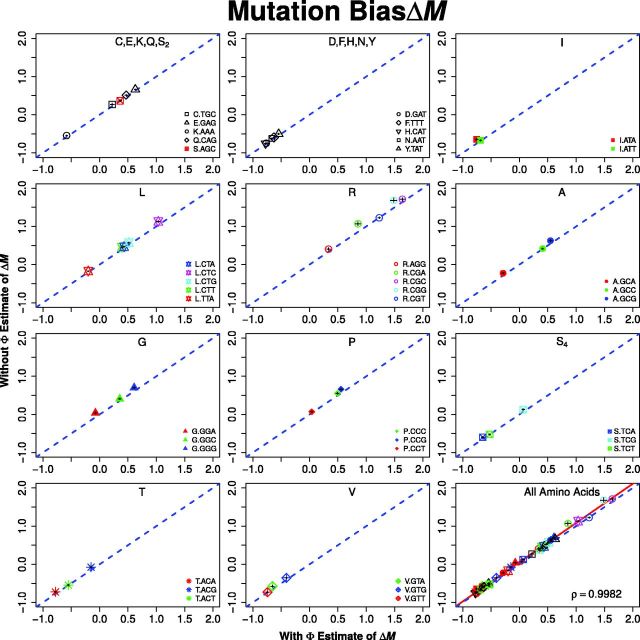
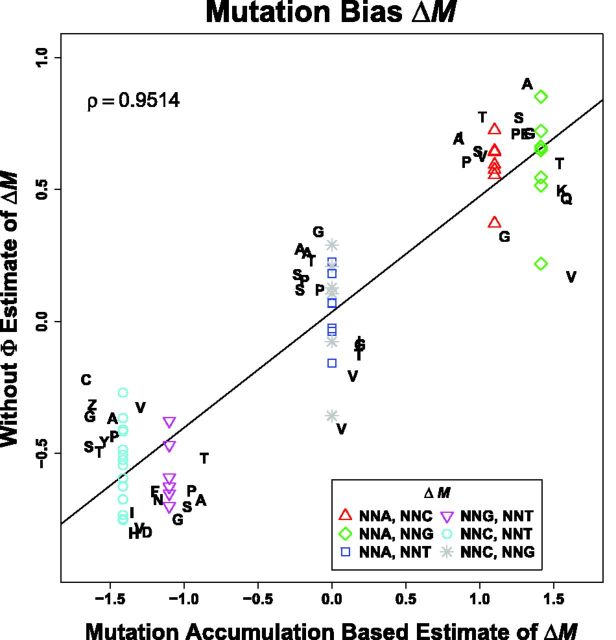
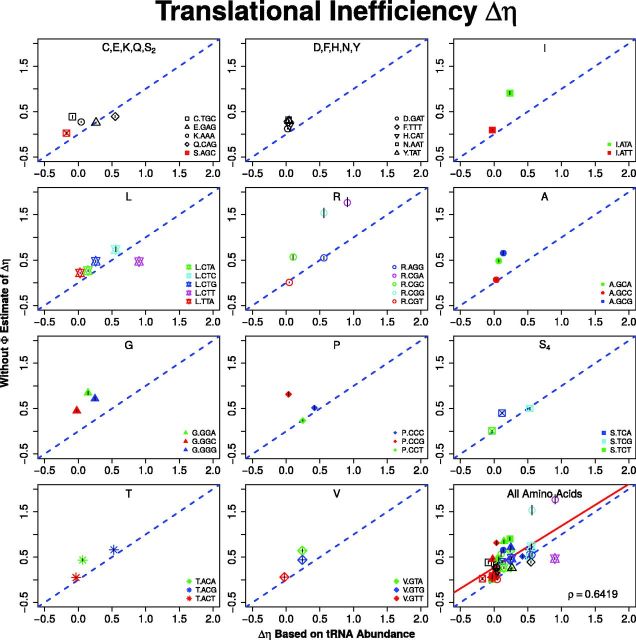
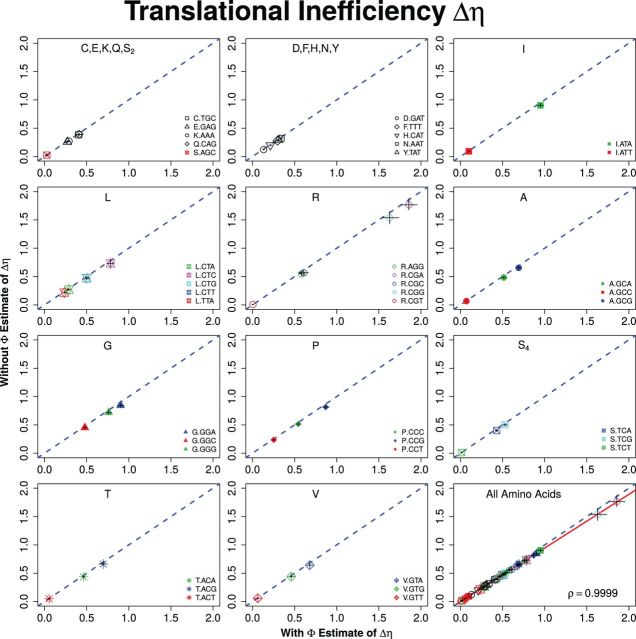
Extracting biologically meaningful information from the continuing flood of genomic data is a major challenge in the life sciences. Codon usage bias (CUB) is a general feature of most genomes and is thought to reflect the effects of both natural selection for efficient translation and mutation bias. Here we present a mechanistically interpretable, Bayesian model (ribosome overhead costs Stochastic Evolutionary Model of Protein Production Rate [ROC SEMPPR]) to extract meaningful information from patterns of CUB within a genome. ROC SEMPPR is grounded in population genetics and allows us to separate the contributions of mutational biases and natural selection against translational inefficiency on a gene-by-gene and codon-by-codon basis. Until now, the primary disadvantage of similar approaches was the need for genome scale measurements of gene expression. Here, we demonstrate that it is possible to both extract accurate estimates of codon-specific mutation biases and translational efficiencies while simultaneously generating accurate estimates of gene expression, rather than requiring such information. We demonstrate the utility of ROC SEMPPR using the Saccharomyces cerevisiae S288c genome. When we compare our model fits with previous approaches we observe an exceptionally high agreement between estimates of both codon-specific parameters and gene expression levels ([Formula: see text] in all cases). We also observe strong agreement between our parameter estimates and those derived from alternative data sets. For example, our estimates of mutation bias and those from mutational accumulation experiments are highly correlated ([Formula: see text]). Our estimates of codon-specific translational inefficiencies and tRNA copy number-based estimates of ribosome pausing time ([Formula: see text]), and mRNA and ribosome profiling footprint-based estimates of gene expression ([Formula: see text]) are also highly correlated, thus supporting the hypothesis that selection against translational inefficiency is an important force driving the evolution of CUB. Surprisingly, we find that for particular amino acids, codon usage in highly expressed genes can still be largely driven by mutation bias and that failing to take mutation bias into account can lead to the misidentification of an amino acid's "optimal" codon. In conclusion, our method demonstrates that an enormous amount of biologically important information is encoded within genome scale patterns of codon usage, accessing this information does not require gene expression measurements, but instead carefully formulated biologically interpretable models.

摘要

从源源不断的基因组数据中提取具有生物学意义的信息是生命科学领域的一项重大挑战。密码子使用偏好(CUB)是大多数基因组的一个普遍特征,被认为反映了高效翻译的自然选择和突变偏好的影响。在此,我们提出了一个具有机械可解释性的贝叶斯模型(核糖体额外成本蛋白质生产率随机进化模型[ROC SEMPPR]),以从基因组内的CUB模式中提取有意义的信息。ROC SEMPPR基于群体遗传学,使我们能够在逐个基因和逐个密码子的基础上,区分突变偏好和针对翻译低效的自然选择的贡献。到目前为止,类似方法的主要缺点是需要对基因表达进行全基因组规模的测量。在此,我们证明,有可能在生成基因表达的准确估计值的同时,提取密码子特异性突变偏好和翻译效率的准确估计值,而不是需要此类信息。我们使用酿酒酵母S288c基因组证明了ROC SEMPPR的实用性。当我们将我们的模型拟合与先前的方法进行比较时,我们发现在所有情况下,密码子特异性参数估计值和基因表达水平之间都有非常高的一致性([公式:见正文])。我们还观察到我们的参数估计值与从替代数据集得出的估计值之间有很强的一致性。例如,我们的突变偏好估计值与突变积累实验得出的估计值高度相关([公式:见正文])。我们的密码子特异性翻译低效估计值与基于tRNA拷贝数的核糖体暂停时间估计值([公式:见正文]),以及基于mRNA和核糖体谱足迹的基因表达估计值([公式:见正文])也高度相关,从而支持了针对翻译低效的选择是驱动CUB进化的重要力量这一假设。令人惊讶的是,我们发现对于特定氨基酸,高表达基因中的密码子使用在很大程度上仍可能由突变偏好驱动,并且不考虑突变偏好可能导致对氨基酸“最优”密码子的错误识别。总之,我们的方法表明,基因组规模的密码子使用模式中编码了大量生物学上重要的信息,获取这些信息不需要基因表达测量,而是需要精心构建的具有生物学可解释性的模型。
https://cdn.ncbi.nlm.nih.gov/pmc/blobs/cc04/4494061/e2210dd43517/evv087f9p.jpg
https://cdn.ncbi.nlm.nih.gov/pmc/blobs/cc04/4494061/5275d85bcf71/evv087f1p.jpg
https://cdn.ncbi.nlm.nih.gov/pmc/blobs/cc04/4494061/30c5b5f82926/evv087f2p.jpg
https://cdn.ncbi.nlm.nih.gov/pmc/blobs/cc04/4494061/54b3c7dc4b75/evv087f3p.jpg
https://cdn.ncbi.nlm.nih.gov/pmc/blobs/cc04/4494061/cdb2bab99499/evv087f4p.jpg
https://cdn.ncbi.nlm.nih.gov/pmc/blobs/cc04/4494061/1b010b8d49a6/evv087f5p.jpg
https://cdn.ncbi.nlm.nih.gov/pmc/blobs/cc04/4494061/5e11148f7b35/evv087f6p.jpg
https://cdn.ncbi.nlm.nih.gov/pmc/blobs/cc04/4494061/395bc455d714/evv087f7p.jpg
https://cdn.ncbi.nlm.nih.gov/pmc/blobs/cc04/4494061/38919a83bf23/evv087f8p.jpg
https://cdn.ncbi.nlm.nih.gov/pmc/blobs/cc04/4494061/e2210dd43517/evv087f9p.jpg
https://cdn.ncbi.nlm.nih.gov/pmc/blobs/cc04/4494061/5275d85bcf71/evv087f1p.jpg
https://cdn.ncbi.nlm.nih.gov/pmc/blobs/cc04/4494061/30c5b5f82926/evv087f2p.jpg
https://cdn.ncbi.nlm.nih.gov/pmc/blobs/cc04/4494061/54b3c7dc4b75/evv087f3p.jpg
https://cdn.ncbi.nlm.nih.gov/pmc/blobs/cc04/4494061/cdb2bab99499/evv087f4p.jpg
https://cdn.ncbi.nlm.nih.gov/pmc/blobs/cc04/4494061/1b010b8d49a6/evv087f5p.jpg
https://cdn.ncbi.nlm.nih.gov/pmc/blobs/cc04/4494061/5e11148f7b35/evv087f6p.jpg
https://cdn.ncbi.nlm.nih.gov/pmc/blobs/cc04/4494061/395bc455d714/evv087f7p.jpg
https://cdn.ncbi.nlm.nih.gov/pmc/blobs/cc04/4494061/38919a83bf23/evv087f8p.jpg
https://cdn.ncbi.nlm.nih.gov/pmc/blobs/cc04/4494061/e2210dd43517/evv087f9p.jpg

相似文献

1
Estimating Gene Expression and Codon-Specific Translational Efficiencies, Mutation Biases, and Selection Coefficients from Genomic Data Alone.仅从基因组数据估算基因表达、密码子特异性翻译效率、突变偏好和选择系数。
Genome Biol Evol. 2015 May 14;7(6):1559-79. doi: 10.1093/gbe/evv087.
2
Quantifying codon usage in signal peptides: Gene expression and amino acid usage explain apparent selection for inefficient codons.量化信号肽中的密码子使用情况:基因表达和氨基酸使用情况解释了明显选择低效密码子的原因。
Biochim Biophys Acta Biomembr. 2018 Dec;1860(12):2479-2485. doi: 10.1016/j.bbamem.2018.09.010. Epub 2018 Sep 19.
3
Translational Selection for Speed Is Not Sufficient to Explain Variation in Bacterial Codon Usage Bias.翻译:翻译为简体中文后输出。
Genome Biol Evol. 2018 Feb 1;10(2):562-576. doi: 10.1093/gbe/evy018.
4
Mutation-selection models of codon substitution and their use to estimate selective strengths on codon usage.密码子替换的突变选择模型及其在估计密码子使用选择强度方面的应用。
Mol Biol Evol. 2008 Mar;25(3):568-79. doi: 10.1093/molbev/msm284. Epub 2008 Jan 3.
5
Unlocking a signal of introgression from codons in Lachancea kluyveri using a mutation-selection model.利用突变-选择模型揭示克鲁维酵母密码子中的基因渗入信号。
BMC Evol Biol. 2020 Aug 26;20(1):109. doi: 10.1186/s12862-020-01649-w.
6
Explaining complex codon usage patterns with selection for translational efficiency, mutation bias, and genetic drift.用翻译效率选择、突变偏向和遗传漂变来解释复杂的密码子使用模式。
Proc Natl Acad Sci U S A. 2011 Jun 21;108(25):10231-6. doi: 10.1073/pnas.1016719108. Epub 2011 Jun 6.
7
A genetic optimization approach for isolating translational efficiency bias.一种用于分离翻译效率偏差的遗传优化方法。
IEEE/ACM Trans Comput Biol Bioinform. 2011 Mar-Apr;8(2):342-52. doi: 10.1109/TCBB.2009.24.
8
Accounting for Programmed Ribosomal Frameshifting in the Computation of Codon Usage Bias Indices.在密码子使用偏好指数计算中考虑程序性核糖体移码
G3 (Bethesda). 2018 Oct 3;8(10):3173-3183. doi: 10.1534/g3.118.200185.
9
Intragenomic variation in non-adaptive nucleotide biases causes underestimation of selection on synonymous codon usage.基因组内非适应性核苷酸偏倚的变异导致对同义密码子使用选择的低估。
PLoS Genet. 2022 Jun 17;18(6):e1010256. doi: 10.1371/journal.pgen.1010256. eCollection 2022 Jun.
10
Combining models of protein translation and population genetics to predict protein production rates from codon usage patterns.结合蛋白质翻译模型和群体遗传学,从密码子使用模式预测蛋白质产生速率。
Mol Biol Evol. 2007 Nov;24(11):2362-72. doi: 10.1093/molbev/msm169. Epub 2007 Aug 16.

引用本文的文献

1
Macroevolutionary changes in natural selection on codon usage reflect evolution of the tRNA pool across a budding yeast subphylum.密码子使用上自然选择的宏观进化变化反映了整个芽殖酵母亚门tRNA库的进化。
Proc Natl Acad Sci U S A. 2025 Jul 8;122(27):e2419889122. doi: 10.1073/pnas.2419889122. Epub 2025 Jul 1.
2
Genomic factors shaping codon usage across the Saccharomycotina subphylum.塑造子囊菌亚门下密码子使用的基因组因素。
G3 (Bethesda). 2024 Nov 6;14(11). doi: 10.1093/g3journal/jkae207.
3
Profiling expression strategies for a type III polyketide synthase in a lysate-based, cell-free system.

本文引用的文献

1
Integrative analysis of 111 reference human epigenomes.111 个人类参考基因组的综合分析。
Nature. 2015 Feb 19;518(7539):317-30. doi: 10.1038/nature14248.
2
The relationship between dN/dS and scaled selection coefficients.非同义替换率与标度化选择系数之间的关系。
Mol Biol Evol. 2015 Apr;32(4):1097-108. doi: 10.1093/molbev/msv003. Epub 2015 Jan 8.
3
Modeling evolution using the probability of fixation: history and implications.利用固定概率进行演化建模:历史与影响。
基于提取物的无细胞系统中 III 型聚酮合酶表达策略的分析。
Sci Rep. 2024 Jun 6;14(1):12983. doi: 10.1038/s41598-024-61376-w.
4
The Patterns of Codon Usage between Chordates and Arthropods are Different but Co-evolving with Mutational Biases.脊索动物和节肢动物的密码子使用模式不同,但与突变偏性共同进化。
Mol Biol Evol. 2024 May 3;41(5). doi: 10.1093/molbev/msae080.
5
Re-examining Correlations Between Synonymous Codon Usage and Protein Bond Angles in Escherichia coli.重新考察大肠杆菌中同义密码子使用与蛋白质键角之间的相关性。
Genome Biol Evol. 2024 May 2;16(5). doi: 10.1093/gbe/evae080.
6
Fitness Effects of Phenotypic Mutations at Proteome-Scale Reveal Optimality of Translation Machinery.蛋白质组规模上的表型突变的适应性效应揭示了翻译机制的最优性。
Mol Biol Evol. 2024 Mar 1;41(3). doi: 10.1093/molbev/msae048.
7
Growth-dependent Gene Expression Variation Influences the Strength of Codon Usage Biases.生长依赖性基因表达变化影响密码子使用偏好的强度。
Mol Biol Evol. 2023 Sep 1;40(9). doi: 10.1093/molbev/msad189.
8
Growth-dependent gene expression variation influences the strength of codon usage biases.生长依赖性基因表达变异影响密码子使用偏好的强度。
bioRxiv. 2023 Jul 13:2023.03.14.532645. doi: 10.1101/2023.03.14.532645.
9
CDMAP/CDVIS: context-dependent mutation analysis package and visualization software.CDMAP/CDVIS:上下文相关突变分析包和可视化软件。
G3 (Bethesda). 2023 Apr 11;13(4). doi: 10.1093/g3journal/jkac299.
10
Intragenomic variation in non-adaptive nucleotide biases causes underestimation of selection on synonymous codon usage.基因组内非适应性核苷酸偏倚的变异导致对同义密码子使用选择的低估。
PLoS Genet. 2022 Jun 17;18(6):e1010256. doi: 10.1371/journal.pgen.1010256. eCollection 2022 Jun.
Q Rev Biol. 2014 Sep;89(3):225-52. doi: 10.1086/677571.
4
Codon-by-codon modulation of translational speed and accuracy via mRNA folding.通过mRNA折叠对翻译速度和准确性进行逐个密码子的调控。
PLoS Biol. 2014 Jul 22;12(7):e1001910. doi: 10.1371/journal.pbio.1001910. eCollection 2014 Jul.
5
Precise estimates of mutation rate and spectrum in yeast.酵母中突变率和突变谱的精确估计。
Proc Natl Acad Sci U S A. 2014 Jun 3;111(22):E2310-8. doi: 10.1073/pnas.1323011111. Epub 2014 May 20.
6
Quantifying absolute protein synthesis rates reveals principles underlying allocation of cellular resources.定量绝对蛋白质合成率揭示了细胞资源分配的基本原理。
Cell. 2014 Apr 24;157(3):624-35. doi: 10.1016/j.cell.2014.02.033.
7
The reference genome sequence of Saccharomyces cerevisiae: then and now.酿酒酵母的参考基因组序列:过去与现在。
G3 (Bethesda). 2014 Mar 20;4(3):389-98. doi: 10.1534/g3.113.008995.
8
Ribosome profiling reveals post-transcriptional buffering of divergent gene expression in yeast.核糖体图谱分析揭示了酵母中转录后基因表达差异的缓冲作用。
Genome Res. 2014 Mar;24(3):422-30. doi: 10.1101/gr.164996.113. Epub 2013 Dec 6.
9
Evolution at two levels of gene expression in yeast.酵母中基因表达的两个层次上的进化。
Genome Res. 2014 Mar;24(3):411-21. doi: 10.1101/gr.165522.113. Epub 2013 Dec 6.
10
Rate-limiting steps in yeast protein translation.酵母蛋白翻译中的限速步骤。
Cell. 2013 Jun 20;153(7):1589-601. doi: 10.1016/j.cell.2013.05.049.