Dipartimento di Biologia e Biotecnologie L Spallanzani, University of Pavia, Pavia, Italy.
PLoS One. 2012;7(8):e43417. doi: 10.1371/journal.pone.0043417. Epub 2012 Aug 22.
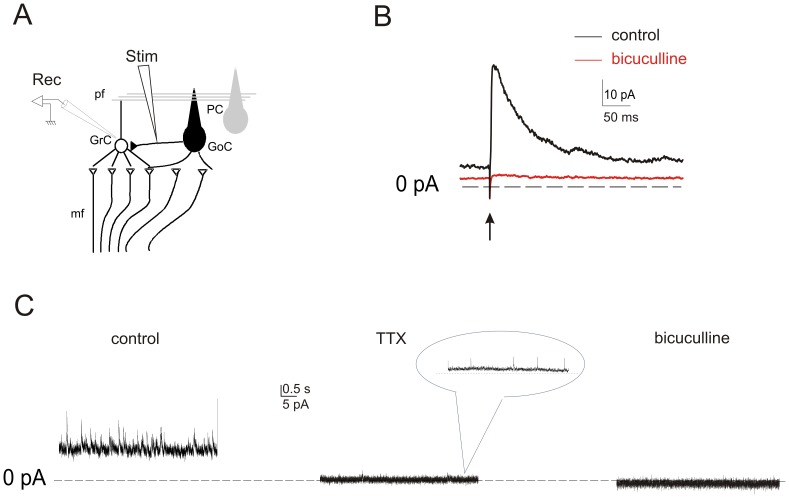
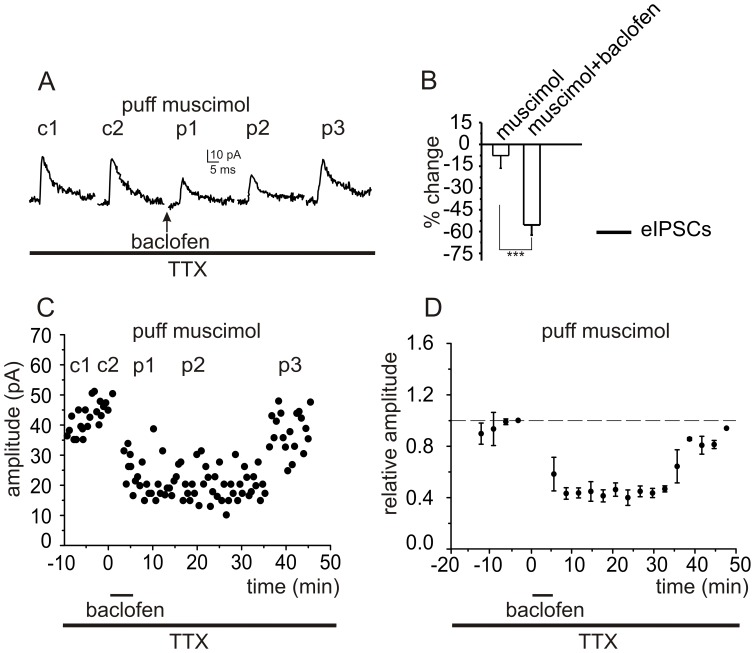
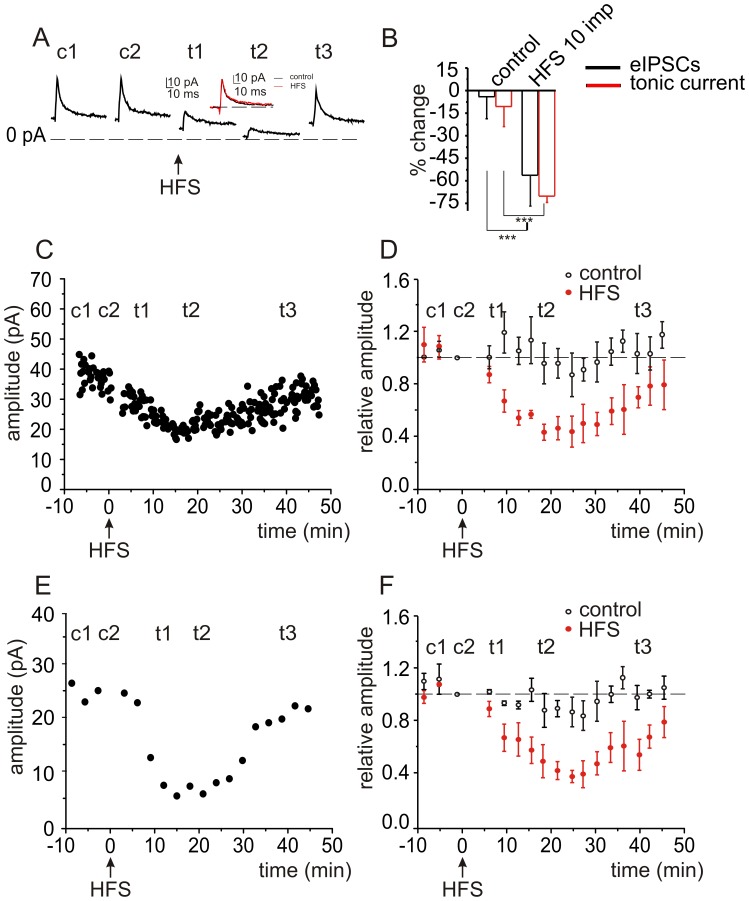
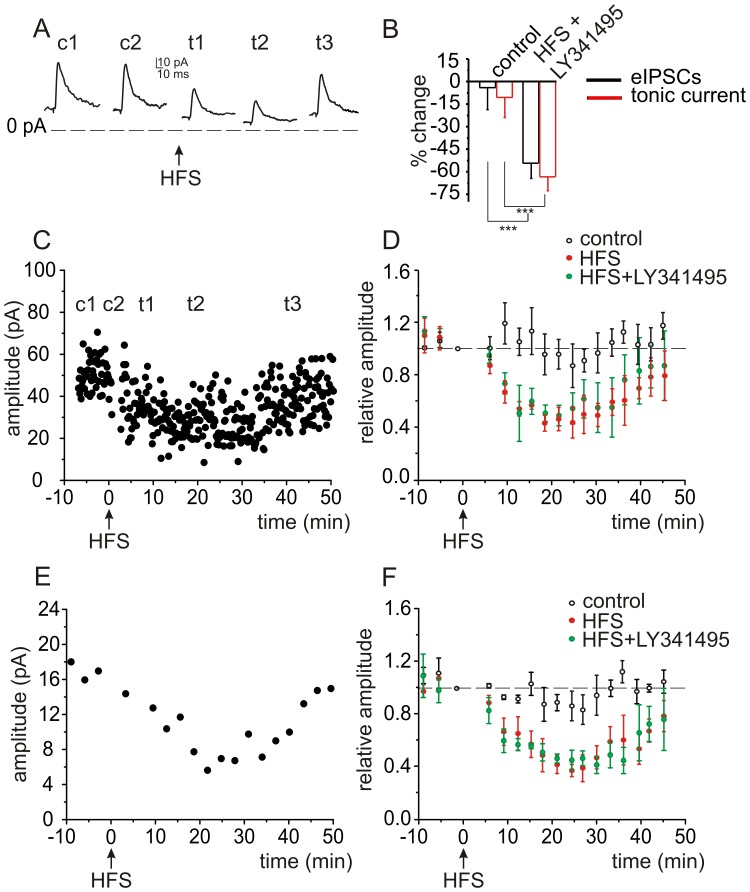
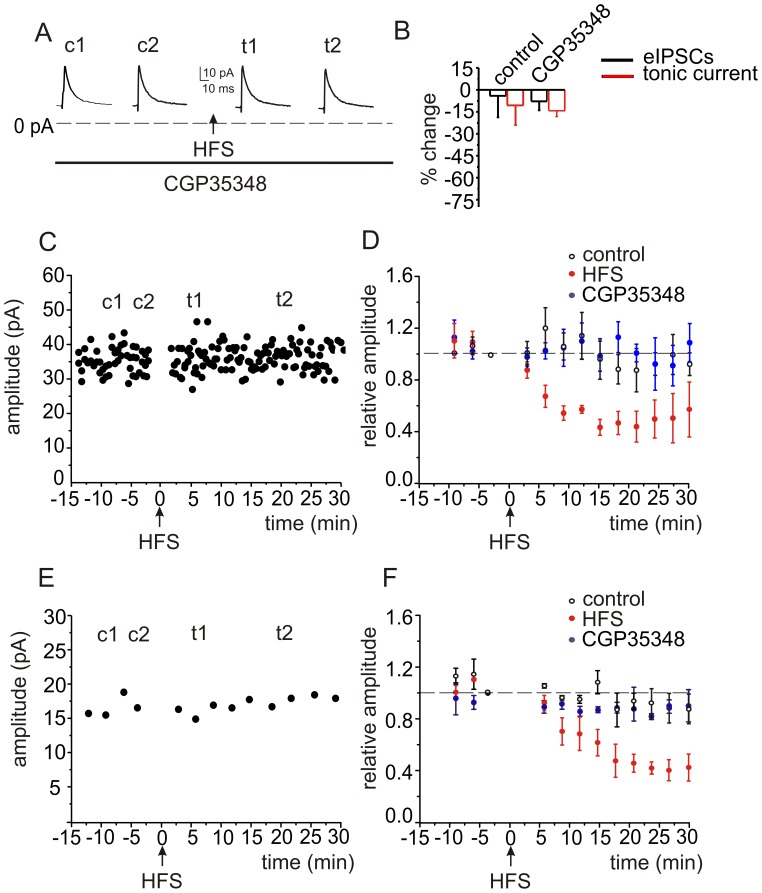
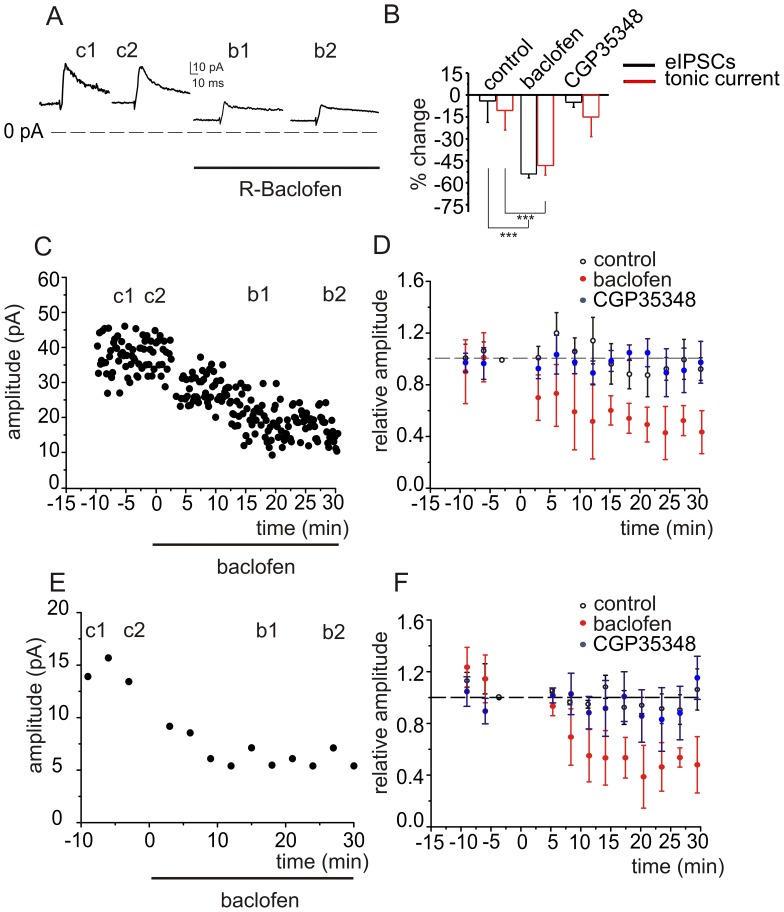
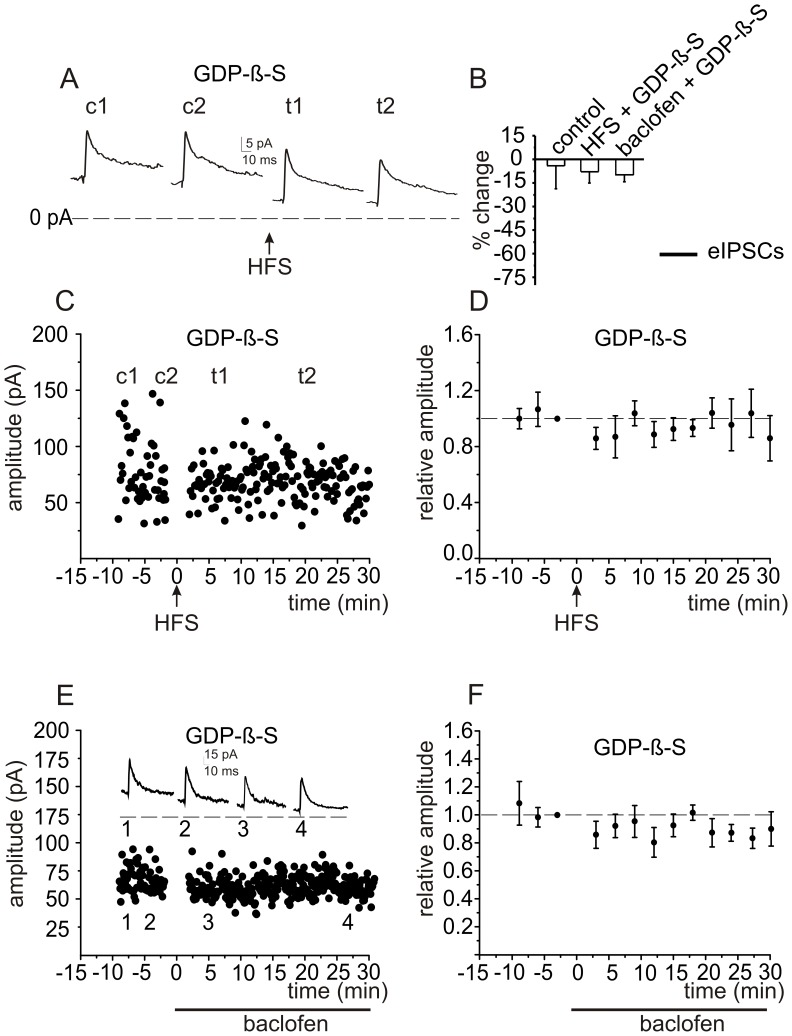
In the cerebellar glomerulus, GABAergic synapses formed by Golgi cells regulate excitatory transmission from mossy fibers to granule cells through feed-forward and feedback mechanisms. In acute cerebellar slices, we found that stimulating Golgi cell axons with a train of 10 impulses at 100 Hz transiently inhibited both the phasic and the tonic components of inhibitory responses recorded in granule cells. This effect was blocked by the GABA(B) receptor blocker CGP35348, and could be mimicked by bath-application of baclofen (30 µM). This depression of IPSCs was prevented when granule cells were dialyzed with GDPβS. Furthermore, when synaptic transmission was blocked, GABA(A) currents induced in granule cells by localized muscimol application were inhibited by the GABA(B) receptor agonist baclofen. These findings indicate that postsynaptic GABA(B) receptors are primarily responsible for the depression of IPSCs. This inhibition of inhibitory events results in an unexpected excitatory action by Golgi cells on granule cell targets. The reduction of Golgi cell-mediated inhibition in the cerebellar glomerulus may represent a regulatory mechanism to shift the balance between excitation and inhibition in the glomerulus during cerebellar information processing.
在小脑小球中,由高尔基细胞形成的 GABA 能突触通过前馈和反馈机制调节从苔藓纤维到颗粒细胞的兴奋性传递。在急性小脑切片中,我们发现用 100 Hz 的 10 脉冲串刺激高尔基细胞轴突会短暂抑制颗粒细胞记录的抑制性反应的相位和紧张成分。这种作用被 GABA(B)受体阻断剂 CGP35348 阻断,并且可以通过巴氯芬(30µM)的浴应用来模拟。当颗粒细胞用 GDPβS 透析时,这种 IPSC 抑制被阻止。此外,当阻断突触传递时,局部应用毒蕈碱诱导的颗粒细胞中的 GABA(A)电流被 GABA(B)受体激动剂巴氯芬抑制。这些发现表明,突触后 GABA(B)受体主要负责 IPSC 的抑制。这种抑制性事件的抑制导致高尔基细胞对颗粒细胞靶标产生意外的兴奋作用。小脑小球中高尔基细胞介导的抑制减少可能代表一种调节机制,用于在小脑信息处理过程中改变小球中兴奋和抑制之间的平衡。