Key Laboratory for Animal Genetics, Breeding, Reproduction and Molecular Design of Jiangsu Province, College of Animal Science and Technology, Yangzhou University, Yangzhou, Jiangsu Province, China.
PLoS One. 2012;7(8):e43741. doi: 10.1371/journal.pone.0043741. Epub 2012 Aug 24.
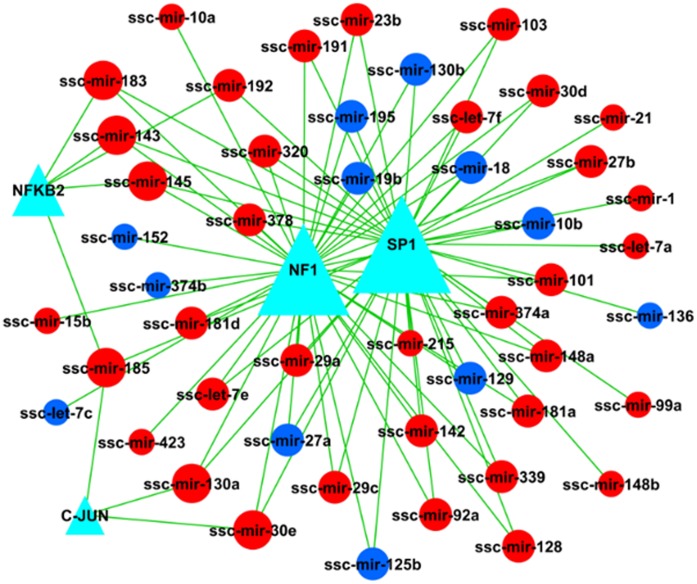
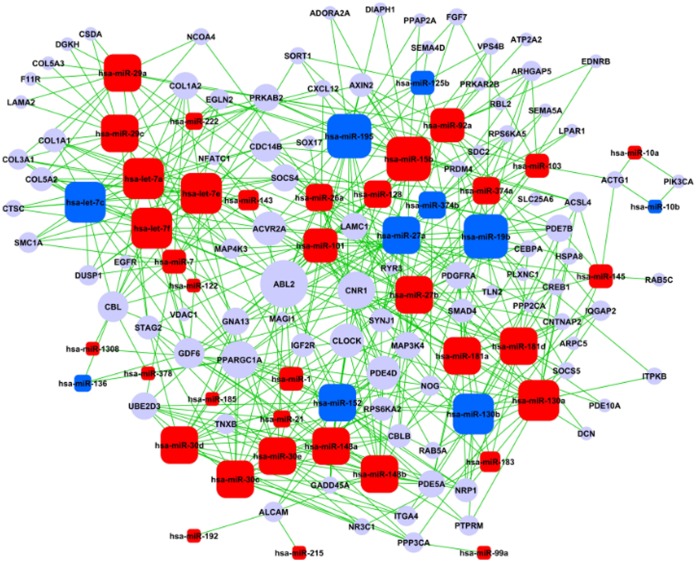
Small RNA duodenal libraries were constructed for Escherichia coli F18-sensitive and -resistant weaned piglets in full-sib pair groups and sequenced using Illumina Solexa high-throughput sequencing technology. The identification of differentially expressed miRNAs provides the basis for improved database information on pig miRNAs, understanding the genetic basics of differences in resistance to E. coli F18 between local Chinese and exotic pig breeds, and finding new resistance markers for E. coli F18 infection. The duodenum of all individuals contained more than 90% of known swine miRNAs. A total of 58 differentially expressing miRNAs were identified, of which 46 were increased and 12 were decreased in E. coli F18-sensitive pigs. Of miRNAs with increased expression, ssc-miR-143 was most highly expressed, followed by ssc-let-7f, ssc-miR-192, and ssc-miR-21. We identified a total of 2036 intersection target genes by comparing TargetScan data and previous gene expression profile results. Gene ontology and pathway analysis of intersection genes showed that differentially expressed miRNAs were mainly involved in the immune response and transcriptional regulation. Combining information on differential miRNA expression and their regulatory relationships with transcription factors, identified 12 candidate miRNA disease markers, including 11 miRNAs with increased expression, ssc-miR-143, ssc-let-7f, ssc-miR-30e, ssc-miR-148a, ssc-miR-148b, ssc-miR-181a, ssc-miR-192, ssc-miR-27b, ssc-miR-15b, ssc-miR-21, and ssc-miR-215, and one with decreased expression, ssc-miR-152. Quantitative real-time PCR analysis of candidate miRNA expression in a larger cohort of E coli F18-sensitive and -resistant animals confirmed the high-throughput sequencing results.
构建了大肠杆菌 F18 敏感和抗性断奶仔猪的小 RNA 十二指肠文库,并使用 Illumina Solexa 高通量测序技术进行测序。差异表达 miRNA 的鉴定为猪 miRNA 的数据库信息提供了基础,有助于了解中国本地猪种和外来猪种对大肠杆菌 F18 抗性的遗传基础,并为大肠杆菌 F18 感染寻找新的抗性标记。所有个体的十二指肠均含有超过 90%的已知猪 miRNA。共鉴定出 58 个差异表达的 miRNA,其中 46 个在大肠杆菌 F18 敏感猪中上调,12 个下调。在表达上调的 miRNA 中,ssc-miR-143 表达水平最高,其次是 ssc-let-7f、ssc-miR-192 和 ssc-miR-21。通过比较 TargetScan 数据和之前的基因表达谱结果,我们共鉴定出 2036 个交集靶基因。交集基因的 GO 和通路分析表明,差异表达的 miRNA 主要参与免疫反应和转录调控。结合差异 miRNA 表达及其与转录因子的调控关系信息,鉴定出 12 个候选 miRNA 疾病标记物,包括 11 个表达上调的 miRNA,即 ssc-miR-143、ssc-let-7f、ssc-miR-30e、ssc-miR-148a、ssc-miR-148b、ssc-miR-181a、ssc-miR-192、ssc-miR-27b、ssc-miR-15b、ssc-miR-21 和 ssc-miR-215,以及一个表达下调的 miRNA,即 ssc-miR-152。对较大数量大肠杆菌 F18 敏感和抗性动物候选 miRNA 表达的定量实时 PCR 分析证实了高通量测序结果。