Department of Neurology, University of California San Francisco, San Francisco, CA 94158, USA.
Trends Genet. 2012 Dec;28(12):598-605. doi: 10.1016/j.tig.2012.08.002. Epub 2012 Aug 28.
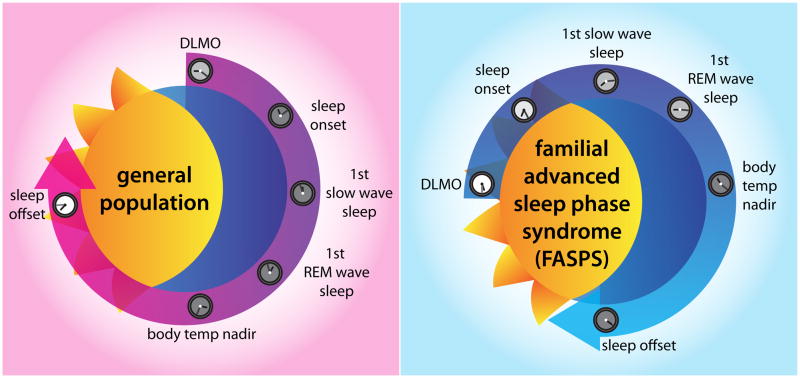
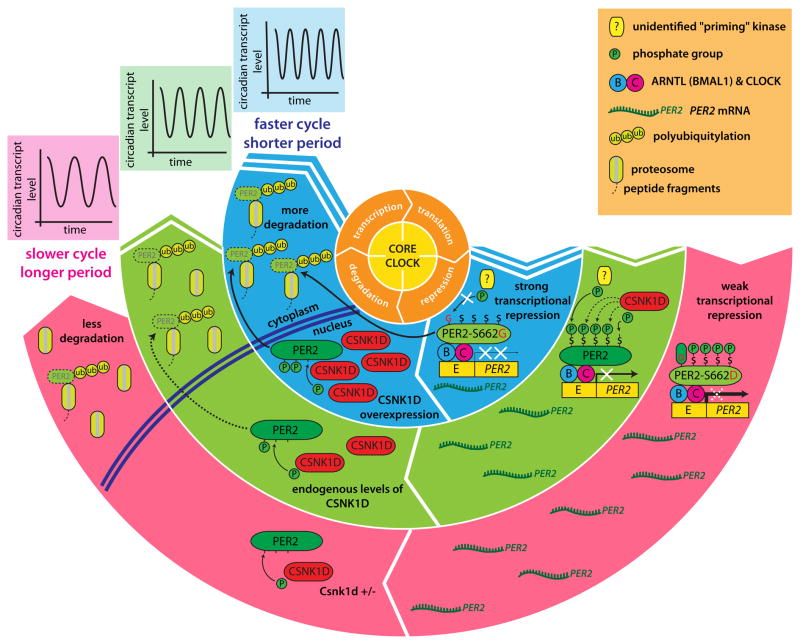
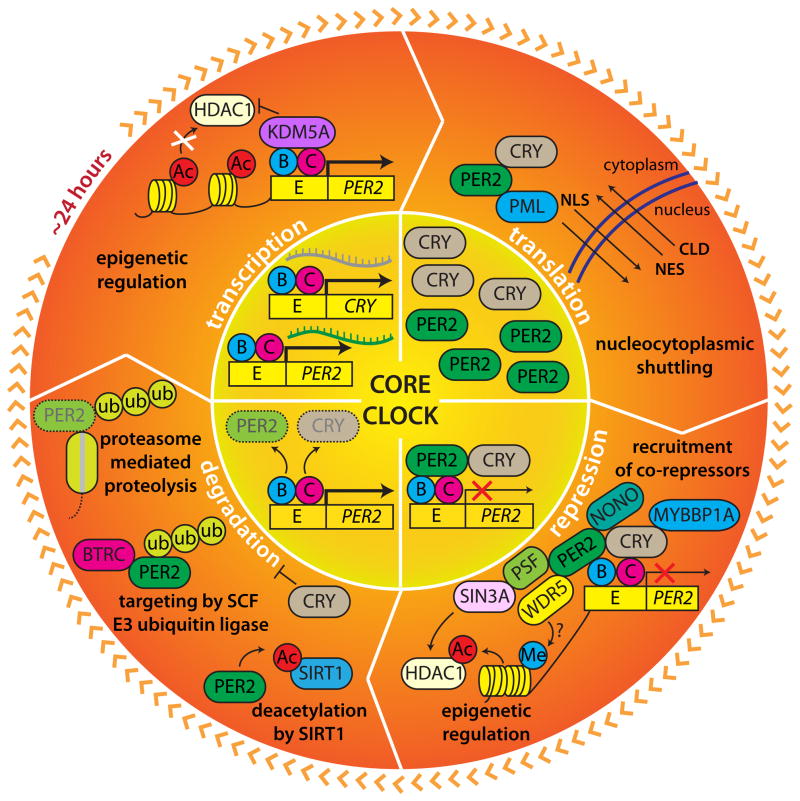
The study of circadian rhythms is emerging as a fruitful opportunity for understanding cellular mechanisms that govern human physiology and behavior, fueled by evidence directly linking sleep disorders to genetic mutations affecting circadian molecular pathways. Familial advanced sleep-phase disorder (FASPD) is the first recognized Mendelian circadian rhythm trait, and affected individuals exhibit exceptionally early sleep-wake onset due to altered post-translational regulation of period homolog 2 (PER2). Behavioral and cellular circadian rhythms are analogously affected because the circadian period length of behavior is reduced in the absence of environmental time cues, and cycle duration of the molecular clock is likewise shortened. In light of these findings, we review the PER2 dynamics in the context of circadian regulation to reveal the mechanism of sleep-schedule modulation. Understanding PER2 regulation and functionality may shed new light on how our genetic composition can influence our sleep-wake behaviors.
昼夜节律的研究正在成为理解控制人类生理和行为的细胞机制的一个富有成效的机会,这一研究得到了直接将睡眠障碍与影响昼夜分子途径的基因突变联系起来的证据的推动。家族性提前睡眠阶段障碍(FASPD)是第一个被识别的孟德尔昼夜节律特征,受影响的个体由于 PER2(PERIOD 同源物 2)的翻译后调控改变而表现出异常早的睡眠-觉醒起始。行为和细胞昼夜节律也受到类似的影响,因为在没有环境时间线索的情况下,行为的昼夜周期长度缩短,分子钟的周期持续时间也相应缩短。有鉴于此,我们在昼夜节律调节的背景下审查了 PER2 动力学,以揭示睡眠-时间表调节的机制。了解 PER2 的调节和功能可能会揭示我们的遗传组成如何影响我们的睡眠-觉醒行为。