The Australian Wine Research Institute, PO Box 197, Glen Osmond, Adelaide, SA, 5064, Australia.
Appl Microbiol Biotechnol. 2012 Nov;96(3):601-18. doi: 10.1007/s00253-012-4370-z. Epub 2012 Sep 1.
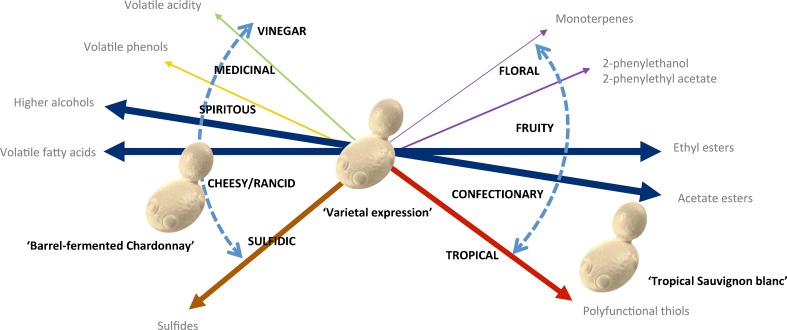
The flavour of fermented beverages such as beer, cider, saké and wine owe much to the primary fermentation yeast used in their production, Saccharomyces cerevisiae. Where once the role of yeast in fermented beverage flavour was thought to be limited to a small number of volatile esters and higher alcohols, the discovery that wine yeast release highly potent sulfur compounds from non-volatile precursors found in grapes has driven researchers to look more closely at how choice of yeast can influence wine style. This review explores recent progress towards understanding the range of 'flavour phenotypes' that wine yeast exhibit, and how this knowledge has been used to develop novel flavour-active yeasts. In addition, emerging opportunities to augment these phenotypes by engineering yeast to produce so-called grape varietal compounds, such as monoterpenoids, will be discussed.
发酵饮料(如啤酒、苹果酒、清酒和葡萄酒)的风味在很大程度上归功于其生产中使用的主要发酵酵母,即酿酒酵母。曾经,人们认为酵母在发酵饮料风味中的作用仅限于少数挥发性酯类和高级醇类,但后来发现,葡萄酒酵母可以从葡萄中发现的非挥发性前体中释放出高活性的硫化合物,这促使研究人员更仔细地研究酵母的选择如何影响葡萄酒的风格。本文综述了近年来在了解葡萄酒酵母表现出的各种“风味表型”方面的进展,以及如何利用这些知识来开发新型风味活性酵母。此外,还讨论了通过工程酵母生产所谓的葡萄品种化合物(如单萜类化合物)来增强这些表型的新兴机会。