Institute of Aquaculture, University of Stirling, Stirling, FK9 4LA Scotland, UK.
BMC Genomics. 2012 Sep 4;13:448. doi: 10.1186/1471-2164-13-448.
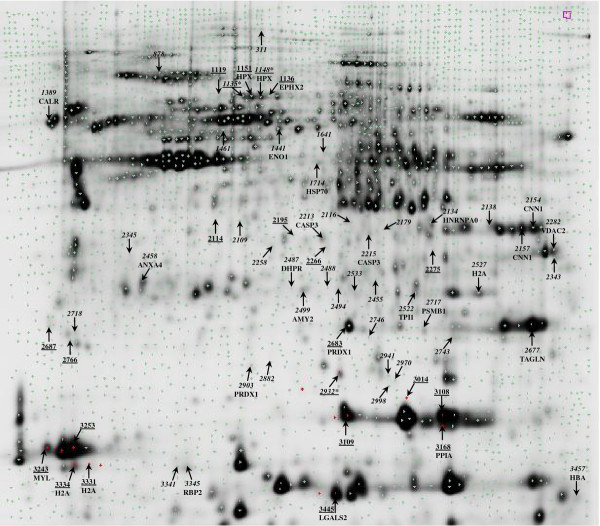
Expansion of aquaculture requires alternative feeds and breeding strategies to reduce dependency on fish oil (FO) and better utilization of dietary vegetable oil (VO). Despite the central role of intestine in maintaining body homeostasis and health, its molecular response to replacement of dietary FO by VO has been little investigated. This study employed transcriptomic and proteomic analyses to study effects of dietary VO in two family groups of Atlantic salmon selected for flesh lipid content, 'Lean' or 'Fat'.
Metabolism, particularly of lipid and energy, was the functional category most affected by diet. Important effects were also measured in ribosomal proteins and signalling. The long-chain polyunsaturated fatty acid (LC-PUFA) biosynthesis pathway, assessed by fatty acid composition and gene expression, was influenced by genotype. Intestinal tissue contents of docosahexaenoic acid were equivalent in Lean salmon fed either a FO or VO diet and expression of LC-PUFA biosynthesis genes was up-regulated in VO-fed fish in Fat salmon. Dietary VO increased lipogenesis in Lean fish, assessed by expression of FAS, while no effect was observed on β-oxidation although transcripts of the mitochondrial respiratory chain were down-regulated, suggesting less active energetic metabolism in fish fed VO. In contrast, dietary VO up-regulated genes and proteins involved in detoxification, antioxidant defence and apoptosis, which could be associated with higher levels of polycyclic aromatic hydrocarbons in this diet. Regarding genotype, the following pathways were identified as being differentially affected: proteasomal proteolysis, response to oxidative and cellular stress (xenobiotic and oxidant metabolism and heat shock proteins), apoptosis and structural proteins particularly associated with tissue contractile properties. Genotype effects were accentuated by dietary VO.
Intestinal metabolism was affected by diet and genotype. Lean fish may have higher responsiveness to low dietary n-3 LC-PUFA, up-regulating the biosynthetic pathway when fed dietary VO. As global aquaculture searches for alternative oils for feeds, this study alerts to the potential of VO introducing contaminants and demonstrates the detoxifying role of intestine. Finally, data indicate genotype-specific responses in the intestinal transcriptome and proteome to dietary VO, including possibly structural properties of the intestinal layer and defence against cellular stress, with Lean fish being more susceptible to diet-induced oxidative stress.
水产养殖的扩张需要替代饲料和养殖策略,以减少对鱼油(FO)的依赖,并更好地利用膳食植物油(VO)。尽管肠道在维持体内平衡和健康方面起着核心作用,但它对用 VO 替代 FO 的饮食的分子反应却很少被研究。本研究采用转录组学和蛋白质组学分析方法,研究了大西洋鲑鱼两个家族群体对饮食 VO 的反应,这两个群体是根据鱼肉脂肪含量选择的,分别为“瘦”或“胖”。
代谢,特别是脂质和能量代谢,是受饮食影响最大的功能类别。核糖体蛋白和信号转导也有重要影响。通过脂肪酸组成和基因表达评估的长链多不饱和脂肪酸(LC-PUFA)生物合成途径受到基因型的影响。肠道组织中的二十二碳六烯酸含量在饲喂 FO 或 VO 饮食的瘦鲑鱼中相等,并且在饲喂 VO 的胖鲑鱼中 LC-PUFA 生物合成基因的表达上调。膳食 VO 增加了瘦鱼的脂肪生成,通过 FAS 的表达来评估,而β-氧化没有受到影响,尽管线粒体呼吸链的转录本下调,表明饲喂 VO 的鱼的能量代谢不那么活跃。相反,膳食 VO 上调了与多环芳烃水平较高相关的解毒、抗氧化防御和细胞凋亡相关的基因和蛋白质。就基因型而言,确定了以下受差异影响的途径:蛋白酶体蛋白水解、对氧化和细胞应激的反应(异生物质和氧化剂代谢和热休克蛋白)、细胞凋亡和结构蛋白,特别是与组织收缩特性相关的蛋白。饮食 VO 加剧了基因型的影响。
肠道代谢受到饮食和基因型的影响。瘦鱼可能对低膳食 n-3 LC-PUFA 有更高的反应性,当饲喂膳食 VO 时,上调生物合成途径。随着全球水产养殖业寻找替代饲料的油,本研究提醒人们注意 VO 可能引入污染物,并证明了肠道的解毒作用。最后,数据表明,肠道转录组和蛋白质组对饮食 VO 有特定的基因型反应,包括肠道层的结构特性和对细胞应激的防御,瘦鱼对饮食诱导的氧化应激更敏感。