Institute of Bioorganic Chemistry, Polish Academy of Sciences, Noskowskiego 12/14, 61-704 Poznan, Poland.
Mol Neurobiol. 2012 Oct;46(2):430-66. doi: 10.1007/s12035-012-8316-3. Epub 2012 Sep 4.
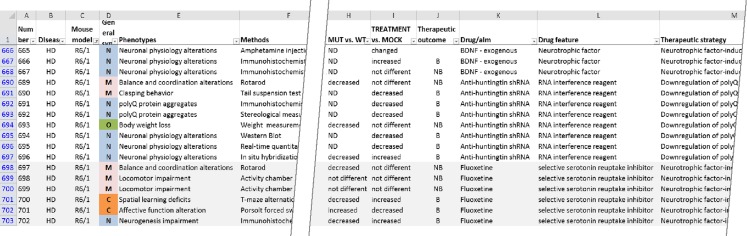
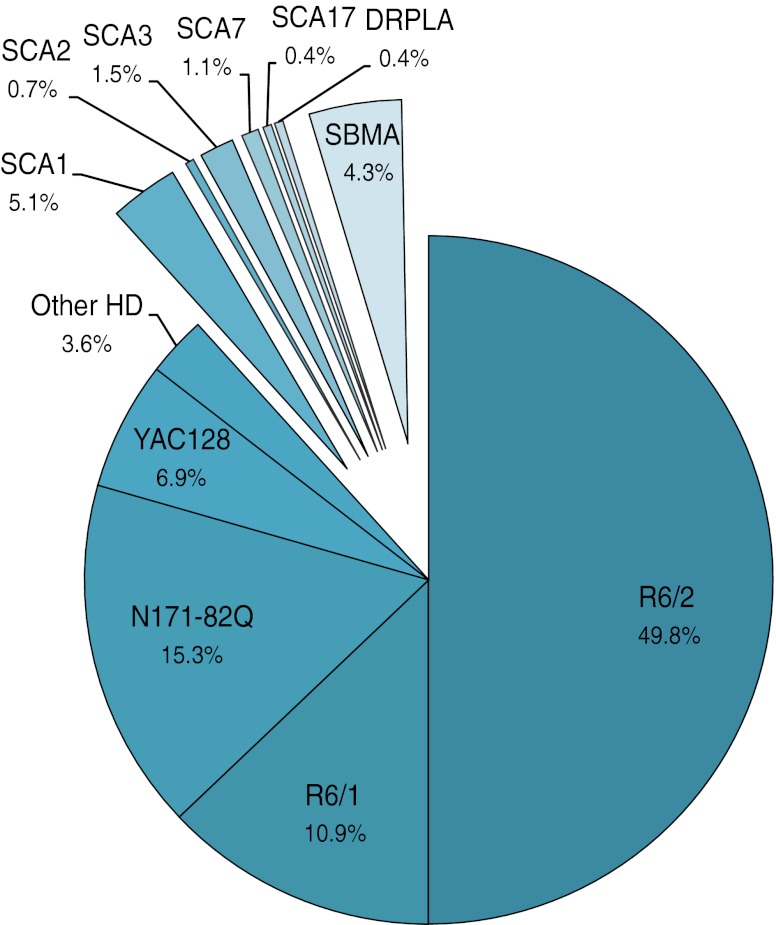
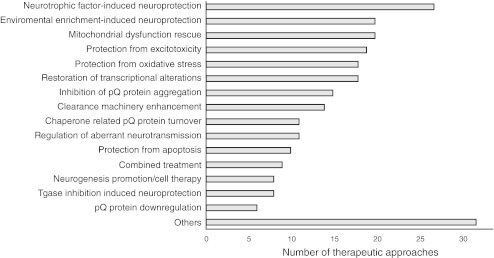
Mouse models of human diseases are created both to understand the pathogenesis of the disorders and to find successful therapies for them. This work is the second part in a series of reviews of mouse models of polyglutamine (polyQ) hereditary disorders and focuses on in vivo experimental therapeutic approaches. Like part I of the polyQ mouse model review, this work is supplemented with a table that contains data from experimental studies of therapeutic approaches in polyQ mouse models. The aim of this review was to characterize the benefits and outcomes of various therapeutic strategies in mouse models. We examine whether the therapeutic strategies are specific to a single disease or are applicable to more than one polyQ disorder in mouse models. In addition, we discuss the suitability of mouse models in therapeutic approaches. Although the majority of therapeutic studies were performed in mouse models of Huntington disease, similar strategies were also used in other disease models.
人类疾病的小鼠模型既用于了解疾病的发病机制,也用于寻找成功的治疗方法。这项工作是一系列关于多聚谷氨酰胺(polyQ)遗传性疾病小鼠模型综述的第二部分,重点介绍体内实验治疗方法。与第一部分的 polyQ 小鼠模型综述一样,这项工作还附有一个表格,其中包含了 polyQ 小鼠模型中治疗方法的实验研究数据。本综述的目的是描述各种治疗策略在小鼠模型中的益处和结果。我们检查治疗策略是否针对单一疾病,或者在小鼠模型中是否适用于多种 polyQ 疾病。此外,我们还讨论了小鼠模型在治疗方法中的适用性。尽管大多数治疗研究都是在亨廷顿病的小鼠模型中进行的,但类似的策略也在其他疾病模型中使用。