Szlachcic Wojciech J, Switonski Pawel M, Kurkowiak Małgorzata, Wiatr Kalina, Figiel Maciej
Institute of Bioorganic Chemistry, Polish Academy of Sciences, Noskowskiego 12/14, 61-704, Poznań, Poland.
Mol Brain. 2015 Oct 29;8(1):69. doi: 10.1186/s13041-015-0160-8.
The polyglutamine (polyQ) family of disorders comprises 9 genetic diseases, including several types of ataxia and Huntington disease. Approximately two decades of investigation and the creation of more than 130 mouse models of polyQ disorders have revealed many similarities between these diseases. The disorders share common mutation types, neurological characteristics and certain aspects of pathogenesis, including morphological and physiological neuronal alterations. All of the diseases still remain incurable.
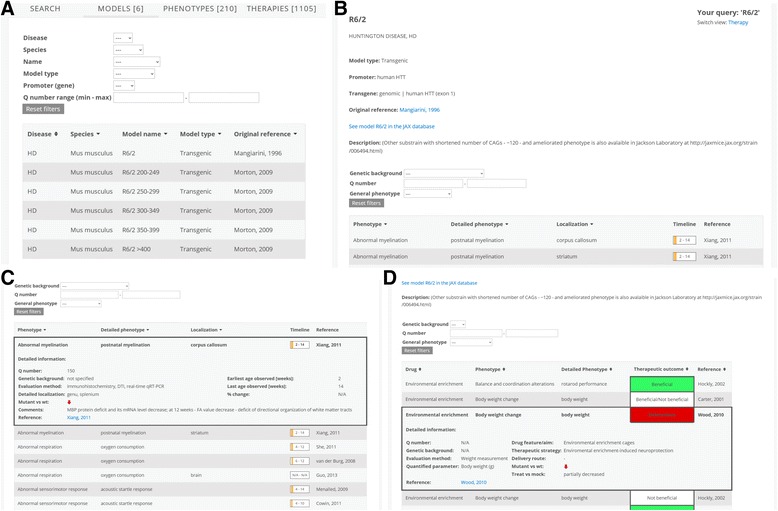
The large volume of information collected as a result of the investigation of polyQ models currently represents a great potential for searching, comparing and translating pathogenesis and therapeutic information between diseases. Therefore, we generated a public database comprising the polyQ mouse models, phenotypes and therapeutic interventions tested in vivo. The database is available at http://conyza.man.poznan.pl/ .
The use of the database in the field of polyQ diseases may accelerate research on these and other neurodegenerative diseases and provide new perspectives for future investigation.
多聚谷氨酰胺(polyQ)疾病家族包括9种遗传疾病,其中有几种类型的共济失调和亨廷顿病。经过约二十年的研究以及创建了130多种polyQ疾病小鼠模型后,已揭示出这些疾病之间存在许多相似之处。这些疾病具有共同的突变类型、神经学特征以及发病机制的某些方面,包括形态学和生理学上的神经元改变。所有这些疾病仍然无法治愈。
由于对polyQ模型的研究而收集的大量信息目前在疾病之间搜索、比较和转化发病机制及治疗信息方面具有巨大潜力。因此,我们生成了一个包含在体内测试的polyQ小鼠模型、表型和治疗干预措施的公共数据库。该数据库可在http://conyza.man.poznan.pl/ 上获取。
在polyQ疾病领域使用该数据库可能会加速对这些疾病和其他神经退行性疾病的研究,并为未来的研究提供新的视角。