Andalusian Public Health System Biobank, Centro de Investigación Biomédica, Consejería de Salud-Universidad de Granada, Granada, Spain.
J Cell Mol Med. 2012 Dec;16(12):3009-21. doi: 10.1111/j.1582-4934.2012.01628.x.
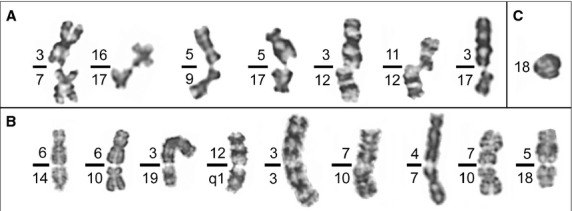
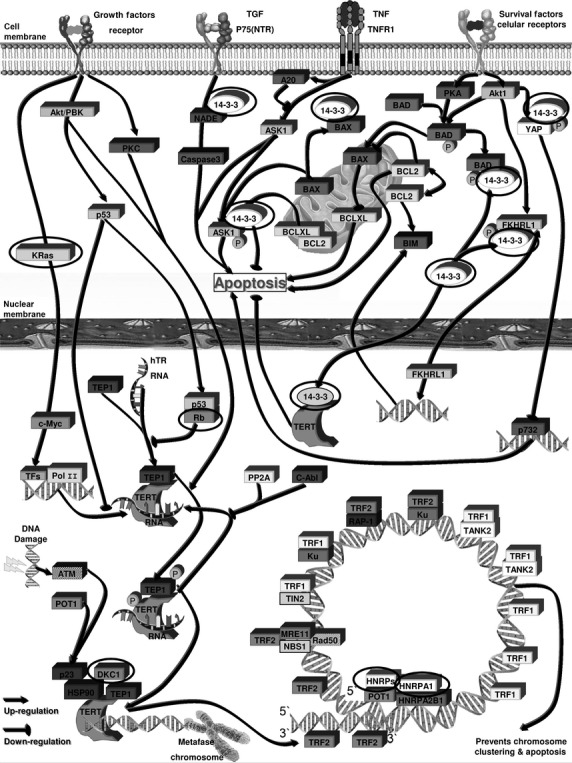
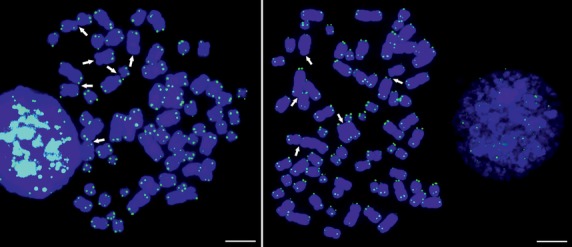
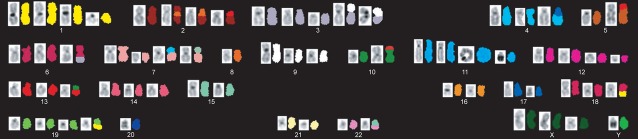
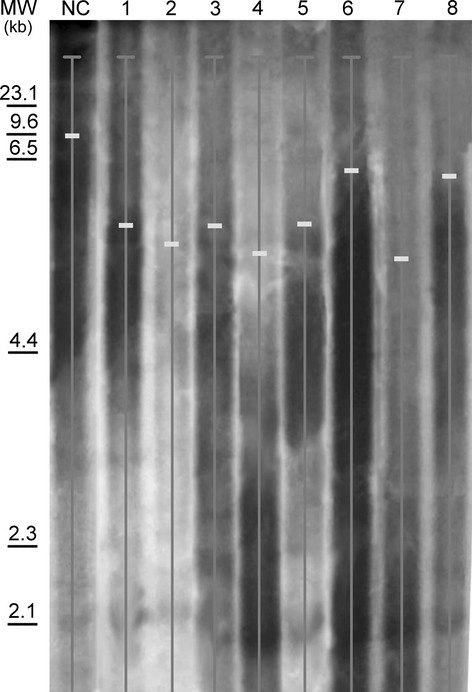
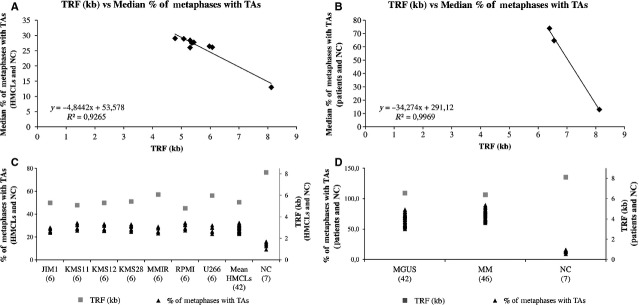
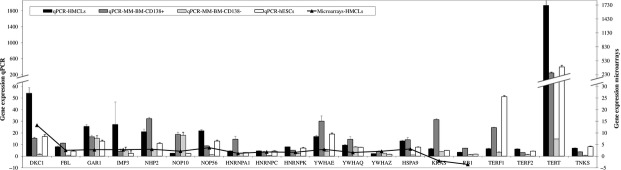
To further contribute to the understanding of multiple myeloma, we have focused our research interests on the mechanisms by which tumour plasma cells have a higher survival rate than normal plasma cells. In this article, we study the expression profile of genes involved in the regulation and protection of telomere length, telomerase activity and apoptosis in samples from patients with monoclonal gammopathy of undetermined significance, smouldering multiple myeloma, multiple myeloma (MM) and plasma cell leukaemia (PCL), as well as several human myeloma cell lines (HMCLs). Using conventional cytogenetic and fluorescence in situ hybridization studies, we identified a high number of telomeric associations (TAs). Moreover, telomere length measurements by terminal restriction fragment (TRF) assay showed a shorter mean TRF peak value, with a consistent correlation with the number of TAs. Using gene expression arrays and quantitative PCR we identified the hTERT gene together with 16 other genes directly involved in telomere length maintenance: HSPA9, KRAS, RB1, members of the Small nucleolar ribonucleoproteins family, A/B subfamily of ubiquitously expressed heterogeneous nuclear ribonucleoproteins, and 14-3-3 family. The expression levels of these genes were even higher than those in human embryonic stem cells (hESCs) and induced pluripotent stem cells (iPSCs), which have unlimited proliferation capacity. In conclusion, the gene signature suggests that MM tumour cells are able to maintain stable short telomere lengths without exceeding the short critical length, allowing cell divisions to continue. We propose that this could be a mechanism contributing to MM tumour cells expansion in the bone marrow (BM).
为了进一步深入了解多发性骨髓瘤,我们将研究兴趣集中在肿瘤浆细胞比正常浆细胞具有更高存活率的机制上。在本文中,我们研究了涉及端粒长度、端粒酶活性和凋亡调节和保护的基因在意义未明的单克隆丙种球蛋白血症、冒烟型多发性骨髓瘤、多发性骨髓瘤(MM)和浆细胞白血病(PCL)患者样本中的表达谱,以及几种人骨髓瘤细胞系(HMCLs)。通过常规细胞遗传学和荧光原位杂交研究,我们鉴定出大量的端粒相关(TA)。此外,通过末端限制性片段(TRF)分析测量端粒长度显示出较短的平均 TRF 峰值,与 TA 的数量呈一致的相关性。通过基因表达阵列和定量 PCR,我们鉴定了 hTERT 基因以及 16 个其他直接参与端粒长度维持的基因:HSPA9、KRAS、RB1、小核仁核糖核蛋白家族成员、广泛表达的异质核核糖核蛋白 A/B 亚家族,以及 14-3-3 家族。这些基因的表达水平甚至高于具有无限增殖能力的人类胚胎干细胞(hESCs)和诱导多能干细胞(iPSCs)。总之,该基因特征表明 MM 肿瘤细胞能够维持稳定的短端粒长度而不超过短临界长度,从而允许细胞分裂继续进行。我们提出,这可能是 MM 肿瘤细胞在骨髓(BM)中扩张的一种机制。