White Daniel D, Gallup Andrew C, Gallup Gordon G
Department of Anthropology, University at Albany, SUNY, Albany, New York, USA.
Evol Psychol. 2010 Feb 17;8(1):49-65. doi: 10.1177/147470491000800106.
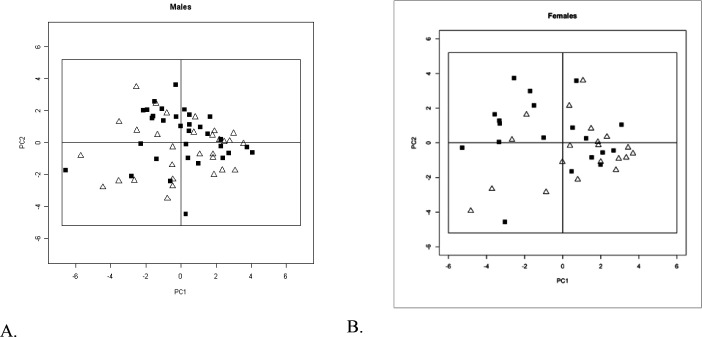
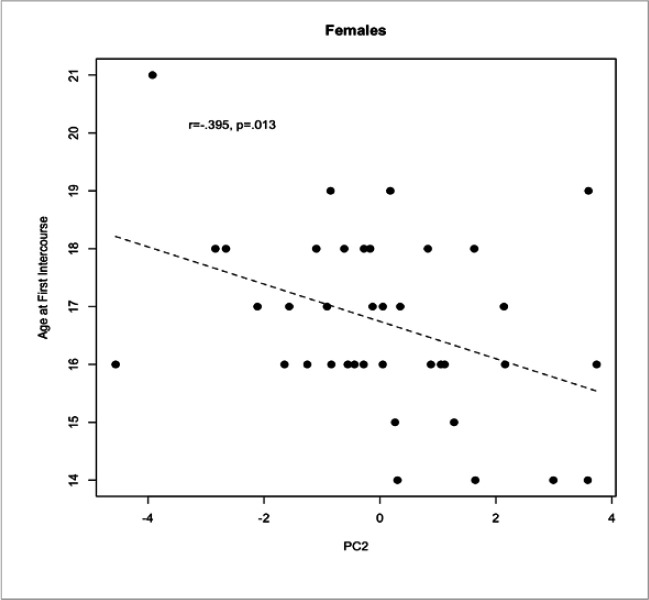
Evolutionary psychologists have suggested that indirect aggression during adolescence is a strategy to compete with same-sex peer rivals for resources, status, and mating opportunities. We collected survey data on 143 young adults to determine retrospectively, the amount of indirect aggressive behavior they perpetrated and the amount of indirect victimization they experienced in middle school and high school. We also collected information about reproductive opportunities such as age at first sexual intercourse and number of lifetime sex partners to determine whether aggression or victimization could be used to predict measures of reproductive opportunity. We performed a principal components analysis to develop factors from 16 aggression and victimization variables. Results indicate that females who reported indirect aggression toward peers had earlier ages at first sexual intercourse and females who were more victimized in adolescence experienced later ages at first sexual intercourse. We discuss these results in terms of intrasexual competition and evolutionary theory.
进化心理学家认为,青春期的间接攻击行为是一种与同性同龄人竞争对手争夺资源、地位和交配机会的策略。我们收集了143名年轻人的调查数据,以回顾性地确定他们在初中和高中实施的间接攻击行为的数量以及他们所经历的间接受害的数量。我们还收集了有关生殖机会的信息,如初次性交年龄和终身性伴侣数量,以确定攻击或受害是否可用于预测生殖机会的指标。我们进行了主成分分析,从16个攻击和受害变量中提取因素。结果表明,报告对同龄人有间接攻击行为的女性初次性交年龄较早,而在青春期受害较多的女性初次性交年龄较晚。我们根据同性竞争和进化理论讨论了这些结果。