Pharmacology and Toxicology Section, Institute of Pharmacy, University of Bonn, Gerhard-Domagk-Straße 3, 53121 Bonn, Germany.
Nat Commun. 2012;3:1044. doi: 10.1038/ncomms2028.
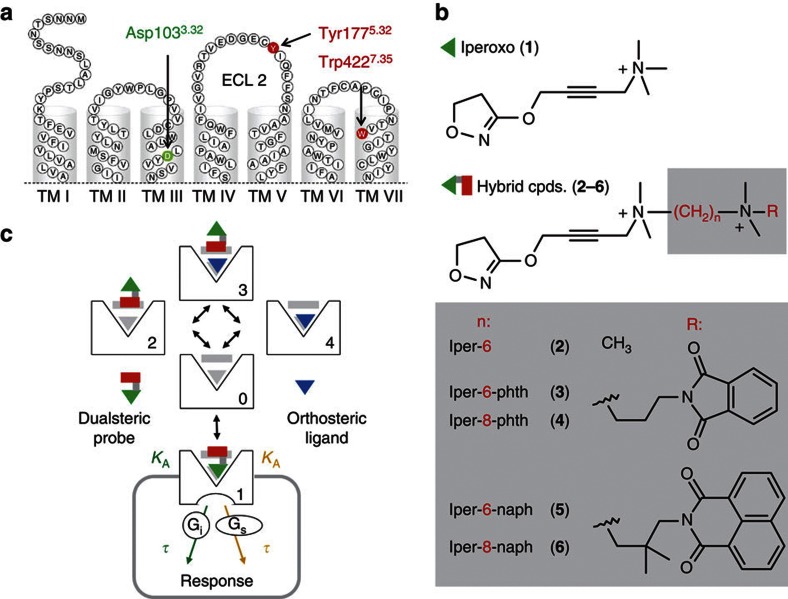
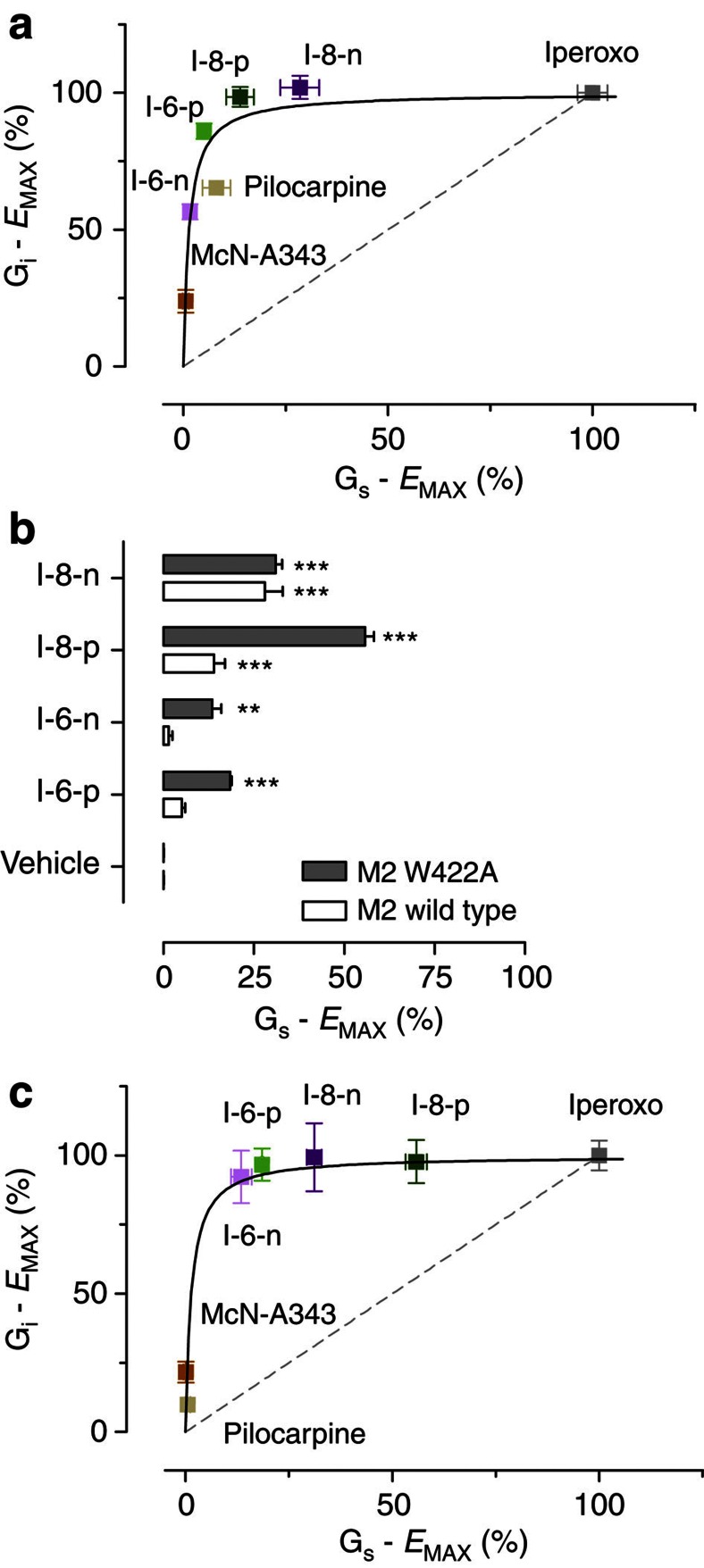
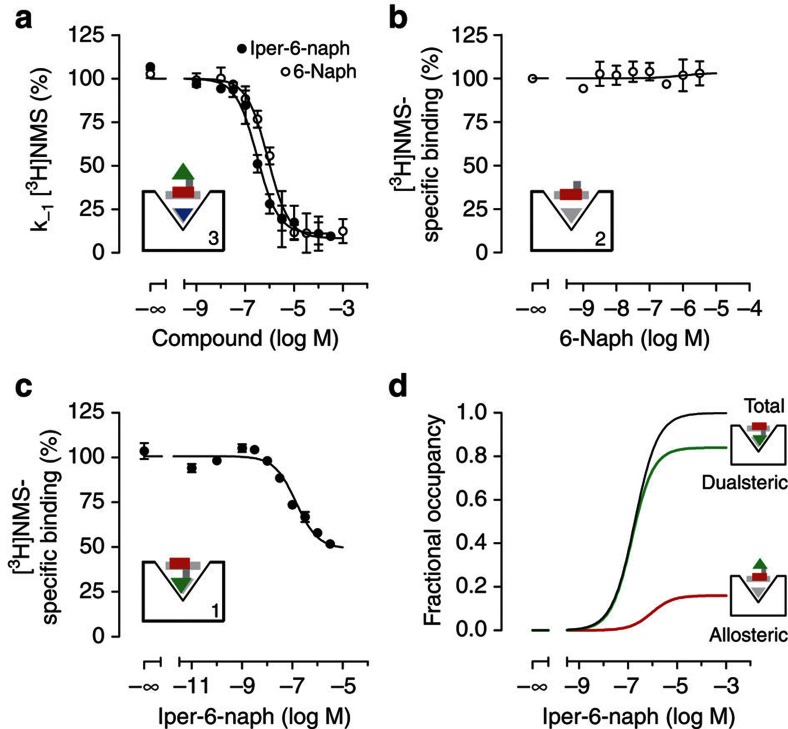
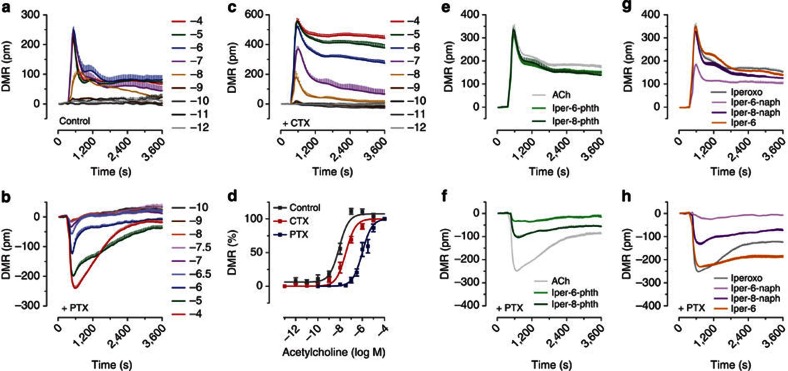
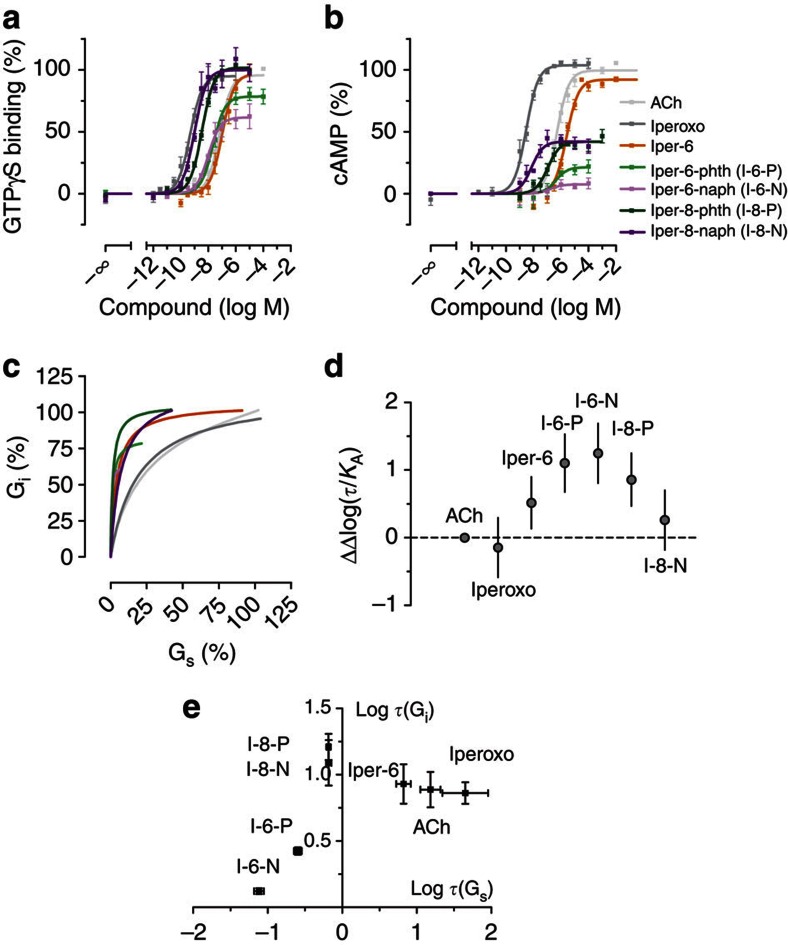
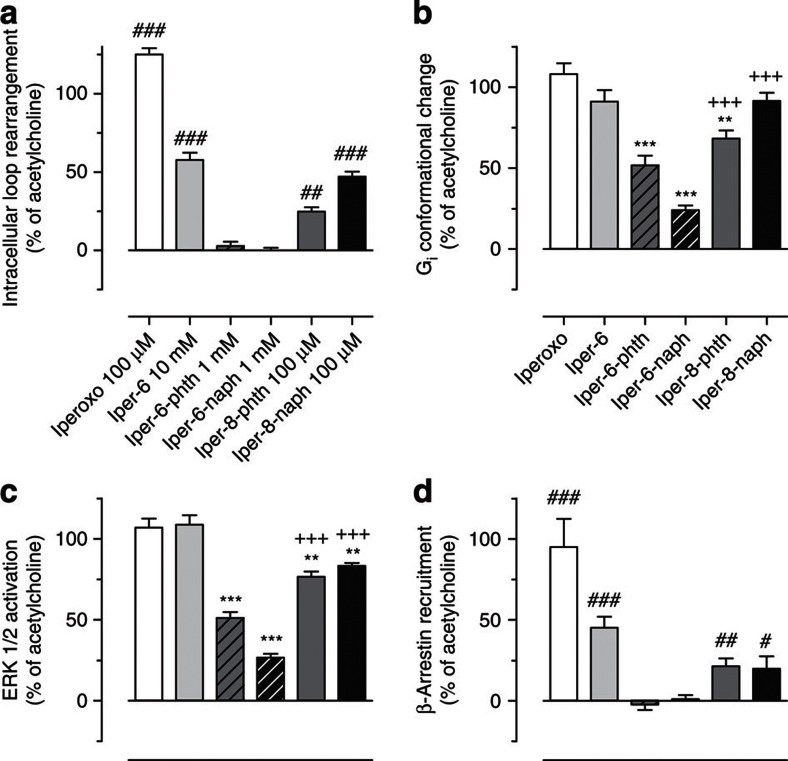
Seven transmembrane helical receptors (7TMRs) modulate cell function via different types of G proteins, often in a ligand-specific manner. Class A 7TMRs harbour allosteric vestibules in the entrance of their ligand-binding cavities, which are in the focus of current drug discovery. However, their biological function remains enigmatic. Here we present a new strategy for probing and manipulating conformational transitions in the allosteric vestibule of label-free 7TMRs using the M(2) acetylcholine receptor as a paradigm. We designed dualsteric agonists as 'tailor-made' chemical probes to trigger graded receptor activation from the acetylcholine-binding site while simultaneously restricting spatial flexibility of the receptor's allosteric vestibule. Our findings reveal for the first time that a 7TMR's allosteric vestibule controls the extent of receptor movement to govern a hierarchical order of G-protein coupling. This is a new concept assigning a biological role to the allosteric vestibule for controlling fidelity of 7TMR signalling.
七次跨膜螺旋受体 (7TMRs) 通过不同类型的 G 蛋白调节细胞功能,通常以配体特异性的方式进行。A 类 7TMRs 在其配体结合腔的入口处具有变构前庭,这是当前药物发现的重点。然而,它们的生物学功能仍然是个谜。在这里,我们提出了一种新的策略,使用 M(2)乙酰胆碱受体作为范例,使用无标签的 7TMR 来探测和操纵变构前庭中的构象转变。我们设计了双功能激动剂作为“定制”化学探针,从乙酰胆碱结合位点触发分级受体激活,同时限制受体变构前庭的空间灵活性。我们的研究结果首次揭示,7TMR 的变构前庭控制受体运动的程度,从而控制 G 蛋白偶联的层次顺序。这是一个新概念,为变构前庭赋予了控制 7TMR 信号保真度的生物学作用。