Behavioral Ecology and Sociobiology Unit, German Primate Center, Kellnerweg 4, Göttingen, Germany.
Immunogenetics. 2012 Dec;64(12):895-913. doi: 10.1007/s00251-012-0649-6. Epub 2012 Sep 5.
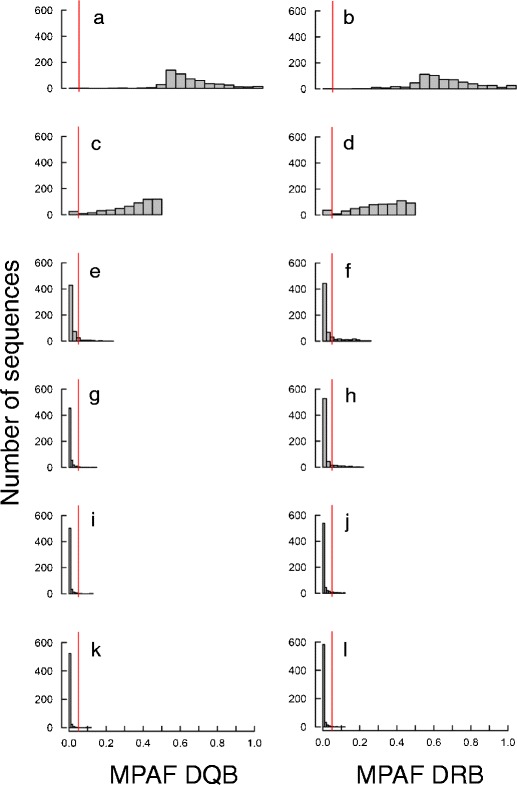
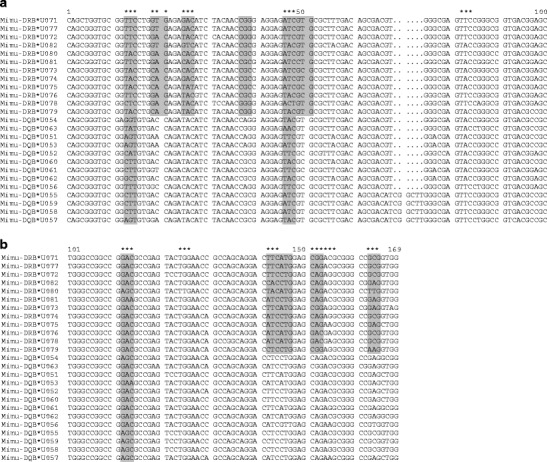
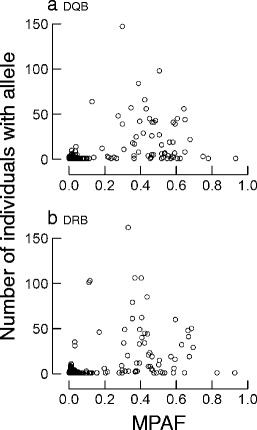
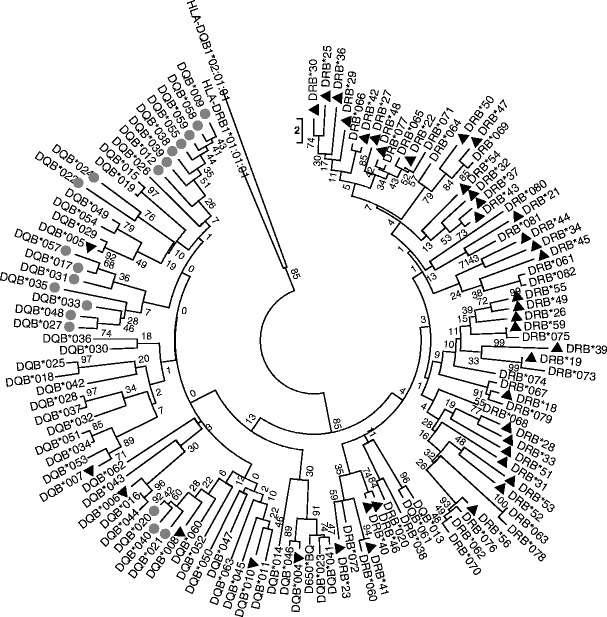
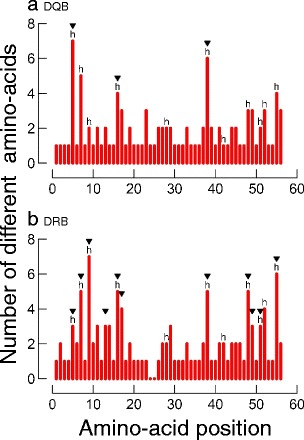
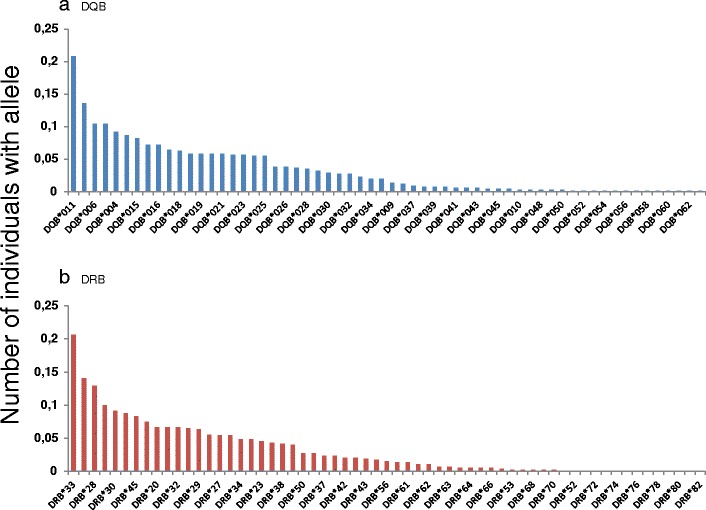
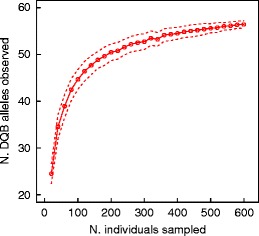
The critical role of major histocompatibility complex (MHC) genes in disease resistance, along with their putative function in sexual selection, reproduction and chemical ecology, make them an important genetic system in evolutionary ecology. Studying selective pressures acting on MHC genes in the wild nevertheless requires population-wide genotyping, which has long been challenging because of their extensive polymorphism. Here, we report on large-scale genotyping of the MHC class II loci of the grey mouse lemur (Microcebus murinus) from a wild population in western Madagascar. The second exons from MHC-DRB and -DQB of 772 and 672 individuals were sequenced, respectively, using a 454 sequencing platform, generating more than 800,000 reads. Sequence analysis, through a stepwise variant validation procedure, allowed reliable typing of more than 600 individuals. The quality of our genotyping was evaluated through three independent methods, namely genotyping the same individuals by both cloning and 454 sequencing, running duplicates, and comparing parent-offspring dyads; each displaying very high accuracy. A total of 61 (including 20 new) and 60 (including 53 new) alleles were detected at DRB and DQB genes, respectively. Both loci were non-duplicated, in tight linkage disequilibrium and in Hardy-Weinberg equilibrium, despite the fact that sequence analysis revealed clear evidence of historical selection. Our results highlight the potential of 454 sequencing technology in attempts to investigate patterns of selection shaping MHC variation in contemporary populations. The power of this approach will nevertheless be conditional upon strict quality control of the genotyping data.
主要组织相容性复合体 (MHC) 基因在疾病抗性中起着关键作用,同时它们在性选择、繁殖和化学生态学中的潜在功能使它们成为进化生态学中的一个重要遗传系统。然而,在野外研究对 MHC 基因施加的选择压力需要进行全人群基因分型,由于其广泛的多态性,这一直是一个挑战。在这里,我们报告了来自马达加斯加西部野生种群的灰鼠狐猴 (Microcebus murinus) MHC 类 II 基因座的大规模基因分型。使用 454 测序平台分别对 772 个和 672 个个体的 MHC-DRB 和-DQB 的第二外显子进行测序,生成了超过 800,000 个读段。通过逐步验证程序的序列分析,允许对 600 多个个体进行可靠的分型。我们通过三种独立的方法评估了基因分型的质量,即通过克隆和 454 测序对相同的个体进行基因分型、运行重复样本,以及比较亲本-后代二联体;每种方法都显示出非常高的准确性。在 DRB 和 DQB 基因中分别检测到 61 个(包括 20 个新的)和 60 个(包括 53 个新的)等位基因。尽管序列分析显示出明显的历史选择证据,但两个基因座均未发生重复,紧密连锁不平衡且处于 Hardy-Weinberg 平衡状态。我们的研究结果强调了 454 测序技术在尝试研究塑造当代种群 MHC 变异的选择模式方面的潜力。然而,这种方法的有效性将取决于基因分型数据的严格质量控制。