Department of Biochemistry, Molecular Biology, Entomology, and Plant Pathology, Mississippi State University.
Institute for Genomics, Biocomputing and Biotechnology, Mississippi State University.
Genome Biol Evol. 2018 Jan 1;10(1):344-358. doi: 10.1093/gbe/evy001.
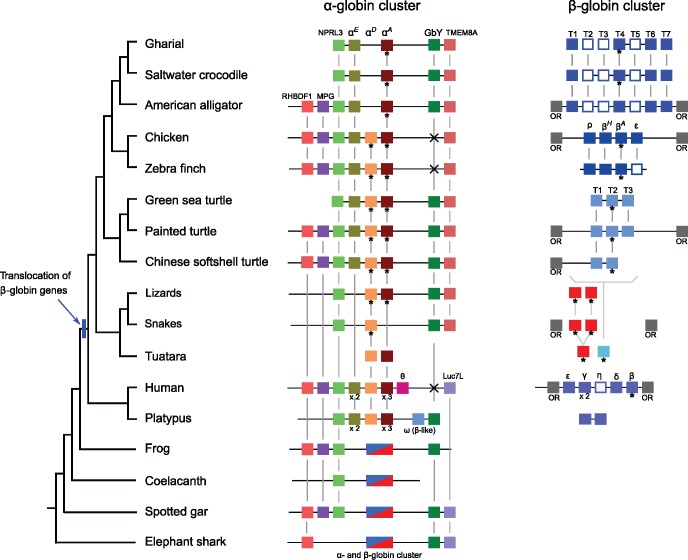
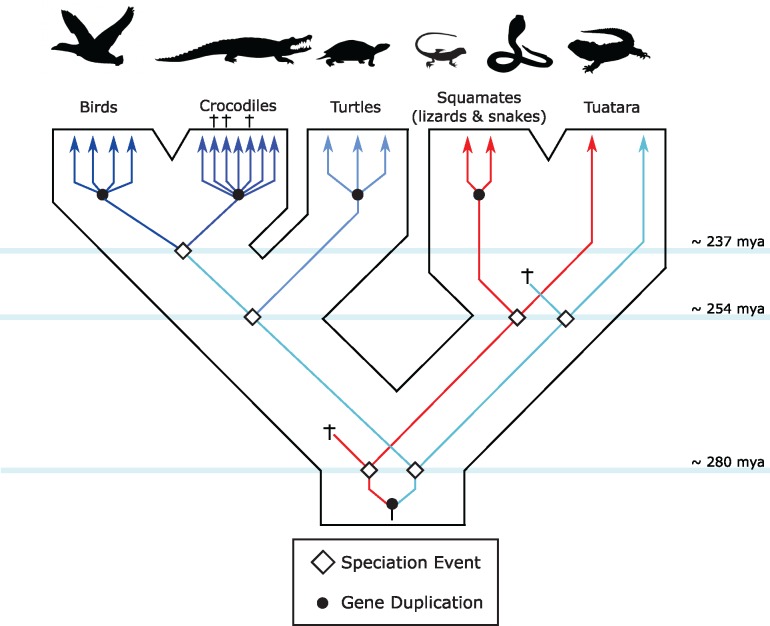
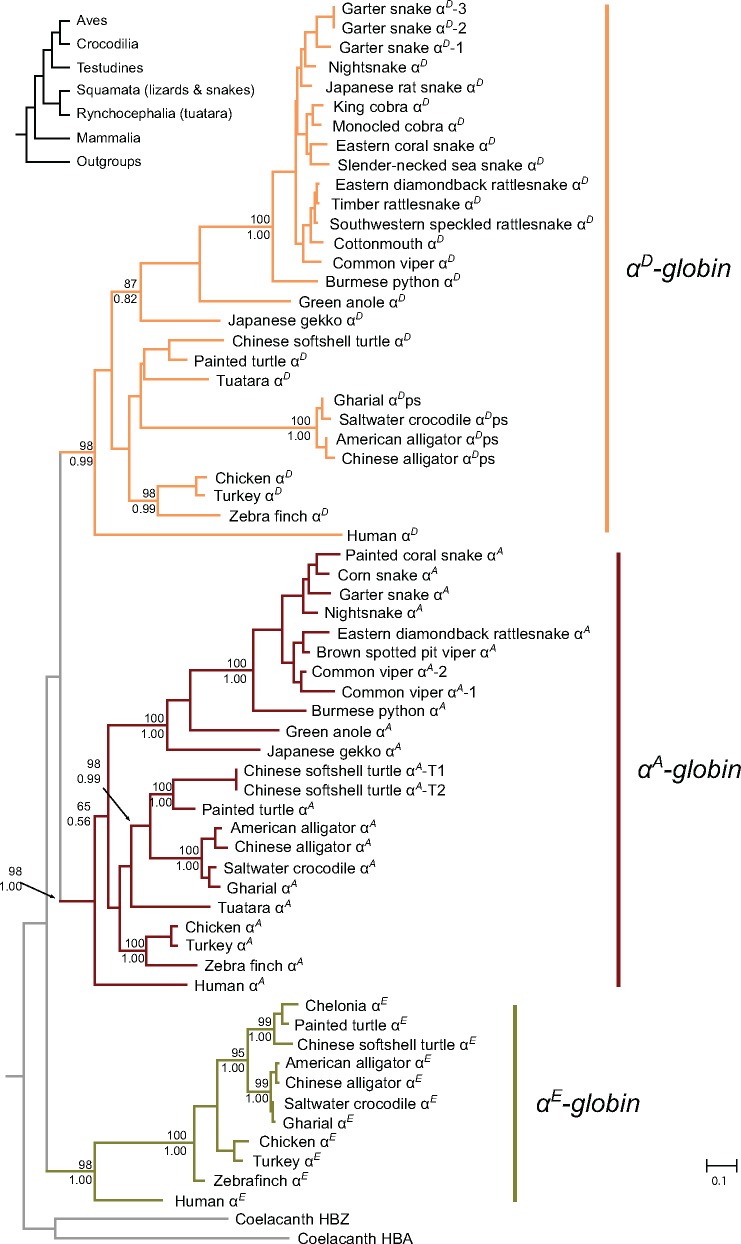
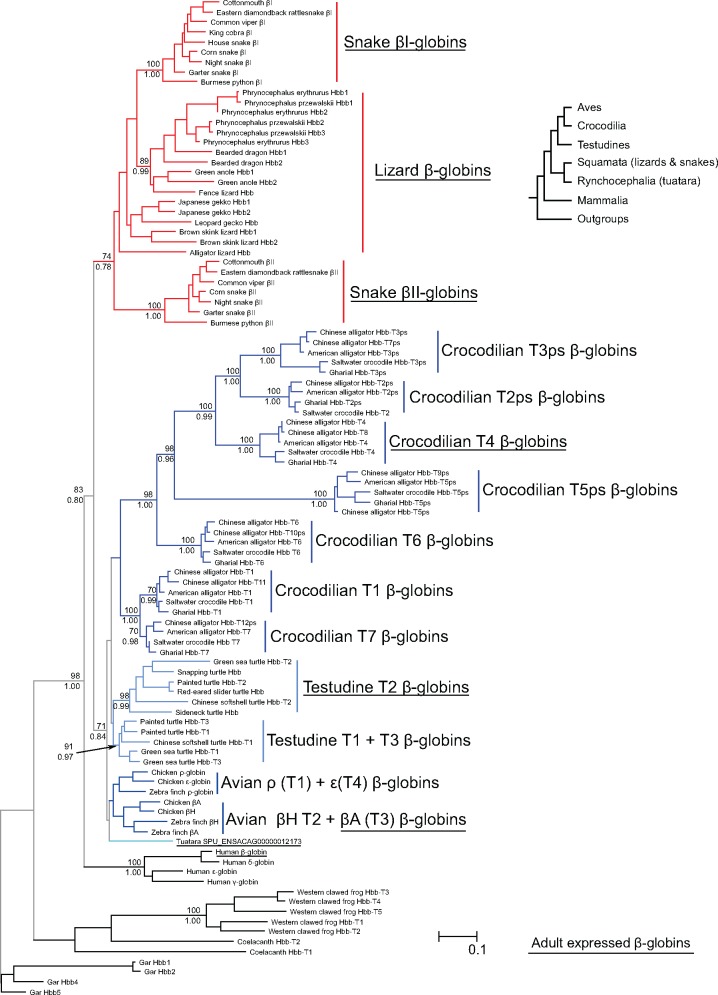
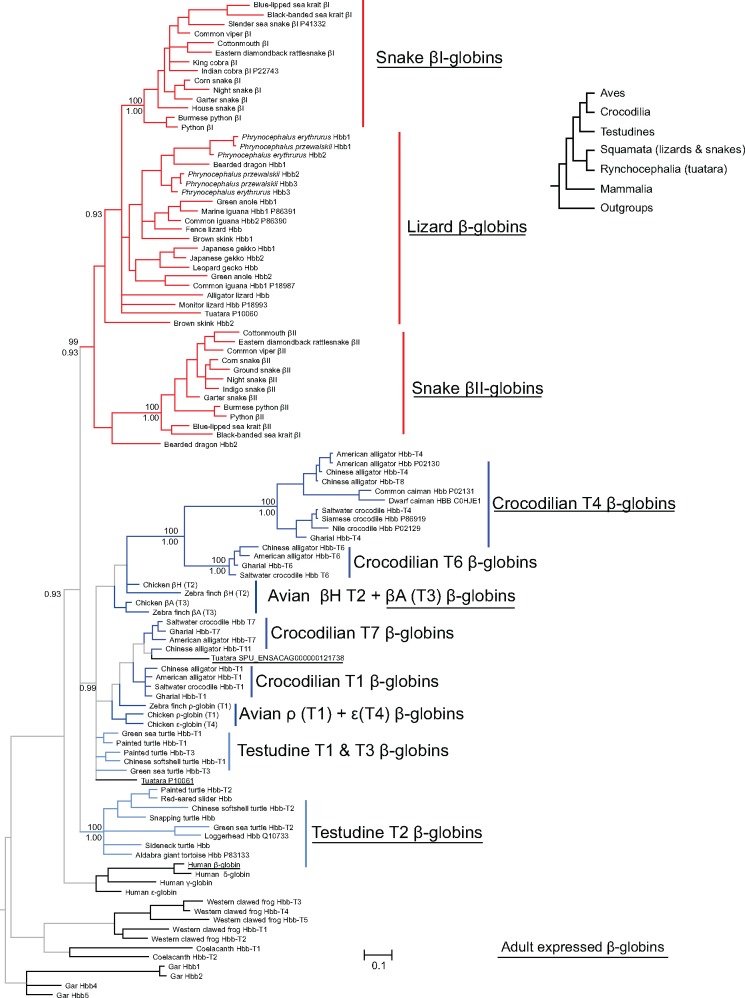
The genes that encode the α- and β-chain subunits of vertebrate hemoglobin have served as a model system for elucidating general principles of gene family evolution, but little is known about patterns of evolution in amniotes other than mammals and birds. Here, we report a comparative genomic analysis of the α- and β-globin gene clusters in sauropsids (archosaurs and nonavian reptiles). The objectives were to characterize changes in the size and membership composition of the α- and β-globin gene families within and among the major sauropsid lineages, to reconstruct the evolutionary history of the sauropsid α- and β-globin genes, to resolve orthologous relationships, and to reconstruct evolutionary changes in the developmental regulation of gene expression. Our comparisons revealed contrasting patterns of evolution in the unlinked α- and β-globin gene clusters. In the α-globin gene cluster, which has remained in the ancestral chromosomal location, evolutionary changes in gene content are attributable to the differential retention of paralogous gene copies that were present in the common ancestor of tetrapods. In the β-globin gene cluster, which was translocated to a new chromosomal location, evolutionary changes in gene content are attributable to differential gene gains (via lineage-specific duplication events) and gene losses (via lineage-specific deletions and inactivations). Consequently, all major groups of amniotes possess unique repertoires of embryonic and postnatally expressed β-type globin genes that diversified independently in each lineage. These independently derived β-type globins descend from a pair of tandemly linked paralogs in the most recent common ancestor of sauropsids.
脊椎动物血红蛋白的 α-和 β-链亚基基因已被用作阐明基因家族进化一般原理的模式系统,但对于除哺乳动物和鸟类以外的羊膜动物的进化模式知之甚少。在这里,我们报告了对蜥形类动物(恐龙和非鸟类爬行动物)的α-和β-球蛋白基因簇的比较基因组分析。目的是描述在主要的蜥形类谱系内和谱系之间的α-和β-球蛋白基因家族的大小和成员组成的变化,重建蜥形类α-和β-球蛋白基因的进化历史,解析同源关系,并重建基因表达的发育调控的进化变化。我们的比较揭示了在不相关的α-和β-球蛋白基因簇中进化的对比模式。在α-球蛋白基因簇中,该基因簇保持在祖先的染色体位置,基因内容的进化变化归因于在四足动物的共同祖先中存在的同源基因拷贝的差异保留。在β-球蛋白基因簇中,该基因簇被转移到一个新的染色体位置,基因内容的进化变化归因于基因的差异获得(通过谱系特异性复制事件)和基因的丧失(通过谱系特异性缺失和失活)。因此,所有主要的羊膜动物类群都具有独特的胚胎和出生后表达的β-类球蛋白基因库,这些基因在每个谱系中独立多样化。这些独立衍生的β-类球蛋白来自于蜥形类动物最近共同祖先中的一对串联的同源基因。