School of Biological Sciences, University of Nebraska, Lincoln, NE 68588, USA.
Mol Phylogenet Evol. 2013 Feb;66(2):469-78. doi: 10.1016/j.ympev.2012.07.013. Epub 2012 Jul 27.
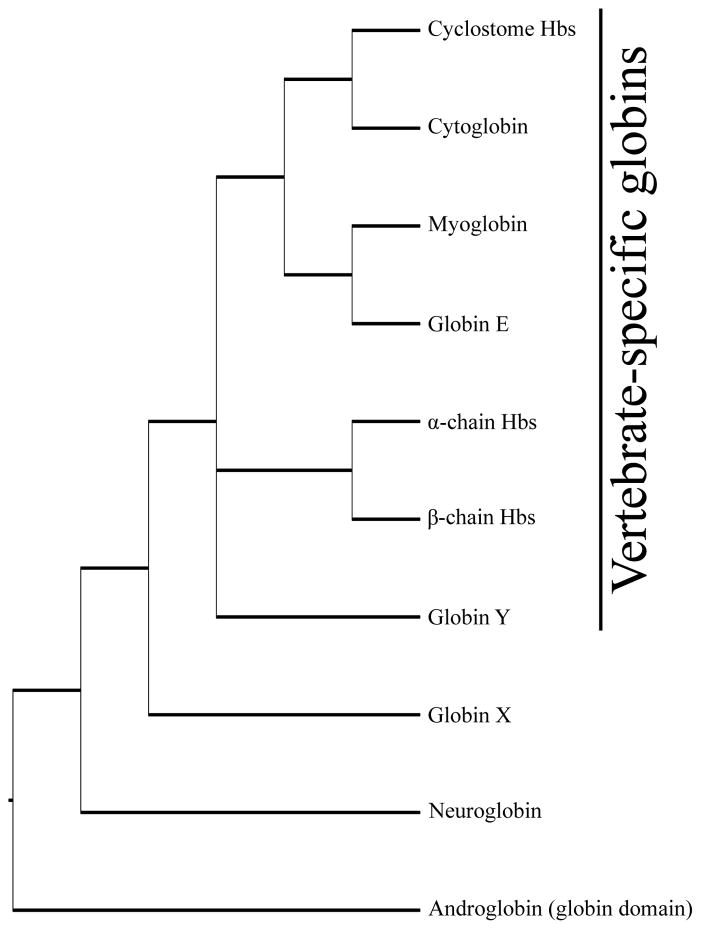
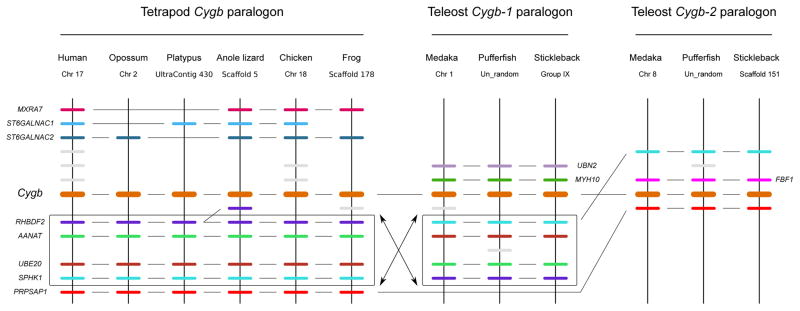
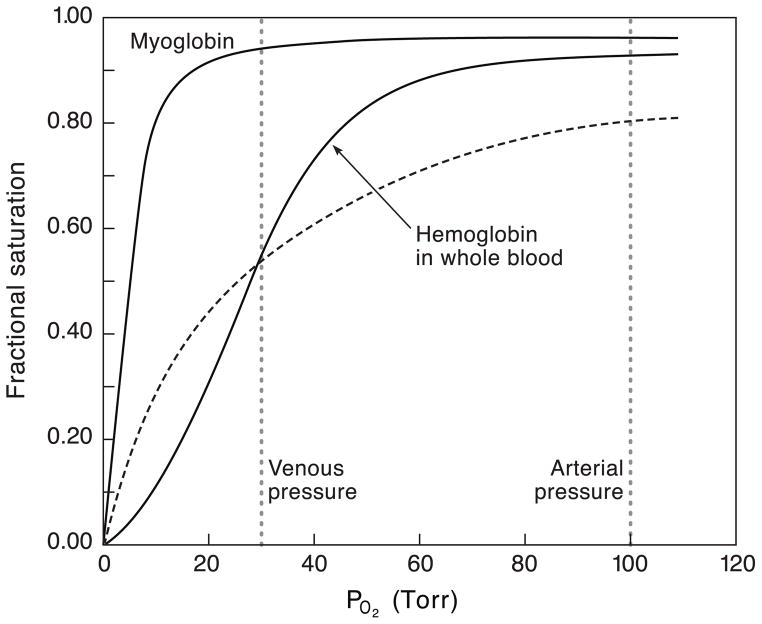
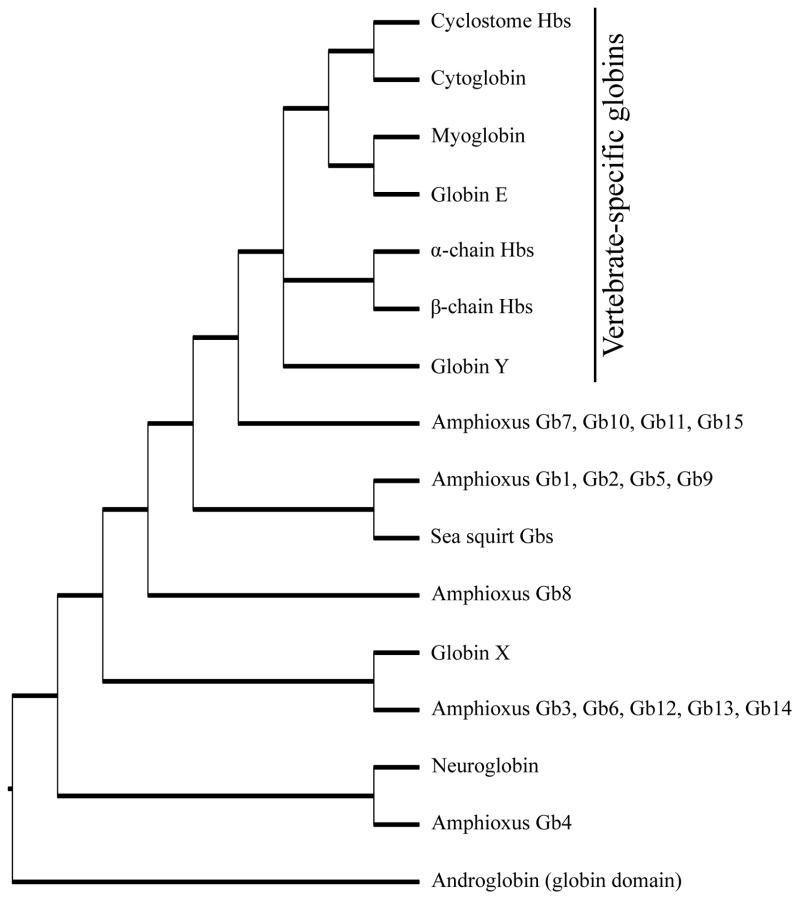
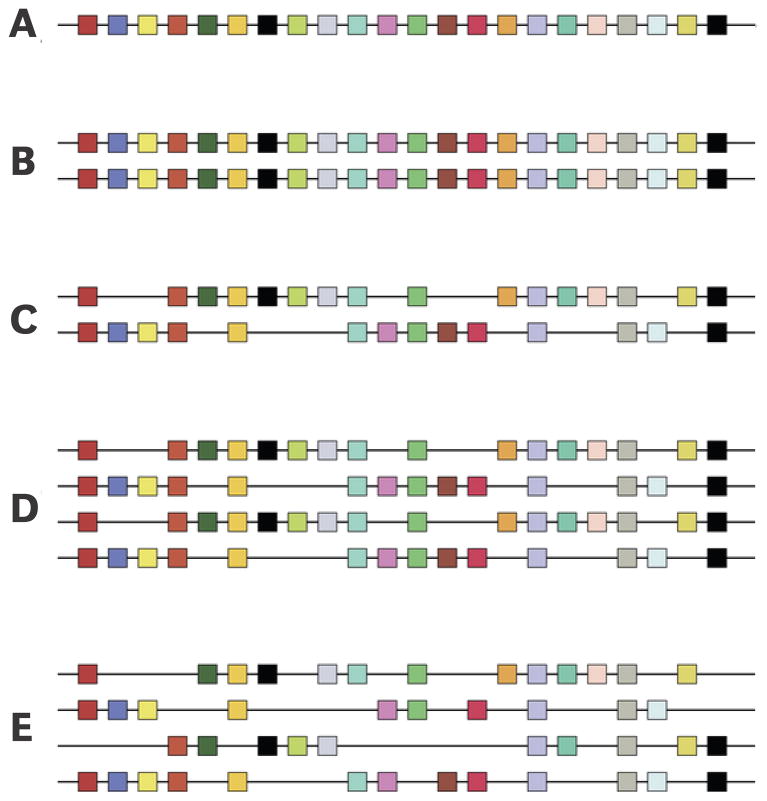
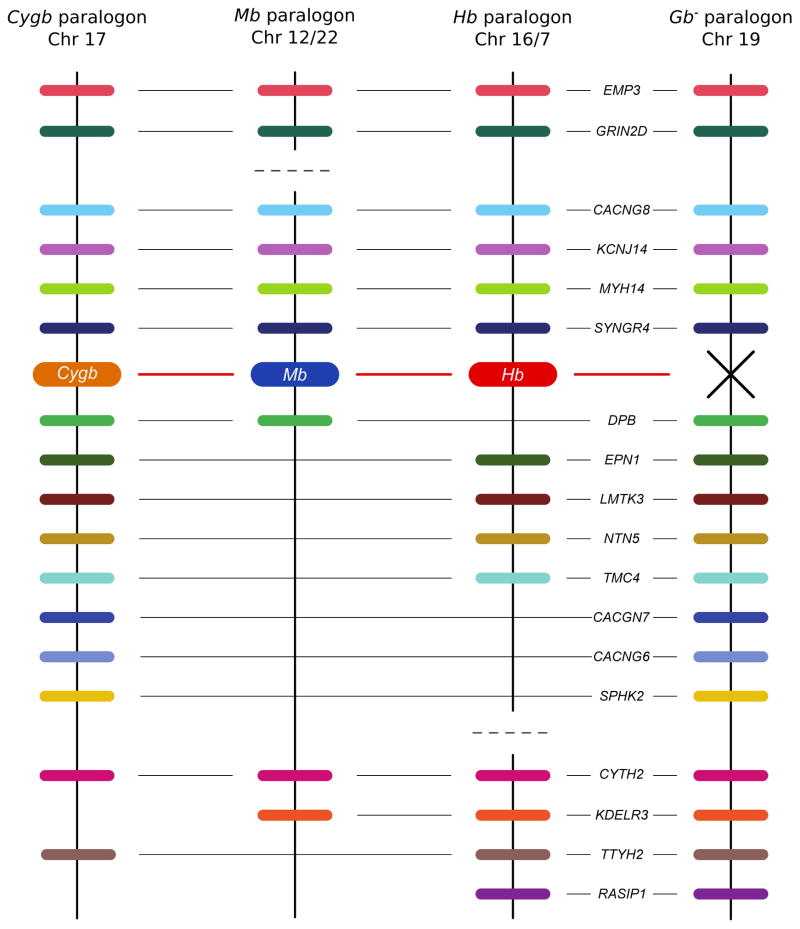
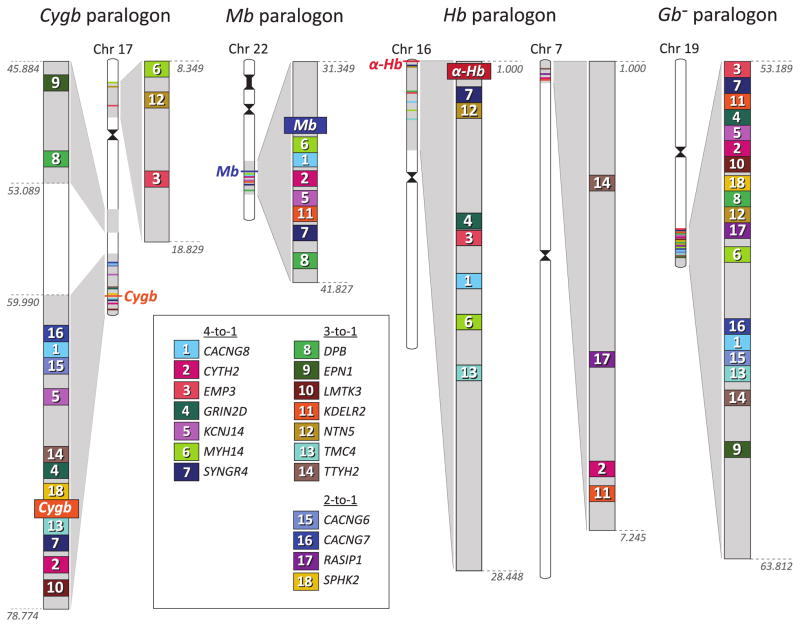
The functional diversification of the vertebrate globin gene superfamily provides an especially vivid illustration of the role of gene duplication and whole-genome duplication in promoting evolutionary innovation. For example, key globin proteins that evolved specialized functions in various aspects of oxidative metabolism and oxygen signaling pathways (hemoglobin [Hb], myoglobin [Mb], and cytoglobin [Cygb]) trace their origins to two whole-genome duplication events in the stem lineage of vertebrates. The retention of the proto-Hb and Mb genes in the ancestor of jawed vertebrates permitted a physiological division of labor between the oxygen-carrier function of Hb and the oxygen-storage function of Mb. In the Hb gene lineage, a subsequent tandem gene duplication gave rise to the proto α- and β-globin genes, which permitted the formation of multimeric Hbs composed of unlike subunits (α(2)β(2)). The evolution of this heteromeric quaternary structure was central to the emergence of Hb as a specialized oxygen-transport protein because it provided a mechanism for cooperative oxygen-binding and allosteric regulatory control. Subsequent rounds of duplication and divergence have produced diverse repertoires of α- and β-like globin genes that are ontogenetically regulated such that functionally distinct Hb isoforms are expressed during different stages of prenatal development and postnatal life. In the ancestor of jawless fishes, the proto Mb and Hb genes appear to have been secondarily lost, and the Cygb homolog evolved a specialized respiratory function in blood-oxygen transport. Phylogenetic and comparative genomic analyses of the vertebrate globin gene superfamily have revealed numerous instances in which paralogous globins have convergently evolved similar expression patterns and/or similar functional specializations in different organismal lineages.
脊椎动物球蛋白基因超家族的功能多样化为基因复制和全基因组复制在促进进化创新方面的作用提供了一个特别生动的例证。例如,在氧化代谢和氧气信号通路的各个方面进化出特殊功能的关键球蛋白蛋白(血红蛋白[Hb]、肌红蛋白[Mb]和细胞球蛋白[Cygb])可以追溯到脊椎动物谱系的两次全基因组复制事件。在有颌脊椎动物的祖先中保留原 Hb 和 Mb 基因,使得 Hb 的氧气载体功能和 Mb 的氧气储存功能在生理上分工。在 Hb 基因谱系中,随后的串联基因复制产生了原α-和β-球蛋白基因,这使得由不同亚基组成的多聚 Hb 形成(α(2)β(2))。这种异源四聚体结构的进化是 Hb 作为一种特殊氧气转运蛋白出现的核心,因为它提供了一种协同氧结合和变构调节控制的机制。随后的复制和分化产生了多种多样的α-和β-样球蛋白基因,这些基因在个体发生过程中受到调节,使得在产前发育和出生后生命的不同阶段表达功能不同的 Hb 同工型。在无颌鱼类的祖先中,原 Mb 和 Hb 基因似乎已经被二次丢失,而 Cygb 同源物在血液氧气运输中进化出了特殊的呼吸功能。对脊椎动物球蛋白基因超家族的系统发育和比较基因组分析揭示了许多例子,其中同源球蛋白在不同的生物谱系中趋同进化出相似的表达模式和/或相似的功能特化。