ICF International, 11785 Beltsville Drive, Suite 300, Calverton, MD 20705, USA.
BMC Public Health. 2012 Sep 5;12:741. doi: 10.1186/1471-2458-12-741.
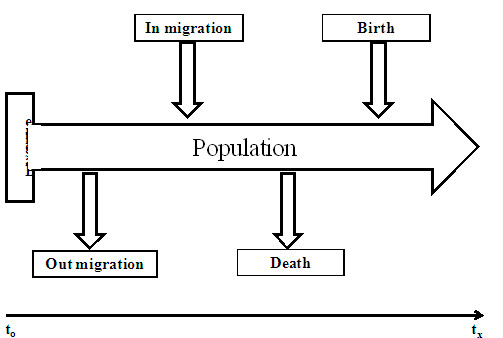
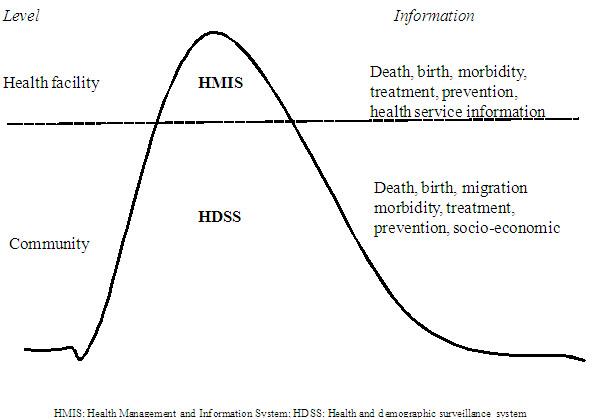
In the developed world, information on vital events is routinely collected nationally to inform population and health policies. However, in many low-and middle-income countries, especially those in sub-Saharan Africa (SSA), there is a lack of effective and comprehensive national civil registration and vital statistics system. In the past decades, the number of Health and Demographic Surveillance Systems (HDSSs) has increased throughout SSA. An HDSS monitors births, deaths, causes of death, migration, and other health and socio-economic indicators within a defined population over time. Currently, the International Network for the Continuous Demographic Evaluation of Populations and Their Health (INDEPTH) brings together 38 member research centers which run 44 HDSS sites from 20 countries in Africa, Asia and Oceana. Thirty two of these HDSS sites are in SSA.
This paper argues that, in the absence of an adequate national CRVS, HDSSs should be more effectively utilised to generate relevant public health data, and also to create local capacity for longitudinal data collection and management systems in SSA. If HDSSs get strategically located to cover different geographical regions in a country, data from these sites could be used to provide a more complete national picture of the health of the population. They provide useful data that can be extrapolated for national estimates if their regional coverage is well planned. HDSSs are however resource-intensive. Efforts are being put towards getting them linked to local or national policy contexts and to reduce their dependence on external funding. Increasing their number in SSA to cover a critical proportion of the population, especially urban populations, must be carefully planned. Strategic planning is needed at national levels to geographically locate HDSS sites and to support these through national funding mechanisms.
The paper does not suggest that HDSSs should be seen as a replacement for civil registration systems. Rather, they should serve as a short- to medium-term measure to provide data for health and population planning at regional levels with possible extrapolation to national levels. HDSSs can also provide useful lessons for countries that intend to set up nationally representative sample vital registration systems in the long term.
在发达国家,常规性地收集全国人口生命事件信息,以制定人口和卫生政策。然而,在许多中低收入国家,特别是撒哈拉以南非洲(SSA)国家,缺乏有效的全面国家民事登记和生命统计系统。在过去几十年中,SSA 国家的卫生和人口监测系统(HDSS)数量有所增加。HDSS 系统长期监测特定人群的出生、死亡、死因、迁移以及其他健康和社会经济指标。目前,国际人口与健康连续监测网络(INDEPTH)汇集了来自非洲、亚洲和大洋洲 20 个国家的 38 个成员研究中心,这些中心运行着 44 个人口与健康监测系统。其中 32 个 HDSS 站点位于 SSA。
本文认为,在缺乏适当的国家民事登记和生命统计系统的情况下,应更有效地利用 HDSS 来生成相关公共卫生数据,并在 SSA 建立长期数据收集和管理系统的地方能力。如果 HDSS 战略性地分布在一个国家的不同地理区域,这些站点的数据可用于更全面地了解该国人口的健康状况。如果其区域覆盖范围得到妥善规划,这些站点可提供有用的数据,以便进行国家估计。然而,HDSS 需要大量资源。目前正在努力将其与地方或国家政策环境联系起来,并减少对外部资金的依赖。必须谨慎规划在 SSA 增加 HDSS 的数量,以覆盖关键的人口比例,特别是城市人口。需要在国家一级进行战略规划,以便在地理上定位 HDSS 站点,并通过国家供资机制为其提供支持。
本文并非建议将 HDSS 视为民事登记系统的替代品,而是认为在短期内可以作为在区域一级提供健康和人口规划数据的措施,有可能推广到国家一级。HDSS 还可以为那些打算长期建立具有全国代表性的抽样生命登记系统的国家提供有用的经验教训。