Lyon Neuroscience Research Center, Team Olfaction: From Coding to Memory, Centre National de Recherche Scientifique (CNRS) Unité Mixte de Recherche 5292 - Institut National de Santé Et de Recherche Médicale (INSERM) U1028 - Université Lyon 1, Lyon, France.
PLoS One. 2012;7(8):e43964. doi: 10.1371/journal.pone.0043964. Epub 2012 Aug 31.
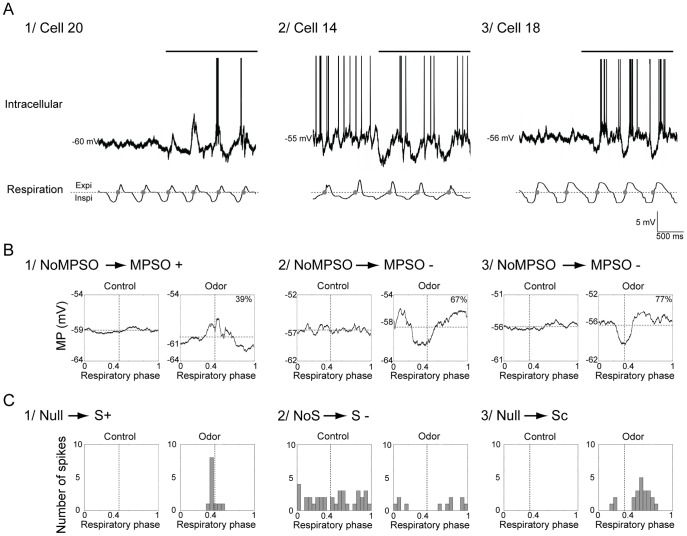
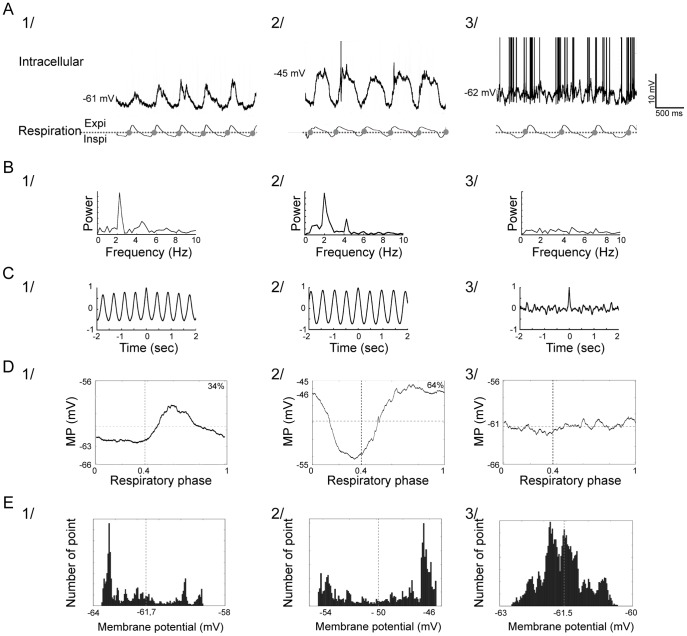
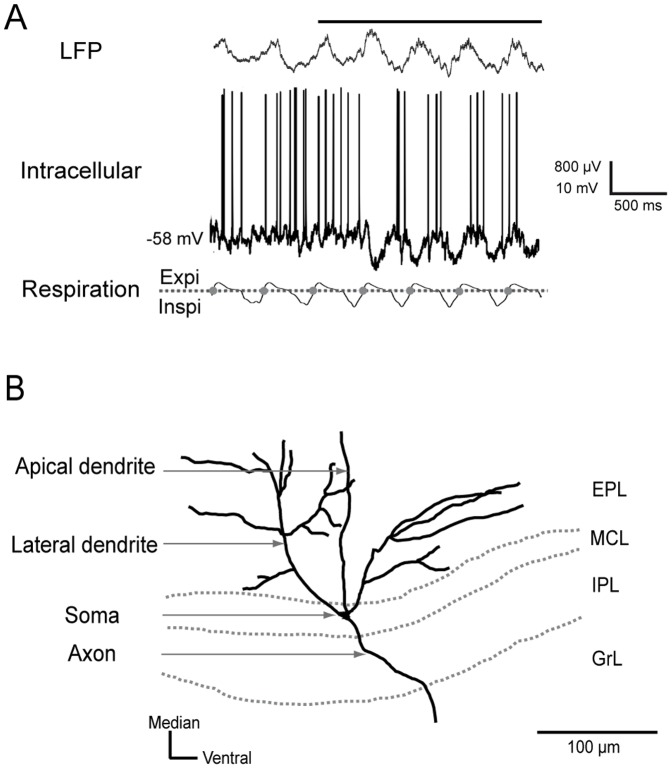
A slow respiration-related rhythm strongly shapes the activity of the olfactory bulb. This rhythm appears as a slow oscillation that is detectable in the membrane potential, the respiration-related spike discharge of the mitral/tufted cells and the bulbar local field potential. Here, we investigated the rules that govern the manifestation of membrane potential slow oscillations (MPSOs) and respiration-related discharge activities under various afferent input conditions and cellular excitability states.
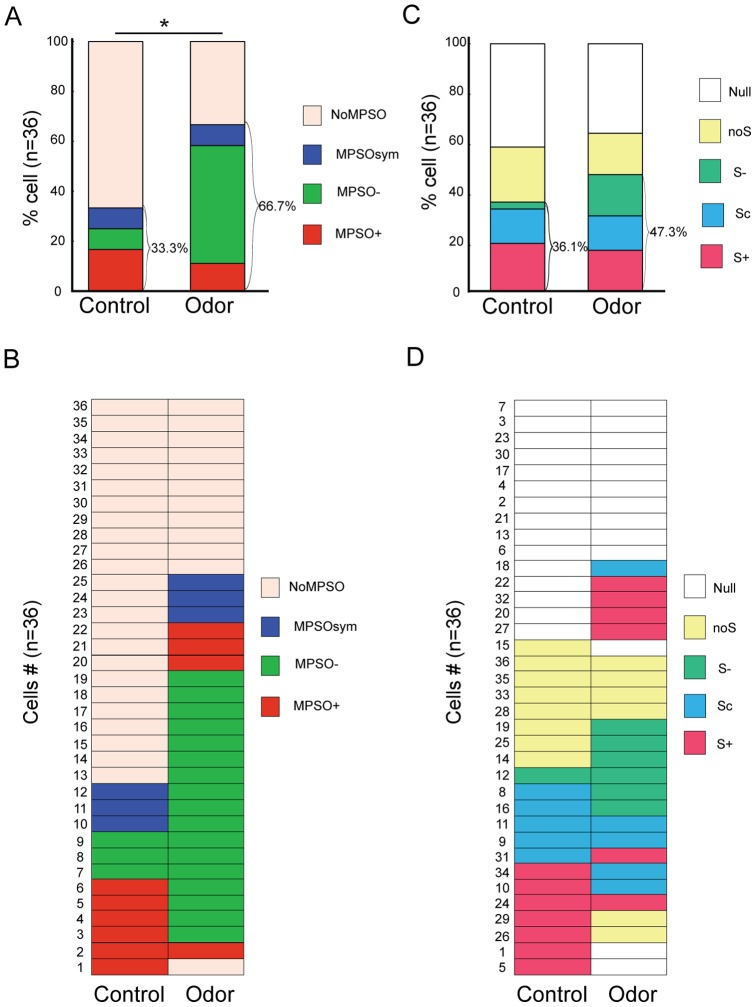
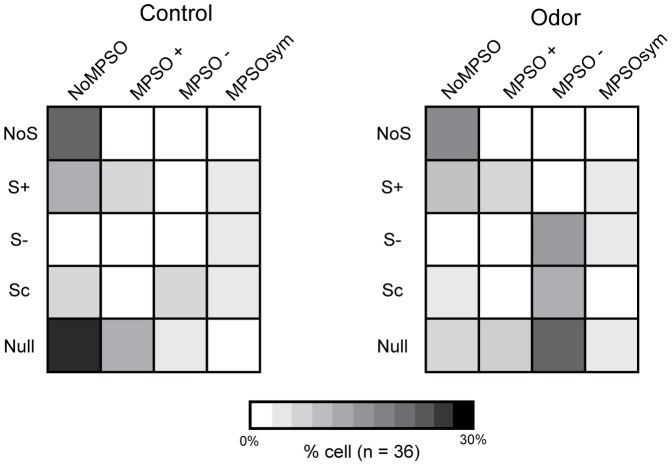
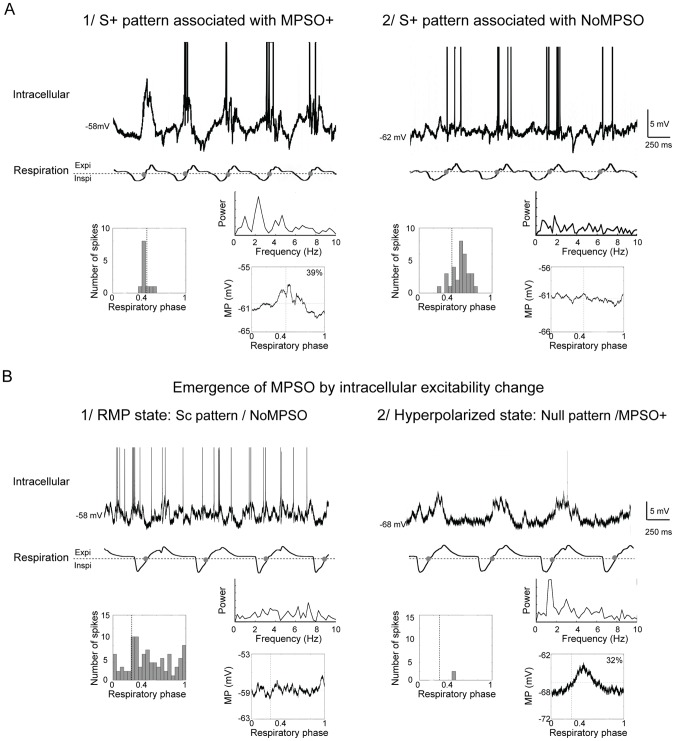
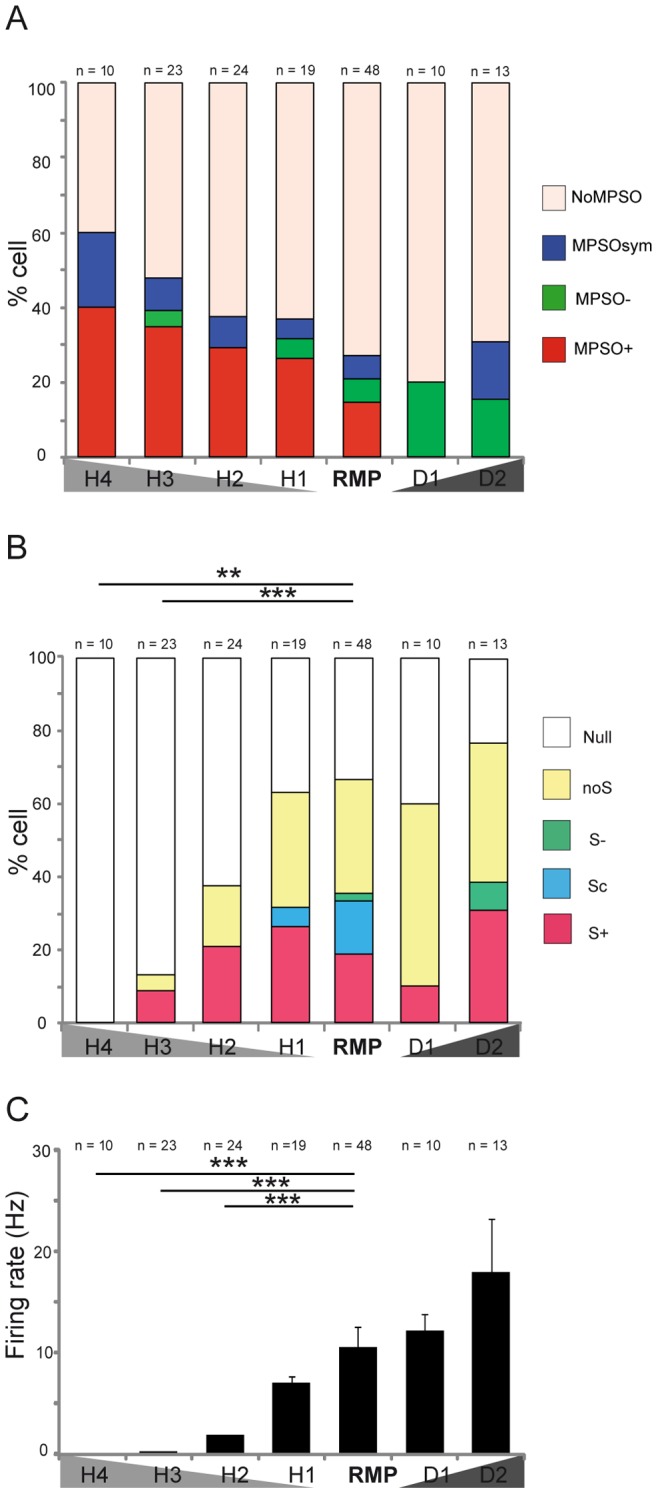
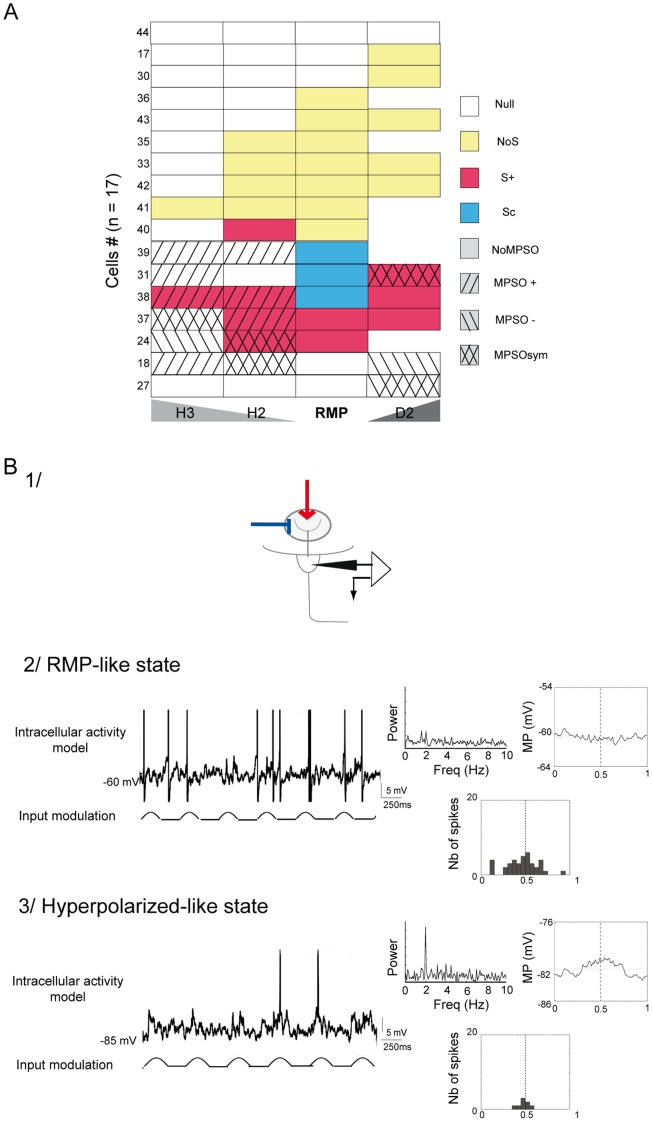
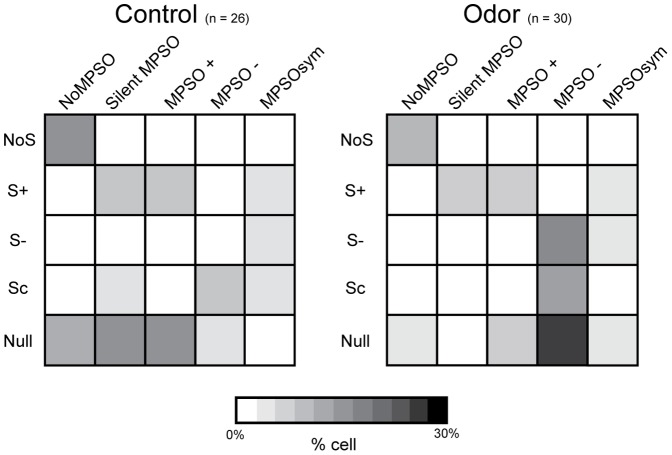
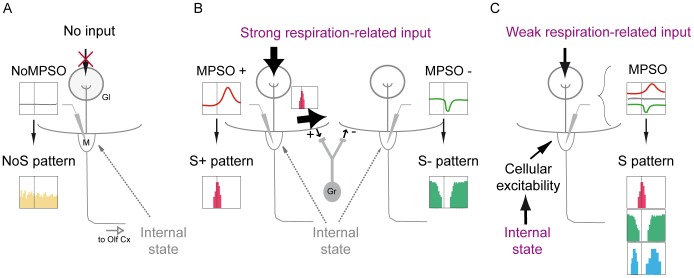
We recorded the intracellular membrane potential signals in the mitral/tufted cells of freely breathing anesthetized rats. We first demonstrated the existence of multiple types of MPSOs, which were influenced by odor stimulation and discharge activity patterns. Complementary studies using changes in the intracellular excitability state and a computational model of the mitral cell demonstrated that slow oscillations in the mitral/tufted cell membrane potential were also modulated by the intracellular excitability state, whereas the respiration-related spike activity primarily reflected the afferent input. Based on our data regarding MPSOs and spike patterns, we found that cells exhibiting an unsynchronized discharge pattern never exhibited an MPSO. In contrast, cells with a respiration-synchronized discharge pattern always exhibited an MPSO. In addition, we demonstrated that the association between spike patterns and MPSO types appeared complex.
We propose that both the intracellular excitability state and input strength underlie specific MPSOs, which, in turn, constrain the types of spike patterns exhibited.
与呼吸相关的缓慢节律强烈影响嗅球的活动。这种节律表现为一种慢振荡,可以在嗅球神经元的膜电位、呼吸相关的放电活动和局部场电位中检测到。在这里,我们研究了在不同传入输入条件和细胞兴奋性状态下,控制膜电位慢振荡(MPSOs)和呼吸相关放电活动表现的规则。
我们记录了麻醉自由呼吸大鼠的嗅球神经元的细胞内膜电位信号。我们首先证明了存在多种类型的 MPSOs,它们受到气味刺激和放电活动模式的影响。通过改变细胞内兴奋性状态和嗅球神经元的计算模型进行的补充研究表明,嗅球神经元的膜电位慢振荡也受到细胞内兴奋性状态的调制,而呼吸相关的放电活动主要反映传入输入。基于我们关于 MPSOs 和放电模式的数据,我们发现表现出非同步放电模式的细胞从不表现出 MPSO。相反,表现出呼吸同步放电模式的细胞总是表现出 MPSO。此外,我们还证明了放电模式和 MPSO 类型之间的关联似乎很复杂。
我们提出,细胞内兴奋性状态和输入强度共同决定了特定的 MPSOs,而这些 MPSOs 反过来又限制了表现出的放电模式的类型。