UNDP/UNFPA/WHO/World Bank Special Programme of Research, Development and Research Training in Human Reproduction, Department of Reproductive Health and Research, World Health Organization, Geneva, Switzerland.
PLoS One. 2012;7(8):e44129. doi: 10.1371/journal.pone.0044129. Epub 2012 Aug 29.
To validate the WHO maternal near-miss criteria and develop a benchmark tool for severe maternal morbidity assessments.
In a multicenter cross-sectional study implemented in 27 referral maternity hospitals in Brazil, a one-year prospective surveillance on severe maternal morbidity and data collection was carried out. Diagnostic accuracy tests were used to assess the validity of the WHO maternal near-miss criteria. Binary logistic regression was used to model the death probability among women with severe maternal complications and benchmark the management of severe maternal morbidity.
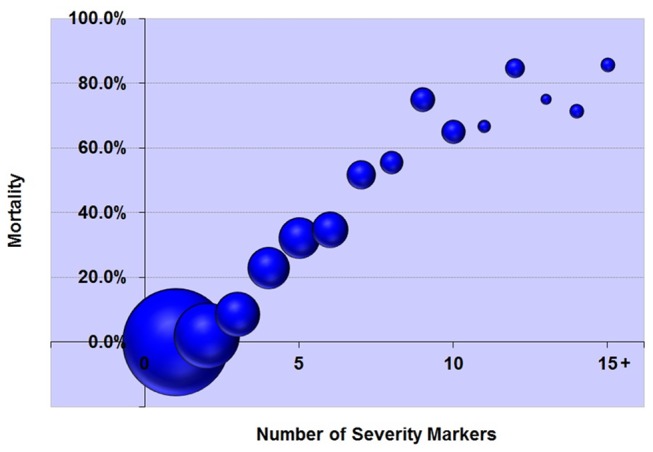
Of the 82,388 women having deliveries in the participating health facilities, 9,555 women presented pregnancy-related complications, including 140 maternal deaths and 770 maternal near misses. The WHO maternal near-miss criteria were found to be accurate and highly associated with maternal deaths (Positive likelihood ratio 106.8 (95% CI 99.56-114.6)). The maternal severity index (MSI) model was developed and found to able to describe the relationship between life-threatening conditions and mortality (Area under the ROC curve: 0.951 (95% CI 0.909-0.993)).
The identification of maternal near-miss cases using the WHO list of pregnancy-related life-threatening conditions was validated. The MSI model can be used as a tool for benchmarking the performance of health services managing women with severe maternal complications and provide case-mix adjustment.
验证世界卫生组织(WHO)产妇濒死标准,并开发一种用于严重产妇发病率评估的基准工具。
在巴西 27 家转诊产科医院进行的一项多中心横断面研究中,对严重产妇发病率进行了为期一年的前瞻性监测和数据收集。采用诊断准确性测试来评估 WHO 产妇濒死标准的有效性。采用二元逻辑回归对患有严重产妇并发症的妇女的死亡概率进行建模,并对严重产妇发病率的管理进行基准测试。
在参与的卫生机构分娩的 82388 名妇女中,有 9555 名妇女出现了妊娠相关并发症,包括 140 例产妇死亡和 770 例产妇濒死。WHO 产妇濒死标准被证明是准确的,且与产妇死亡高度相关(阳性似然比 106.8(95%CI 99.56-114.6))。开发了产妇严重程度指数(MSI)模型,并发现该模型能够描述危及生命的情况与死亡率之间的关系(ROC 曲线下面积:0.951(95%CI 0.909-0.993))。
使用与妊娠相关的危及生命情况的 WHO 清单来识别产妇濒死病例得到了验证。MSI 模型可作为基准工具,用于评估管理严重产妇并发症的卫生服务的表现,并提供病例组合调整。