Department of Pharmacology, China Medical University, Shenyang City, Liaoning, China.
PLoS One. 2012;7(8):e44254. doi: 10.1371/journal.pone.0044254. Epub 2012 Aug 28.
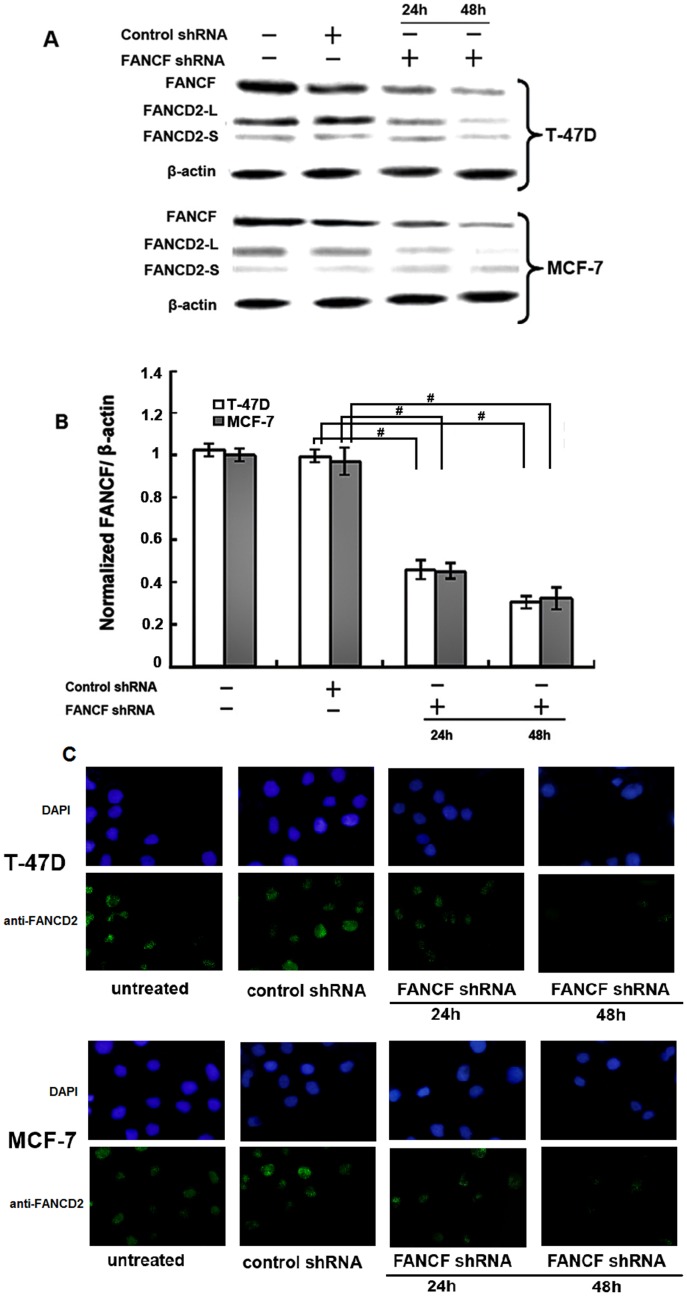
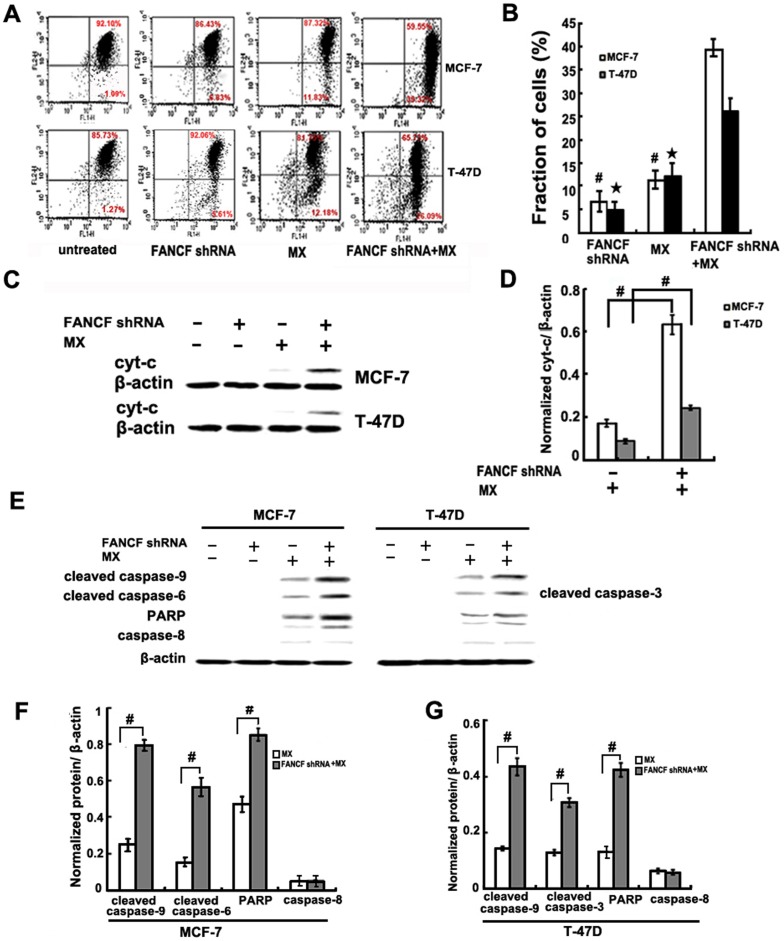
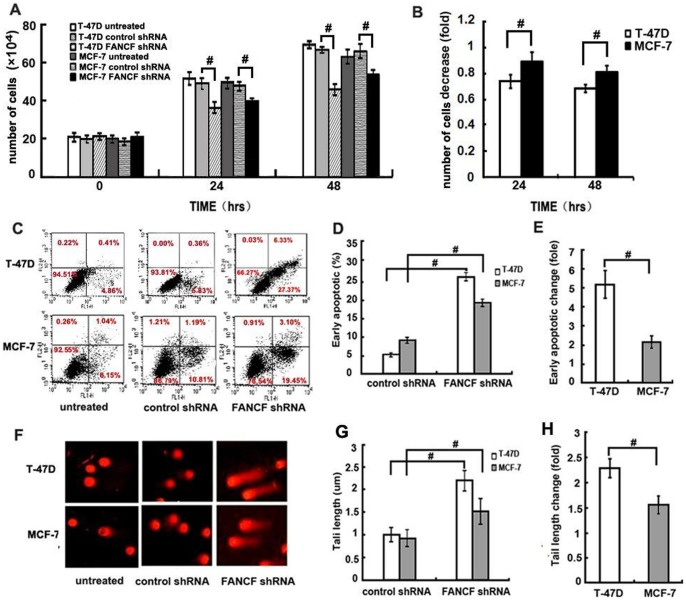
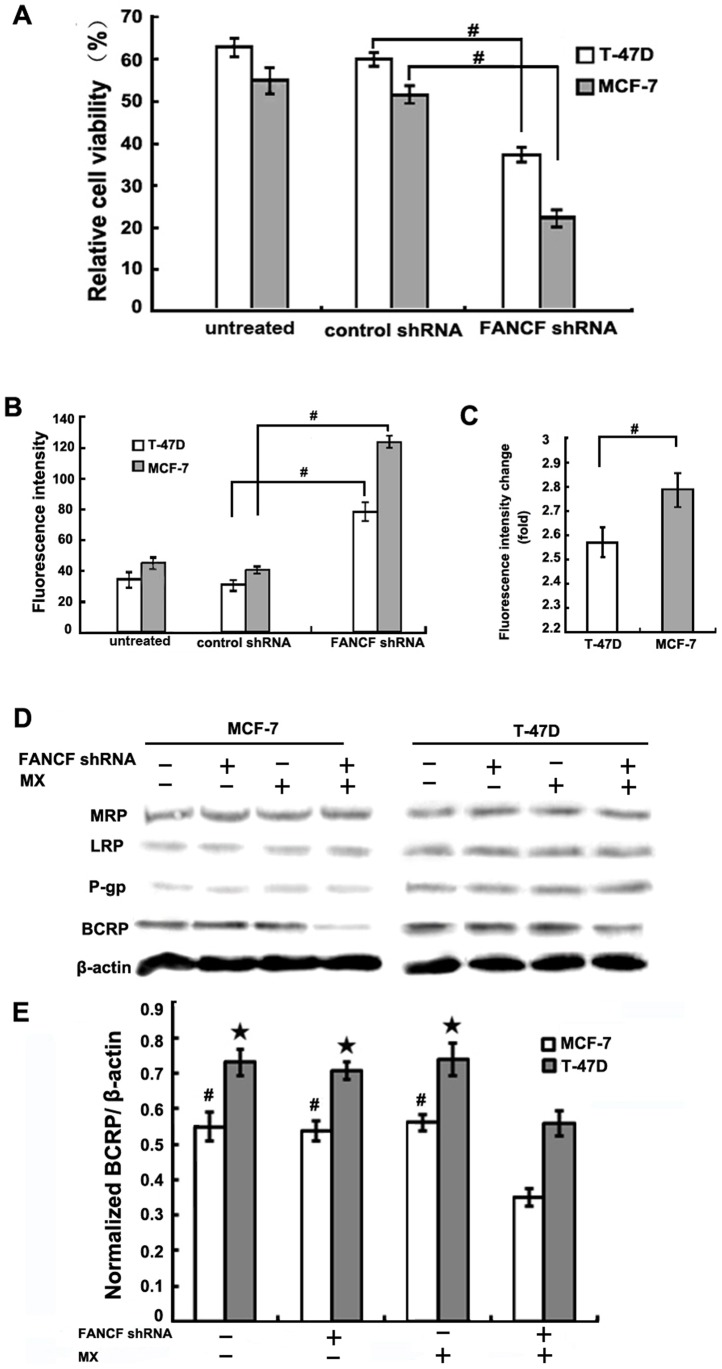
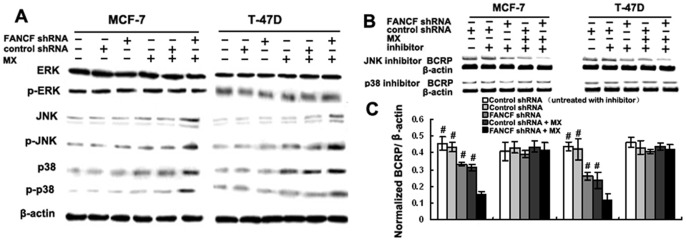
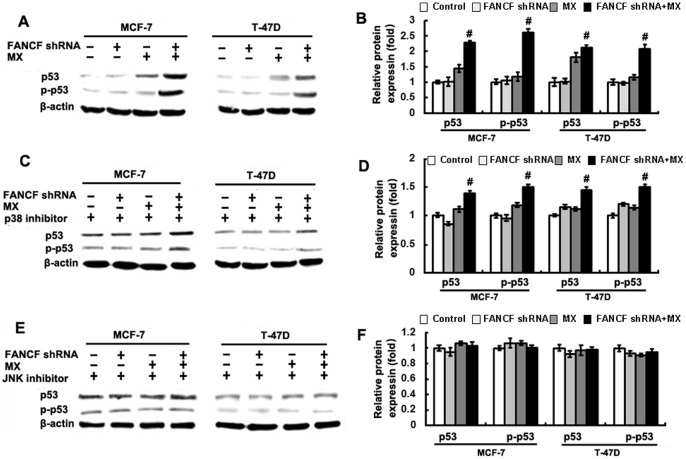
Fanconi anemia complementation group-F (FANCF) is a key factor to maintain the function of FA/BRCA, a DNA-damage response pathway. However, the functional role of FANCF in breast cancer has not been elucidated. In this study, we examined the effects and mechanisms of FANCF-RNAi on the sensitivity of breast cancer cells to mitoxantrone (MX). FANCF silencing by FANCF-shRNA blocked functions of FA/BRCA pathway through inhibition of FANCD2 mono-ubiquitination in breast cancer cell lines MCF-7 and T-47D. In addition, FANCF shRNA inhibited cell proliferation, induced apoptosis, and chromosome fragmentation in both breast cancer cells. We also found that FANCF silencing potentiated the sensitivity to MX in breast cancer cells, accompanying with an increase in intracellular MX accumulation and a decrease in BCRP expression. Furthermore, we found that the blockade of FA/BRCA pathway by FANCF-RNAi activated p38 and JNK MAPK signal pathways in response to MX treatment. BCRP expression was restored by p38 inhibitor SB203580, but not by JNK inhibitor SP600125. FANCF silencing increased JNK and p38 mediated activation of p53 in MX-treated breast cancer cells, activated the mitochondrial apoptosis pathway. Our findings indicate that FANCF shRNA potentiates the sensitivity of breast cancer cells to MX, suggesting that FANCF may be a potential target for therapeutic strategies for the treatment of breast tumors.
范可尼贫血互补群 F(FANCF)是维持 FA/BRCA 功能的关键因素,FA/BRCA 是一种 DNA 损伤反应途径。然而,FANCF 在乳腺癌中的功能作用尚未阐明。在本研究中,我们研究了 FANCF-RNAi 对乳腺癌细胞对米托蒽醌(MX)敏感性的影响及其机制。FANCF-shRNA 沉默通过抑制乳腺癌细胞系 MCF-7 和 T-47D 中的 FANCD2 单泛素化来阻断 FA/BRCA 途径的功能。此外,FANCF shRNA 抑制了两种乳腺癌细胞的增殖,诱导了细胞凋亡和染色体片段化。我们还发现,FANCF 沉默增强了乳腺癌细胞对 MX 的敏感性,伴随着细胞内 MX 积累增加和 BCRP 表达降低。此外,我们发现 FANCF-RNAi 阻断 FA/BRCA 途径会激活 p38 和 JNK MAPK 信号通路,以响应 MX 处理。p38 抑制剂 SB203580 可恢复 BCRP 的表达,但 JNK 抑制剂 SP600125 则不能。FANCF 沉默增加了 JNK 和 p38 在 MX 处理的乳腺癌细胞中对 p53 的介导激活,激活了线粒体凋亡途径。我们的研究结果表明,FANCF shRNA 增强了乳腺癌细胞对 MX 的敏感性,提示 FANCF 可能是治疗乳腺癌的潜在靶点。