Zhao L, Li N, Yu J K, Tang H T, Li Y L, He M, Yu Z J, Bai X F, Zheng Z H, Wang E H, Wei M J
China Medical University, School of Pharmacy, Department of Pharmacology, Heping Ward, Shenyang CityLiaoning, China, Department of Pharmacology, School of Pharmacy, China Medical University, Heping Ward, Shenyang City, Liaoning, China.
China Medical University, Institute of Pathology and Pathophysiology, Heping Ward, Shenyang City,Liaoning, China, Institute of Pathology and Pathophysiology, China Medical University, Heping Ward, Shenyang City, Liaoning, China.
Braz J Med Biol Res. 2014 Jan;47(1):24-34. doi: 10.1590/1414-431X20132938. Epub 2013 Dec 12.
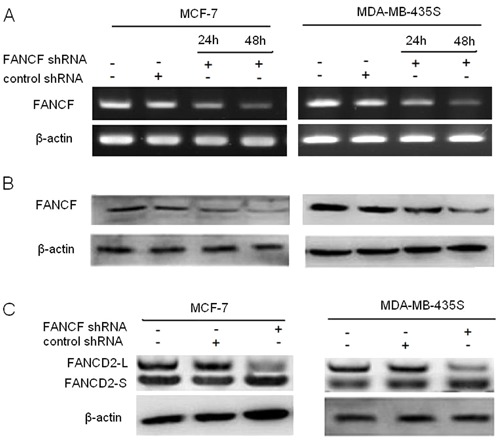
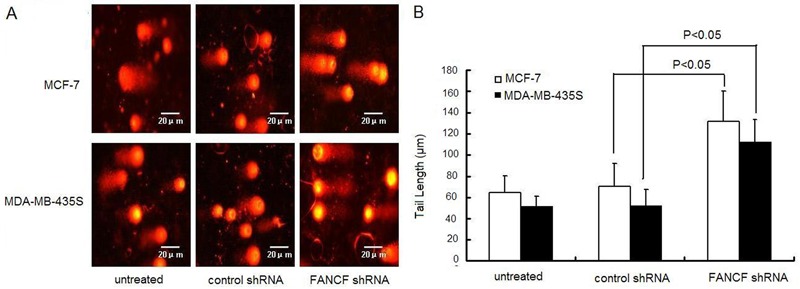
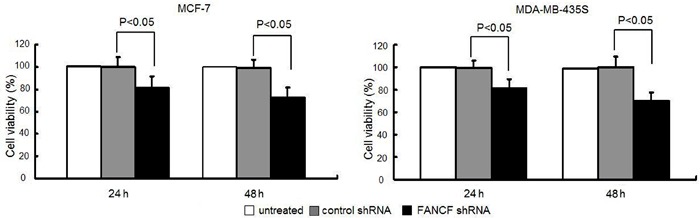
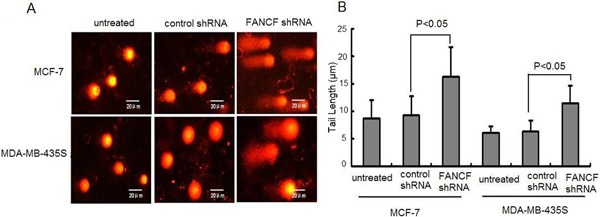
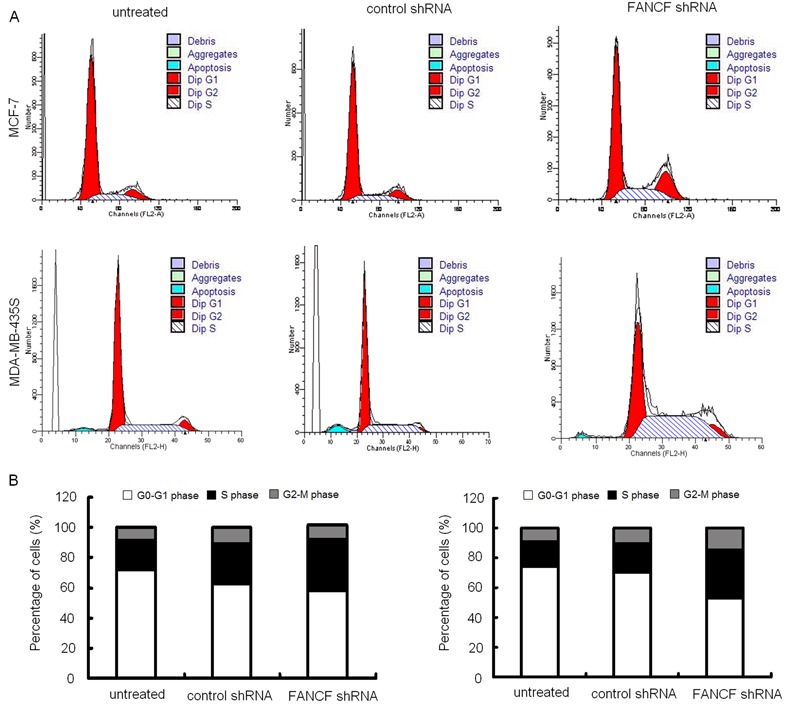
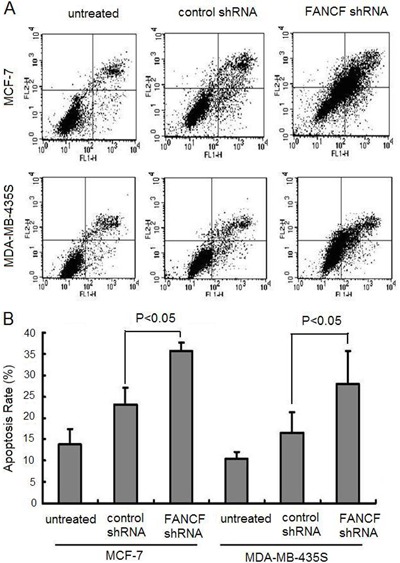
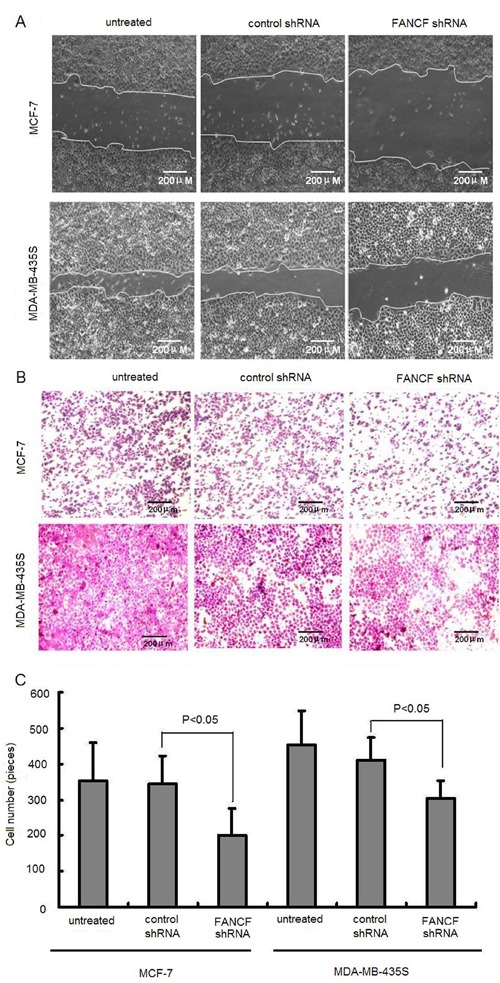
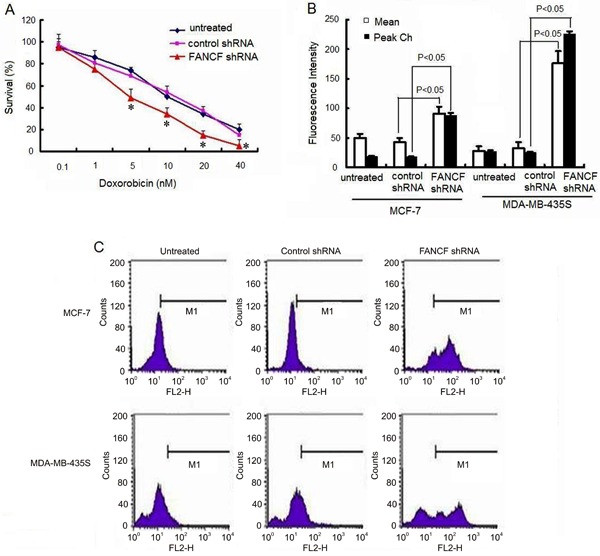
Fanconi anemia complementation group F protein (FANCF) is a key factor, which maintains the function of FA/BRCA, a DNA damage response pathway. However, the functional role of FANCF in breast cancer has not been elucidated. We performed a specific FANCF-shRNA knockdown of endogenous FANCF in vitro. Cell viability was measured with a CCK-8 assay. DNA damage was assessed with an alkaline comet assay. Apoptosis, cell cycle, and drug accumulation were measured by flow cytometry. The expression levels of protein were determined by Western blot using specific antibodies. Based on these results, we used cell migration and invasion assays to demonstrate a crucial role for FANCF in those processes. FANCF shRNA effectively inhibited expression of FANCF. We found that proliferation of FANCF knockdown breast cancer cells (MCF-7 and MDA-MB-435S) was significantly inhibited, with cell cycle arrest in the S phase, induction of apoptosis, and DNA fragmentation. Inhibition of FANCF also resulted in decreased cell migration and invasion. In addition, FANCF knockdown enhanced sensitivity to doxorubicin in breast cancer cells. These results suggest that FANCF may be a potential target for molecular, therapeutic intervention in breast cancer.
范可尼贫血互补组F蛋白(FANCF)是维持DNA损伤反应途径FA/BRCA功能的关键因子。然而,FANCF在乳腺癌中的功能作用尚未阐明。我们在体外对内源性FANCF进行了特异性FANCF-shRNA敲低。用CCK-8法检测细胞活力。用碱性彗星试验评估DNA损伤。通过流式细胞术检测细胞凋亡、细胞周期和药物蓄积。使用特异性抗体通过蛋白质印迹法测定蛋白质表达水平。基于这些结果,我们使用细胞迁移和侵袭试验来证明FANCF在这些过程中的关键作用。FANCF shRNA有效抑制了FANCF的表达。我们发现,FANCF敲低的乳腺癌细胞(MCF-7和MDA-MB-435S)的增殖受到显著抑制,细胞周期停滞于S期,诱导细胞凋亡和DNA片段化。抑制FANCF还导致细胞迁移和侵袭减少。此外,FANCF敲低增强了乳腺癌细胞对阿霉素的敏感性。这些结果表明,FANCF可能是乳腺癌分子治疗干预的潜在靶点。