
寻找癌症中的驱动通路:模型与算法
Finding driver pathways in cancer: models and algorithms.
作者信息
Vandin Fabio, Upfal Eli, Raphael Benjamin J
机构信息
Department of Computer Science, and Center for Computational Molecular Biology Brown University, 115 Waterman St,, 4th Flr, Providence, RI 02912, USA.
出版信息
Algorithms Mol Biol. 2012 Sep 6;7(1):23. doi: 10.1186/1748-7188-7-23.
BACKGROUND
Cancer sequencing projects are now measuring somatic mutations in large numbers of cancer genomes. A key challenge in interpreting these data is to distinguish driver mutations, mutations important for cancer development, from passenger mutations that have accumulated in somatic cells but without functional consequences. A common approach to identify genes harboring driver mutations is a single gene test that identifies individual genes that are recurrently mutated in a significant number of cancer genomes. However, the power of this test is reduced by: (1) the necessity of estimating the background mutation rate (BMR) for each gene; (2) the mutational heterogeneity in most cancers meaning that groups of genes (e.g. pathways), rather than single genes, are the primary target of mutations.
RESULTS
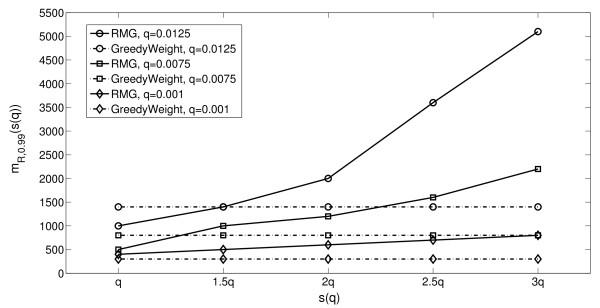
We investigate the problem of discovering driver pathways, groups of genes containing driver mutations, directly from cancer mutation data and without prior knowledge of pathways or other interactions between genes. We introduce two generative models of somatic mutations in cancer and study the algorithmic complexity of discovering driver pathways in both models. We show that a single gene test for driver genes is highly sensitive to the estimate of the BMR. In contrast, we show that an algorithmic approach that maximizes a straightforward measure of the mutational properties of a driver pathway successfully discovers these groups of genes without an estimate of the BMR. Moreover, this approach is also successful in the case when the observed frequencies of passenger and driver mutations are indistinguishable, a situation where single gene tests fail.
CONCLUSIONS
Accurate estimation of the BMR is a challenging task. Thus, methods that do not require an estimate of the BMR, such as the ones we provide here, can give increased power for the discovery of driver genes.
背景
癌症测序项目目前正在大量癌症基因组中检测体细胞突变。解释这些数据的一个关键挑战是区分驱动突变(对癌症发展至关重要的突变)和在体细胞中积累但无功能后果的乘客突变。识别含有驱动突变基因的常用方法是单基因检测,该检测可识别在大量癌症基因组中反复发生突变的单个基因。然而,这种检测的效能会因以下因素而降低:(1)需要估计每个基因的背景突变率(BMR);(2)大多数癌症中的突变异质性意味着基因组(例如通路)而非单个基因是突变的主要靶点。
结果
我们研究了直接从癌症突变数据中发现驱动通路(包含驱动突变的基因组)的问题,且无需事先了解通路或基因之间的其他相互作用。我们引入了两种癌症体细胞突变的生成模型,并研究了在这两种模型中发现驱动通路的算法复杂性。我们表明,针对驱动基因的单基因检测对BMR的估计高度敏感。相比之下,我们表明一种算法方法通过最大化对驱动通路突变特性的直接度量,成功地发现了这些基因组,而无需估计BMR。此外,在乘客突变和驱动突变的观察频率无法区分的情况下(单基因检测在此情况下失败),这种方法也取得了成功。
结论
准确估计BMR是一项具有挑战性的任务。因此,像我们在此提供的那些不需要估计BMR的方法,在发现驱动基因方面可以提供更高的效能。
 Zotero 插件