Department of Microbiology and Immunology, University of Miami Miller School of Medicine, Miami, FL 33101, USA.
J Immunol. 2012 Oct 1;189(7):3311-8. doi: 10.4049/jimmunol.1200597. Epub 2012 Sep 5.
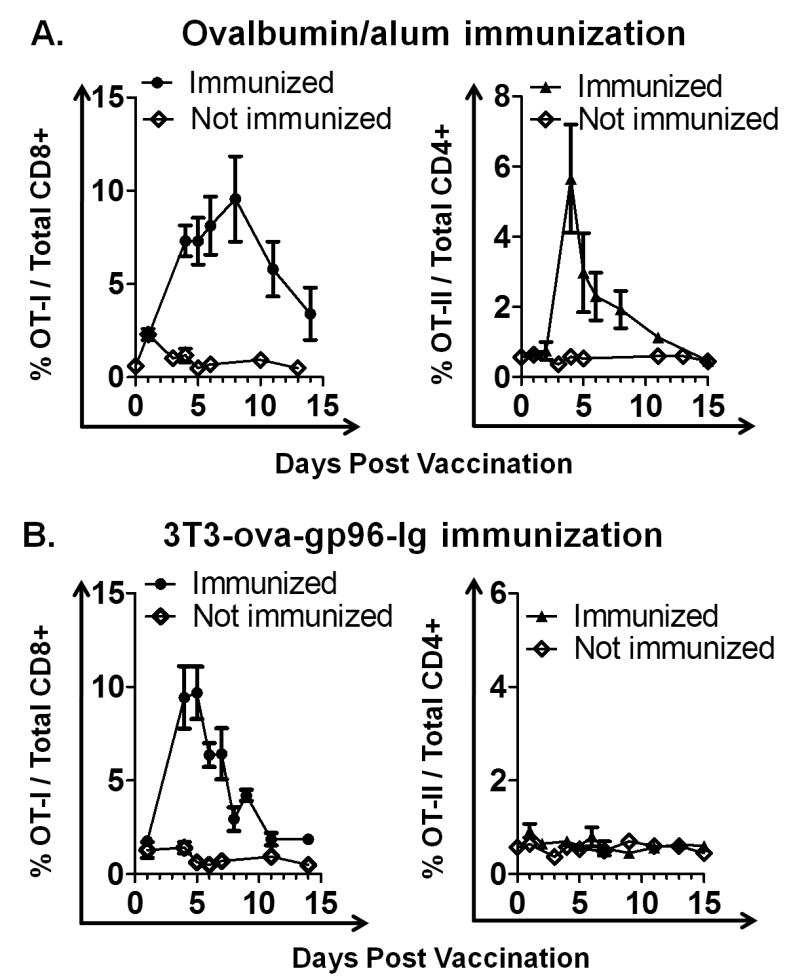
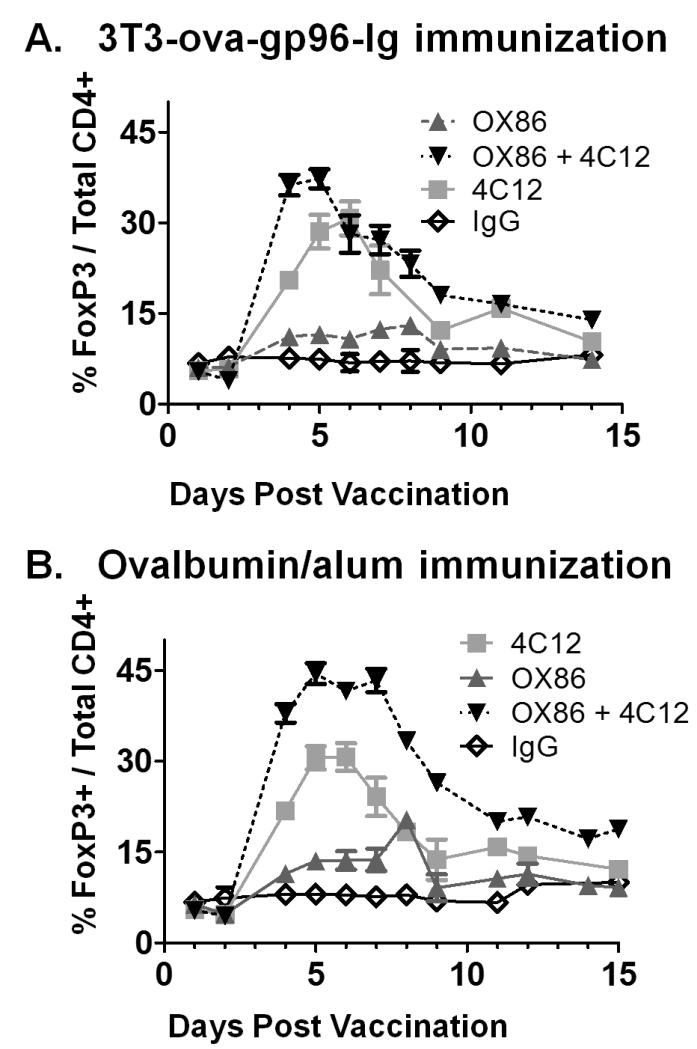
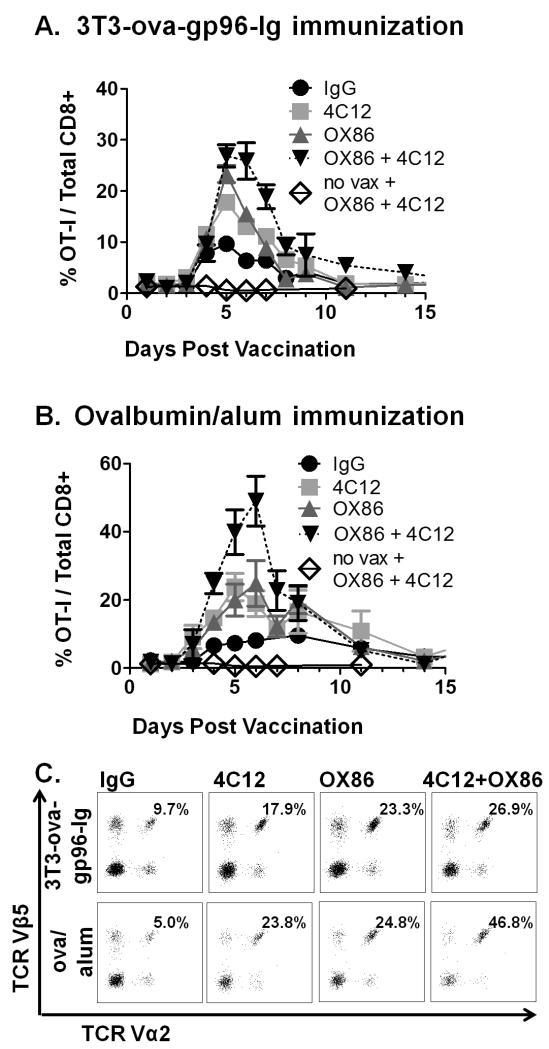
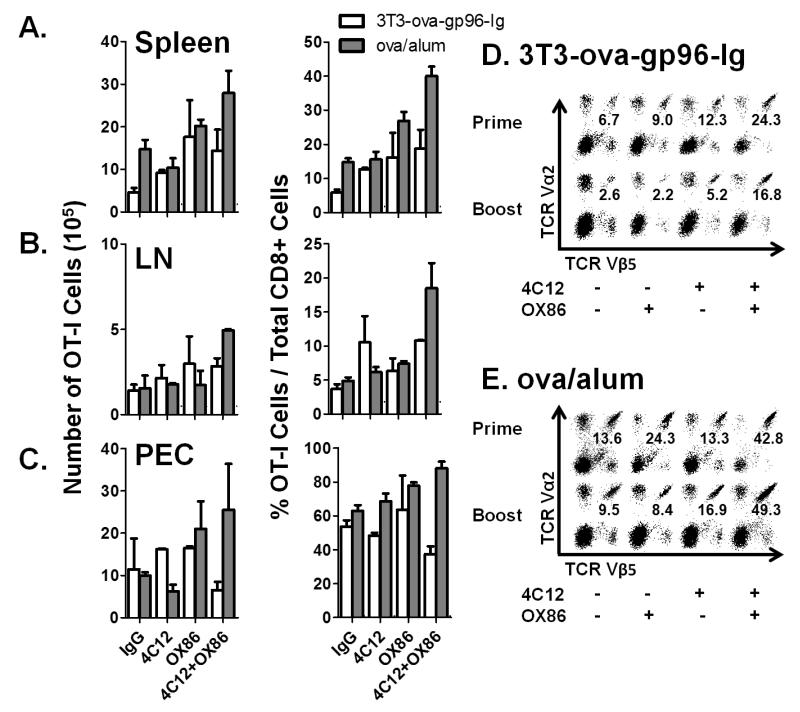
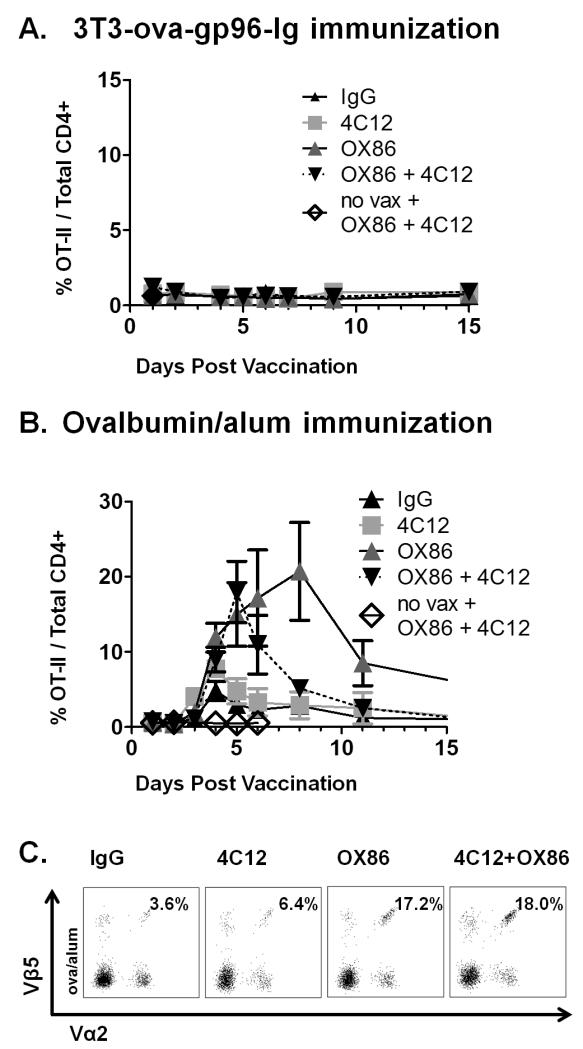
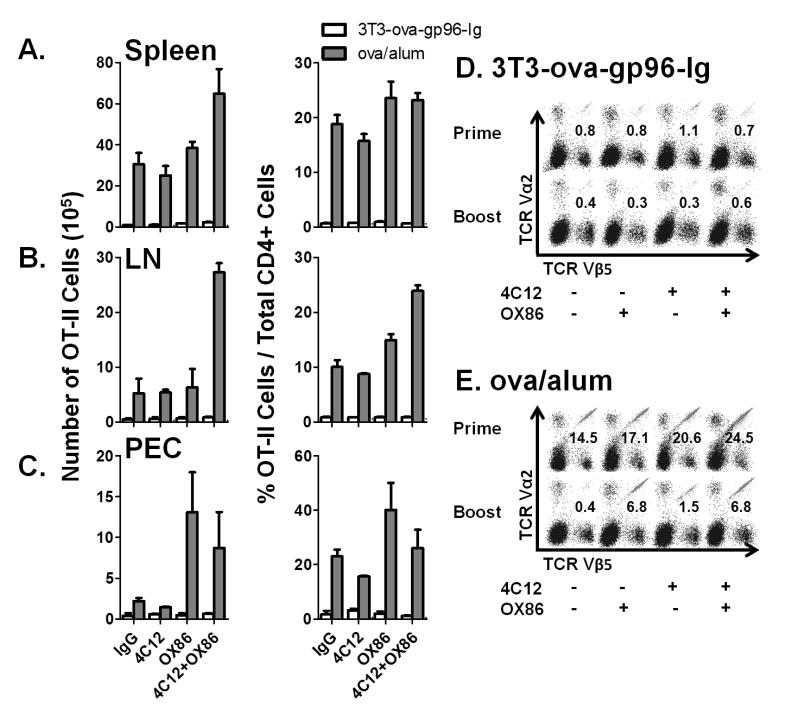
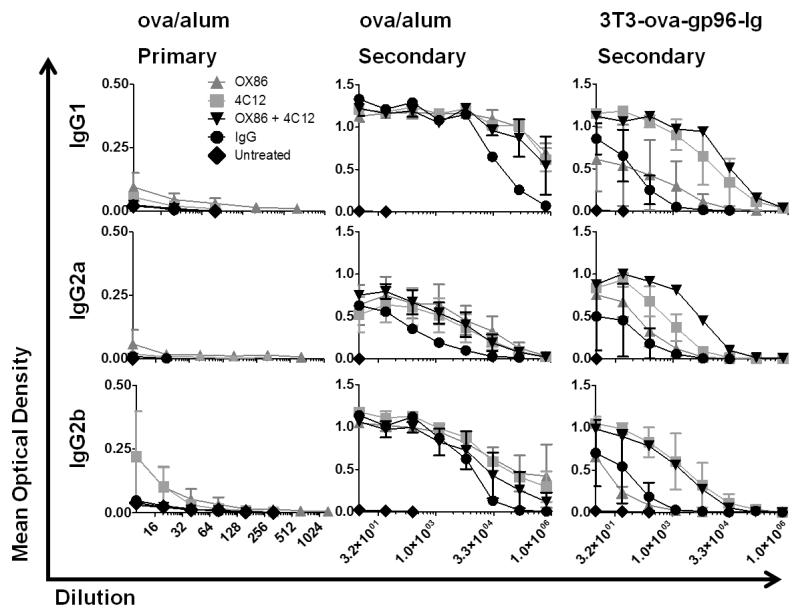
TNFR superfamily (TNFRSF)4 (OX40, CD134) and TNFRSF25 are costimulatory receptors that influence CD4(+) and CD8(+) T cell responses to cognate Ag. Independently, these receptors have been described to stimulate overlapping functions, including enhanced proliferation and activation for both regulatory T cells (CD4(+)Foxp3(+); Tregs) and conventional T cells (CD4(+)Foxp3(-) or CD8(+)Foxp3(-); Tconvs). To determine the relative functionality of TNFRSF4 and TNFRSF25 in T cell immunity, the activity of TNFRSF4 and TNFRS25 agonistic Abs was compared in the context of both traditional protein/adjuvant (OVA/aluminum hydroxide) and CD8(+)-specific heat shock protein-based (gp96-Ig) vaccine approaches. These studies demonstrate that both TNFRSF4 and TNFRSF25 independently and additively costimulate vaccine-induced CD8(+) T cell proliferation following both primary and secondary Ag challenge. In contrast, the activities of TNFRSF4 and TNFRSF25 were observed to be divergent in the costimulation of CD4(+) T cell immunity. TNFRSF4 agonists were potent costimulators of OVA/aluminum hydroxide-induced CD4(+) Tconv proliferation, but they only weakly costimulated Treg proliferation and IgG2a production, whereas TNFRSF25 agonists were strong costimulators of Treg proliferation, producers of IgG1, IgG2a, and IgG2b, and weak costimulators of CD4(+) Tconv proliferation. Interestingly, Ag-specific cellular and humoral responses were uncoupled upon secondary immunization, which was dramatically affected by the presence of TNFRSF4 or TNFRSF25 costimulation. These studies highlight the overlapping but nonredundant activities of TNFRSF4 and TNFRSF25 in T cell immunity, which may guide the application of receptor agonistic agents as vaccine adjuvants for infectious disease and tumor immunity.
肿瘤坏死因子受体超家族(TNFRSF)4(OX40,CD134)和 TNFRSF25 是共刺激受体,可影响 CD4(+)和 CD8(+)T 细胞对同源抗原的反应。独立地,这些受体已被描述为刺激重叠的功能,包括增强增殖和激活调节性 T 细胞(CD4(+)Foxp3(+);Tregs)和常规 T 细胞(CD4(+)Foxp3(-)或 CD8(+)Foxp3(-);Tconvs)。为了确定 TNFRSF4 和 TNFRSF25 在 T 细胞免疫中的相对功能,在传统蛋白/佐剂(OVA/氢氧化铝)和 CD8(+)-特异性热休克蛋白(gp96-Ig)疫苗方法的背景下比较了 TNFRSF4 和 TNFRS25 激动性 Abs 的活性。这些研究表明,TNFRSF4 和 TNFRSF25 独立且可叠加地刺激初次和二次 Ag 挑战后的疫苗诱导的 CD8(+)T 细胞增殖。相比之下,观察到 TNFRSF4 和 TNFRSF25 的活性在 CD4(+)T 细胞免疫的共刺激中是不同的。TNFRSF4 激动剂是 OVA/氢氧化铝诱导的 CD4(+)Tconv 增殖的有效共刺激剂,但它们仅弱地刺激 Treg 增殖和 IgG2a 产生,而 TNFRSF25 激动剂是 Treg 增殖、IgG1、IgG2a 和 IgG2b 产生的强共刺激剂,以及 CD4(+)Tconv 增殖的弱共刺激剂。有趣的是,在二次免疫时,Ag 特异性细胞和体液反应是解耦的,这受到 TNFRSF4 或 TNFRSF25 共刺激的显著影响。这些研究强调了 TNFRSF4 和 TNFRSF25 在 T 细胞免疫中的重叠但非冗余作用,这可能指导受体激动剂作为传染病和肿瘤免疫的疫苗佐剂的应用。