Cancer Prevention Laboratory and Department of Horticulture, Colorado State University, Fort Collins, Colorado, United States of America.
PLoS One. 2012;7(8):e44179. doi: 10.1371/journal.pone.0044179. Epub 2012 Aug 30.
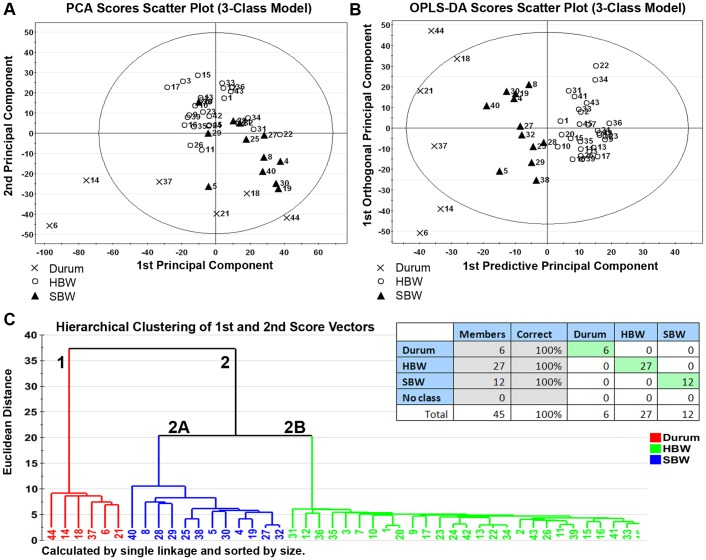
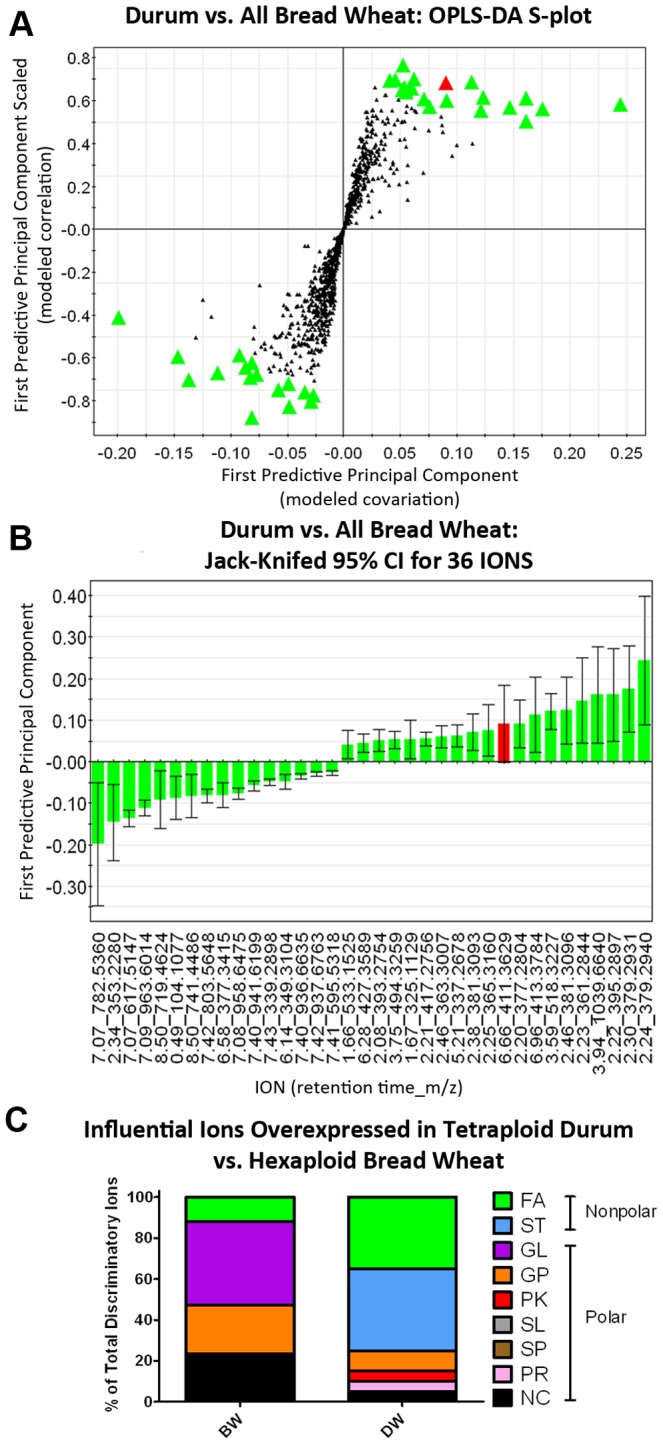
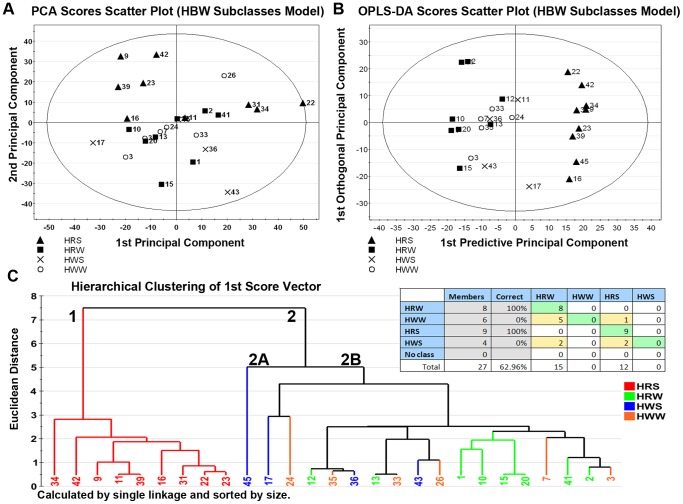
Genetic differences among major types of wheat are well characterized; however, little is known about how these distinctions affect the small molecule profile of the wheat seed. Ethanol/water (65% v/v) extracts of seed from 45 wheat lines representing 3 genetically distinct classes, tetraploid durum (Triticum turgidum subspecies durum) (DW) and hexaploid hard and soft bread wheat (T. aestivum subspecies aestivum) (BW) were subjected to ultraperformance liquid chromatography coupled with time-of-flight mass spectrometry (UPLC-TOF-MS). Discriminant analyses distinguished DW from BW with 100% accuracy due to differences in expression of nonpolar and polar ions, with differences attributed to sterol lipids/fatty acids and phospholipids/glycerolipids, respectively. Hard versus soft BW was distinguished with 100% accuracy by polar ions, with differences attributed to heterocyclic amines and polyketides versus phospholipid ions, respectively. This work provides a foundation for identification of metabolite profiles associated with desirable agronomic and human health traits and for assessing how environmental factors impact these characteristics.
主要类型小麦之间的遗传差异特征明显;然而,对于这些差异如何影响小麦种子的小分子特征知之甚少。利用超高效液相色谱-飞行时间质谱(UPLC-TOF-MS)对来自 45 个小麦品系(代表 3 种不同遗传类群)的种子进行了研究,这些品系包括四倍体硬粒小麦(Triticum turgidum 亚种 durum)(DW)和六倍体硬粒和软粒面包小麦(T. aestivum 亚种 aestivum)(BW)。由于非极性和极性离子表达的差异,判别分析能够准确地区分 DW 和 BW,差异归因于固醇脂质/脂肪酸和磷脂/甘油脂质。极性离子能够准确地区分硬粒和软粒 BW,差异归因于杂环胺和聚酮与磷脂离子的差异。这项工作为鉴定与理想农艺和人类健康性状相关的代谢物图谱以及评估环境因素如何影响这些特征提供了基础。