Produce Safety and Microbiology Research Unit, Western Regional Research Center, Agricultural Research Service, United States Department of Agriculture, Albany, California, United States of America.
PLoS One. 2012;7(9):e44186. doi: 10.1371/journal.pone.0044186. Epub 2012 Sep 5.
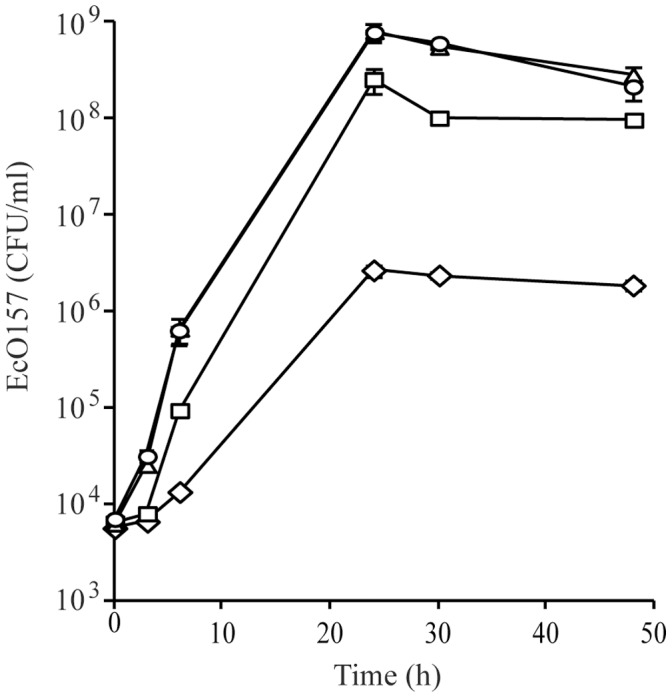
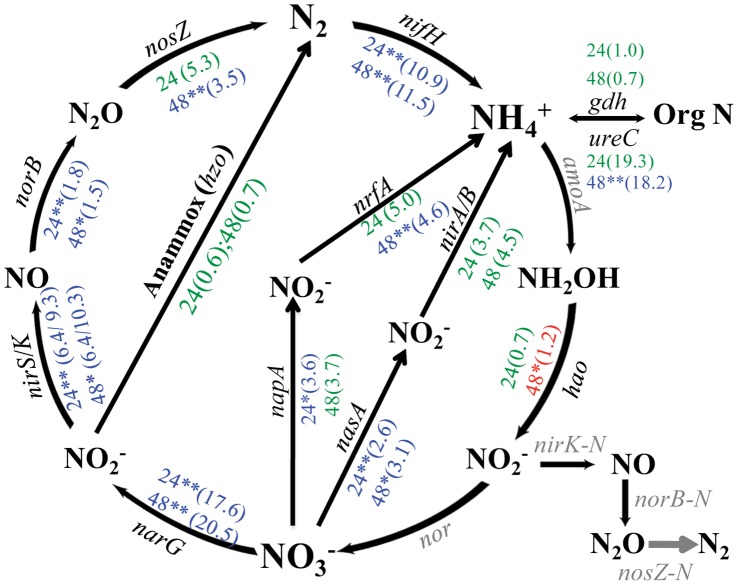
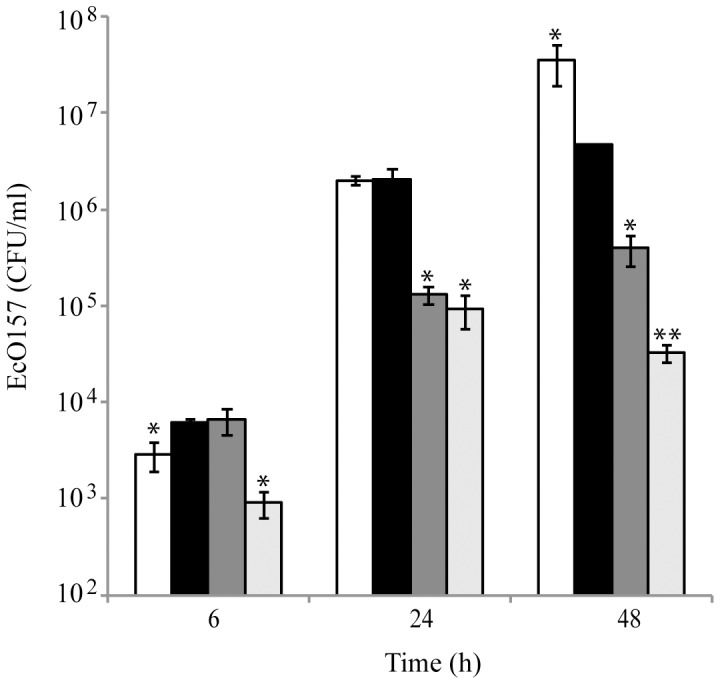
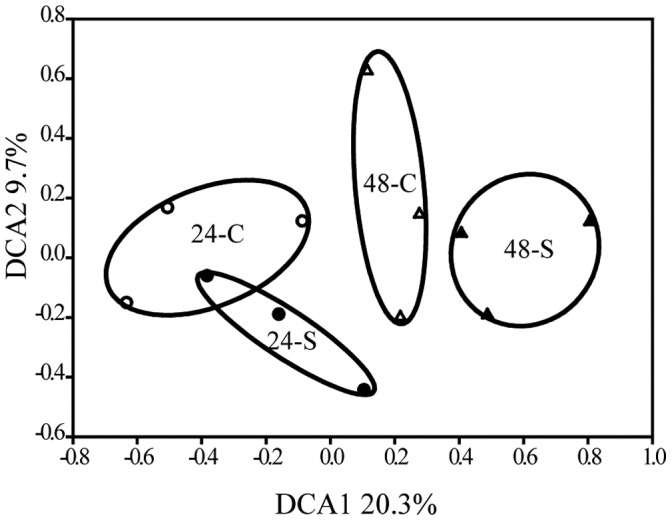
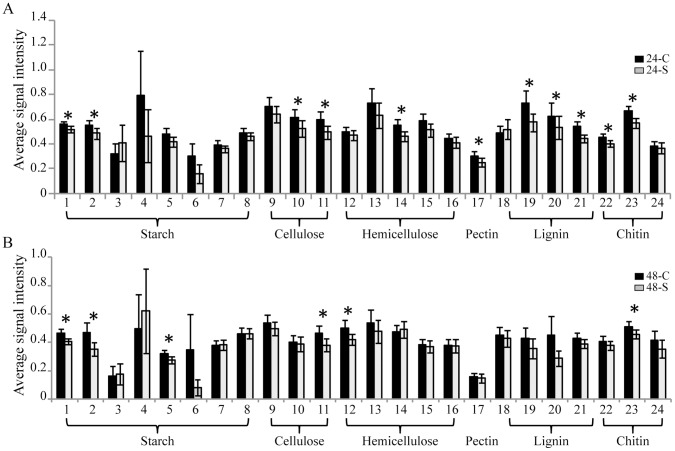
The increase in foodborne outbreaks worldwide attributed to fresh fruit and vegetables suggests that produce may serve as an ecological niche for enteric pathogens. Here we examined the interaction of E. coli O157:H7 (EcO157) with spinach leaf indigenous microorganisms during co-colonization and establishment of a mixed biofilm on a stainless steel surface. Stainless steel surface was selected to mimic the surface of produce-processing equipment, where retention of foodborne pathogens such as EcO157 could serve as a potential source for transmission. We observed a positive effect of spinach-associated microbes on the initial attachment of EcO157, but an antagonistic effect on the EcO157 population at the later stage of biofilm formation. Metagenomic analyses of the biofilm community with the GeoChip revealed an extremely diverse community (gene richness, 23409; Shannon-Weiner index H, 9.55). Presence of EcO157 in the mixed biofilm resulted in a significant decrease in the community α-diversity (t test, P<0.05), indicating a putative competition between the pathogen and indigenous spinach microbes. The decrease in the β-diversity of the EcO157-inoculated biofilm at 48 h (ANOVA, P<0.05) suggested a convergent shift in functional composition in response to EcO157 invasion. The success of EcO157 in the mixed biofilm is likely associated with its metabolic potential in utilizing spinach nutrients: the generation time of EcO157 in spinach lysates at 28°C is ~ 38 min, which is comparable to that in rich broth. The significant decrease in the abundance of many genes involved in carbon, nitrogen, and phosphorus cycling in the EcO157-inoculated biofilms (t test, P<0.05) further support our conclusion that competition for essential macronutrients is likely the primary interaction between the EcO157 and indigenous spinach-biofilm species.
食源性疾病爆发的增加归因于新鲜水果和蔬菜,这表明农产品可能是肠道病原体的生态位。在这里,我们研究了大肠杆菌 O157:H7 (EcO157) 与菠菜叶土著微生物在共同定殖和在不锈钢表面形成混合生物膜过程中的相互作用。选择不锈钢表面来模拟农产品加工设备的表面,在那里,食源性病原体如 EcO157 的保留可能成为传播的潜在来源。我们观察到菠菜相关微生物对 EcO157 的初始附着有积极影响,但在生物膜形成的后期对 EcO157 种群有拮抗作用。使用 GeoChip 对生物膜群落进行的宏基因组分析显示出一个极其多样化的群落(基因丰富度为 23409;Shannon-Weiner 指数 H,9.55)。混合生物膜中 EcO157 的存在导致群落 α-多样性显著降低(t 检验,P<0.05),表明病原体和土著菠菜微生物之间可能存在竞争。48 小时时 EcO157 接种生物膜的 β-多样性降低(ANOVA,P<0.05)表明,功能组成的趋同变化是对 EcO157 入侵的响应。EcO157 在混合生物膜中的成功可能与其利用菠菜营养物质的代谢潜力有关:28°C 时 EcO157 在菠菜裂解物中的代时约为 38 分钟,与在丰富肉汤中的代时相当。在 EcO157 接种生物膜中许多涉及碳、氮和磷循环的基因的丰度显著降低(t 检验,P<0.05),进一步支持我们的结论,即对必需宏量营养素的竞争可能是 EcO157 与土著菠菜生物膜物种之间的主要相互作用。