Department of Anesthesiology, Biomedical Science Tower 3, 3501 Fifth Avenue, University of Pittsburgh School of Medicine, Pittsburgh, PA 15260, USA.
Structure. 2012 Sep 5;20(9):1463-9. doi: 10.1016/j.str.2012.08.009.
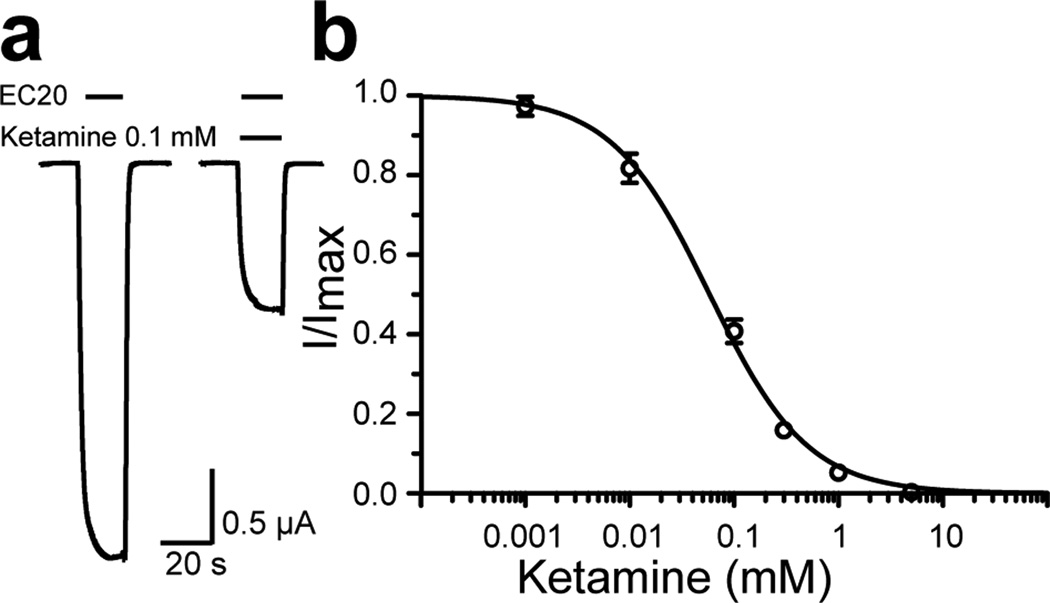
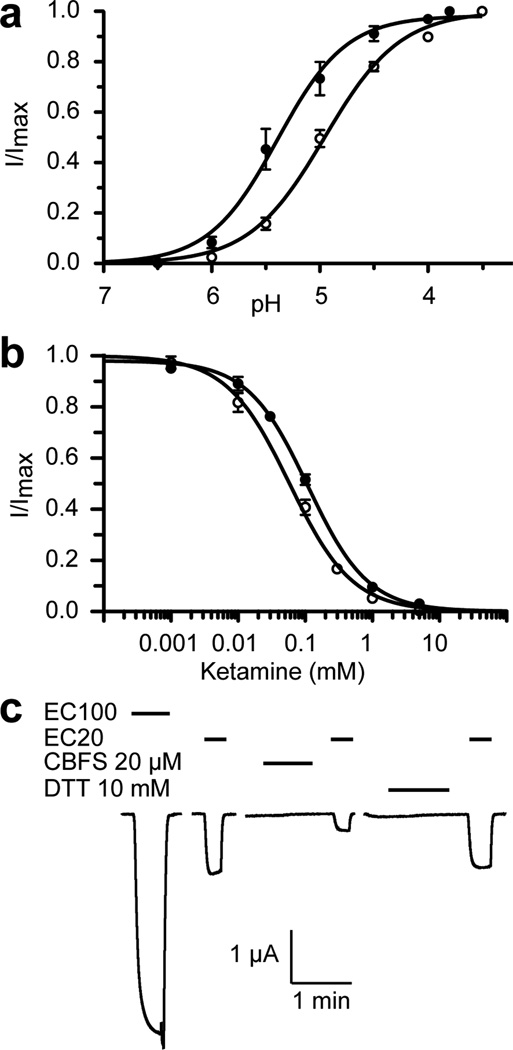
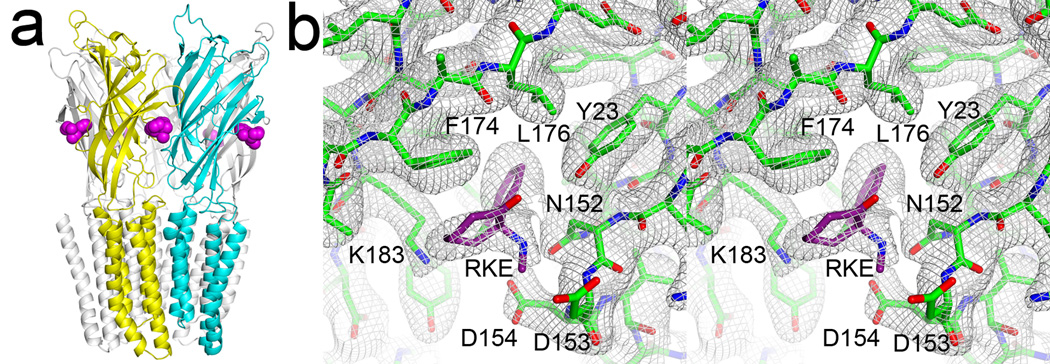
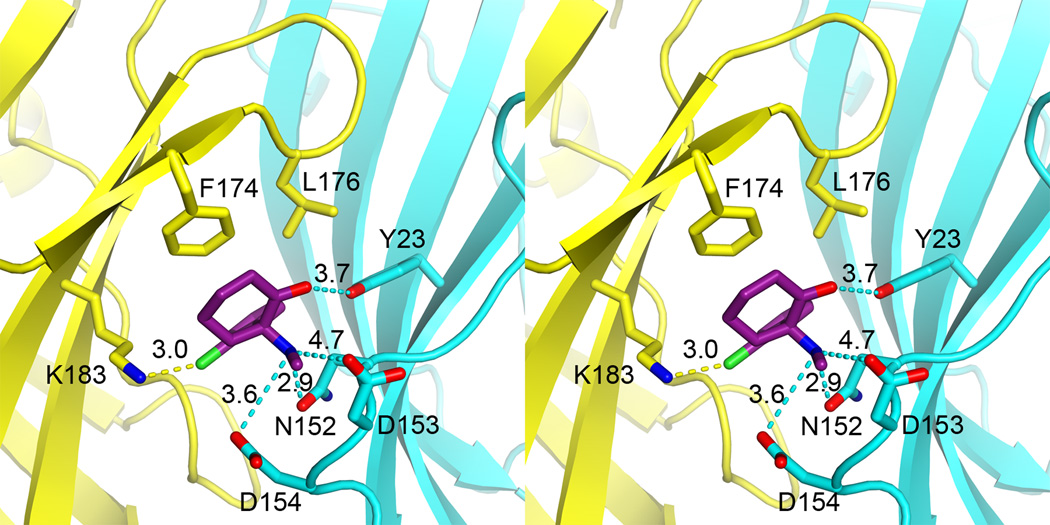
Pentameric ligand-gated ion channels (pLGICs) are targets of general anesthetics, but a structural understanding of anesthetic action on pLGICs remains elusive. GLIC, a prokaryotic pLGIC, can be inhibited by anesthetics, including ketamine. The ketamine concentration leading to half-maximal inhibition of GLIC (58 μM) is comparable to that on neuronal nicotinic acetylcholine receptors. A 2.99 Å resolution X-ray structure of GLIC bound with ketamine revealed ketamine binding to an intersubunit cavity that partially overlaps with the homologous antagonist-binding site in pLGICs. The functional relevance of the identified ketamine site was highlighted by profound changes in GLIC activation upon cysteine substitution of the cavity-lining residue N152. The relevance is also evidenced by changes in ketamine inhibition upon the subsequent chemical labeling of N152C. The results provide structural insight into the molecular recognition of ketamine and are valuable for understanding the actions of anesthetics and other allosteric modulators on pLGICs.
五聚体配体门控离子通道(pLGICs)是全身麻醉剂的作用靶点,但人们对麻醉剂作用于 pLGICs 的结构机制仍知之甚少。GLIC 是一种原核 pLGIC,可被包括氯胺酮在内的麻醉剂抑制。导致 GLIC 半数最大抑制的氯胺酮浓度(58 μM)与神经元烟碱型乙酰胆碱受体相当。GLIC 与氯胺酮结合的 2.99 Å 分辨率 X 射线结构显示,氯胺酮结合于一个位于亚基间的腔中,该腔与 pLGIC 中的同源拮抗剂结合位点部分重叠。通过对腔衬里残基 N152 的半胱氨酸取代,GLIC 的激活发生深刻变化,这凸显了所鉴定的氯胺酮结合位点的功能相关性。N152C 的后续化学标记也会导致氯胺酮抑制的变化,这进一步证明了该位点的相关性。这些结果为氯胺酮的分子识别提供了结构见解,并有助于理解麻醉剂和其他变构调节剂对 pLGICs 的作用。