Department of Pathology, Metabolic Diseases Institute, University of Cincinnati College of Medicine, Cincinnati, Ohio, USA.
Diabetes. 2013 Feb;62(2):382-91. doi: 10.2337/db12-0390. Epub 2012 Sep 6.
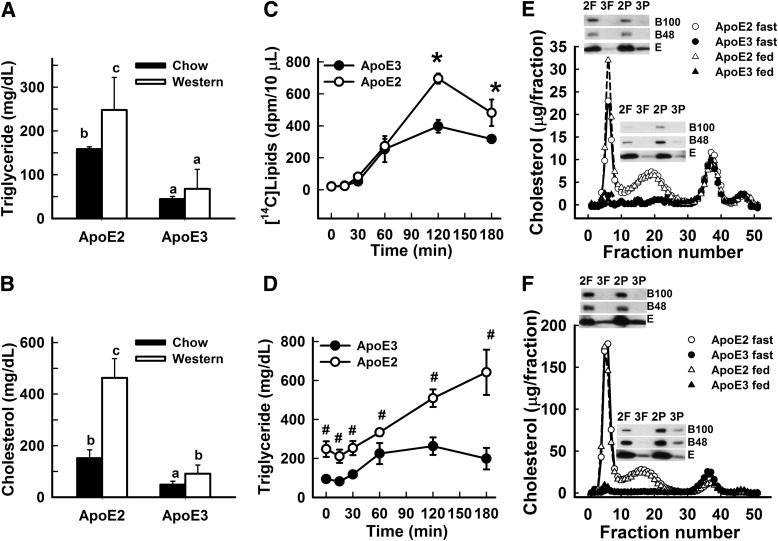
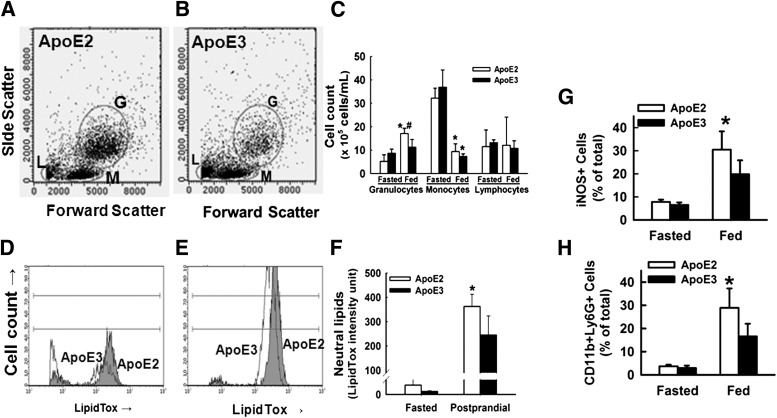
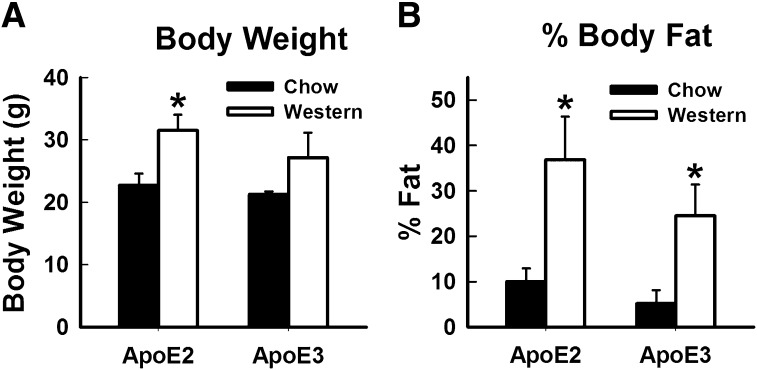
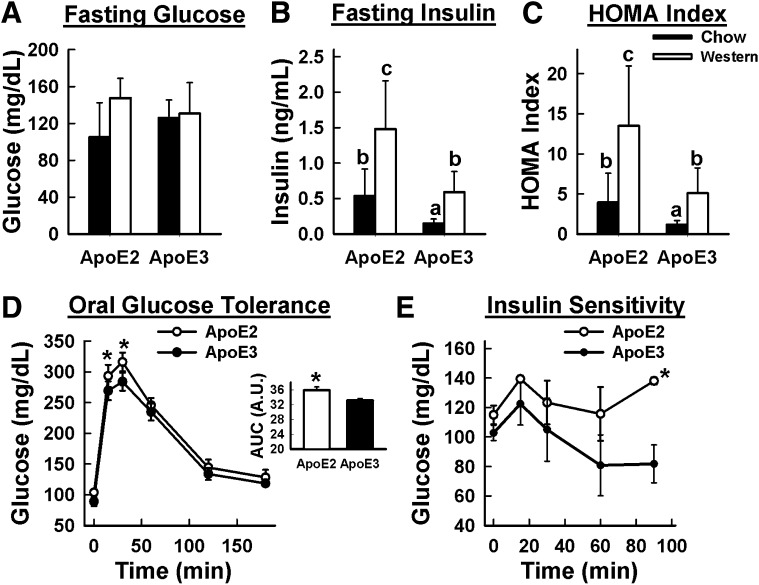
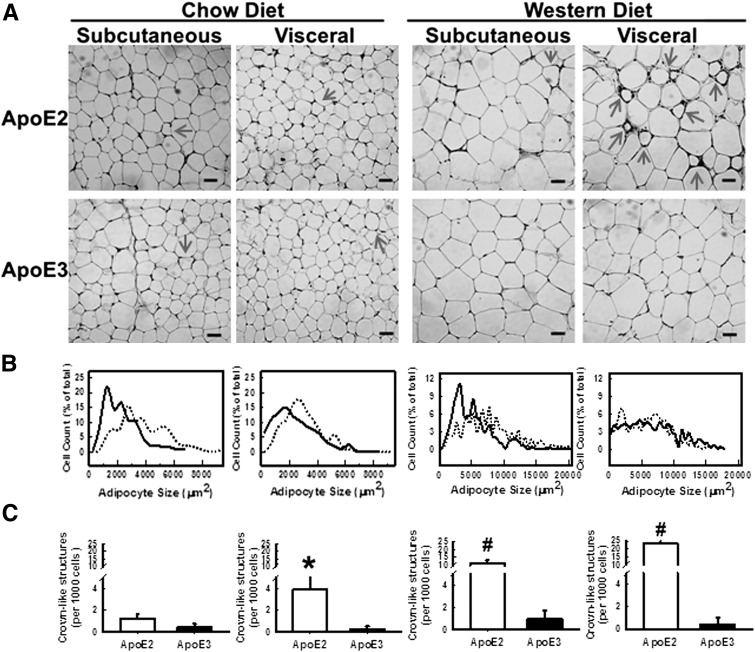
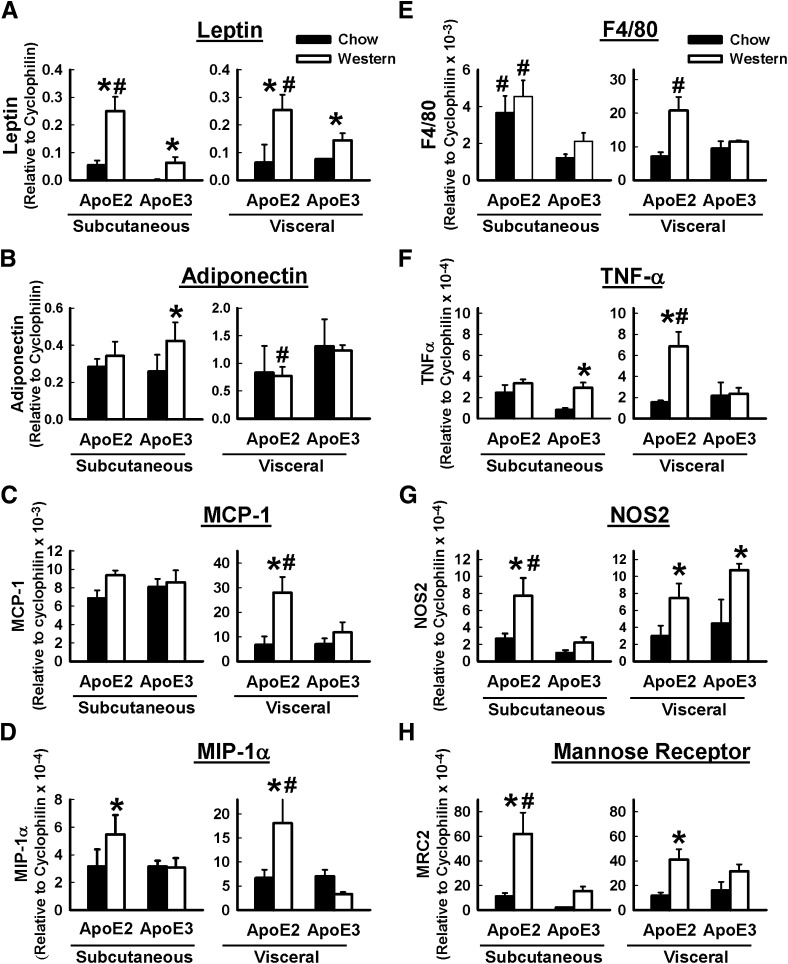
Genetic studies have revealed the association between the ε2 allele of the apolipoprotein E (apoE) gene and greater risk of metabolic diseases. This study compared C57BL/6 mice in which the endogenous mouse gene has been replaced by the human APOE2 or APOE3 gene (APOE2 and APOE3 mice) to identify the mechanism underlying the relationship between ε2 and obesity and diabetes. In comparison with APOE3 mice, the APOE2 mice had elevated fasting plasma lipid and insulin levels and displayed prolonged postprandial hyperlipidemia accompanied by increased granulocyte number and inflammation 2 h after being fed a lipid-rich meal. In comparison with APOE3 mice, the APOE2 mice also showed increased adiposity when maintained on a Western-type, high-fat, high-cholesterol diet. Adipose tissue dysfunction with increased macrophage infiltration, abundant crown-like structures, and inflammation were also observed in adipose tissues of APOE2 mice. The severe adipocyte dysfunction and tissue inflammation corresponded with the robust hyperinsulinemia observed in APOE2 mice after being fed the Western-type diet. Taken together, these data showed that impaired plasma clearance of apoE2-containing, triglyceride-rich lipoproteins promotes lipid redistribution to neutrophils and adipocytes to accentuate inflammation and adiposity, thereby accelerating the development of hyperinsulinemia that will ultimately lead to advanced metabolic diseases.
遗传研究揭示了载脂蛋白 E (apoE) 基因的 ε2 等位基因与代谢疾病风险增加之间的关联。本研究比较了内源性小鼠基因被人源 APOE2 或 APOE3 基因取代的 C57BL/6 小鼠(APOE2 和 APOE3 小鼠),以确定 ε2 与肥胖和糖尿病之间关系的机制。与 APOE3 小鼠相比,APOE2 小鼠空腹血浆脂质和胰岛素水平升高,并表现出餐后高脂血症持续时间延长,进食富含脂质的餐后 2 小时粒细胞数量和炎症增加。与 APOE3 小鼠相比,APOE2 小鼠在维持西式、高脂肪、高胆固醇饮食时也表现出更高的肥胖。APOE2 小鼠的脂肪组织中还观察到脂肪组织功能障碍伴巨噬细胞浸润增加、丰富的冠层样结构和炎症。在 APOE2 小鼠进食西式饮食后,观察到严重的脂肪细胞功能障碍和组织炎症,与强烈的高胰岛素血症相对应。综上所述,这些数据表明,载脂蛋白 E2 富含甘油三酯的脂蛋白的血浆清除受损,促进了脂质向中性粒细胞和脂肪细胞的重新分布,从而加重了炎症和肥胖,加速了高胰岛素血症的发展,最终导致晚期代谢疾病。