Institute for Genome Sciences and Policy, Duke University, Durham, North Carolina, United States of America.
PLoS One. 2012;7(9):e44050. doi: 10.1371/journal.pone.0044050. Epub 2012 Sep 4.
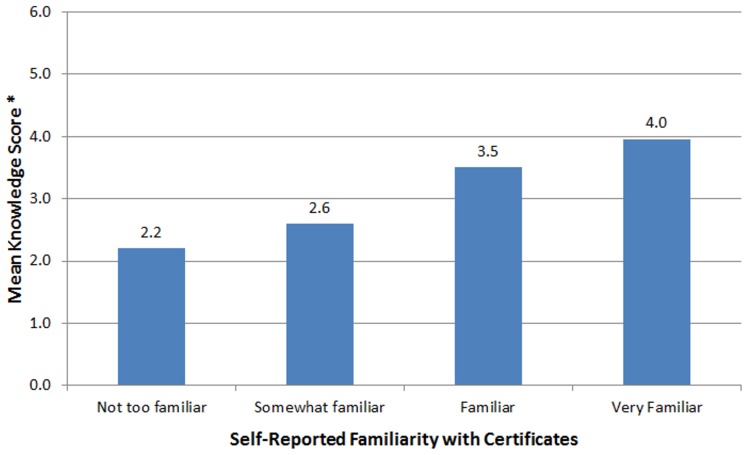
Certificates of Confidentiality, issued by agencies of the U.S. government, are regarded as an important tool for meeting ethical and legal obligations to safeguard research participants' privacy and confidentiality. By shielding against forced disclosure of identifying data, Certificates are intended to facilitate research on sensitive topics critical to the public's health. Although Certificates are potentially applicable to an extensive array of research, their full legal effect is unclear, and little is known about stakeholders' views of the protections they provide. To begin addressing this challenge, we conducted a national survey of institutional review board (IRB) chairs, followed by telephone interviews with selected chairs, to learn more about their familiarity with and opinions about Certificates; their institutions' use of Certificates; policies and practices concerning when Certificates are required or recommended; and the role Certificates play in assessments of research risk. Overall, our results suggest uncertainty about Certificates among IRB chairs. On most objective knowledge questions, most respondents chose the incorrect answer or 'unsure'. Among chairs who reported more familiarity with Certificates, composite opinion scores calculated based on five survey questions were evenly distributed among positive, neutral/middle, and negative views. Further, respondents expressed a variety of ideas about the appropriate use of Certificates, what they are intended to protect, and their effect on research risk. Nevertheless, chairs who participated in our study commonly viewed Certificates as a potentially valuable tool, frequently describing them as an 'extra layer' of protection. These findings lead to several practical observations concerning the need for more stakeholder education about Certificates, consideration of Certificates for a broader range of studies, the importance of remaining vigilant and using all tools available to protect participants' confidentiality, and the need for further empirical investigation of Certificates' effect on researchers and research participants.
保密证书由美国政府机构颁发,被视为履行保护研究参与者隐私和机密性的道德和法律义务的重要工具。通过防止识别数据的强制披露,证书旨在促进对公众健康至关重要的敏感主题的研究。尽管证书可能适用于广泛的研究,但它们的全部法律效力尚不清楚,并且对于利益相关者对其所提供保护的看法知之甚少。为了开始解决这一挑战,我们对机构审查委员会(IRB)主席进行了全国性调查,随后对选定的主席进行了电话访谈,以了解更多关于他们对证书的熟悉程度和看法;他们所在机构使用证书的情况;有关何时需要或建议使用证书的政策和做法;以及证书在评估研究风险方面的作用。总体而言,我们的研究结果表明,IRB 主席对证书存在不确定性。在大多数客观知识问题上,大多数受访者选择了错误的答案或“不确定”。在报告对证书更熟悉的主席中,基于五个调查问题计算的综合意见得分均匀分布在积极、中立/中间和消极观点之间。此外,受访者对证书的适当使用、证书旨在保护的内容以及它们对研究风险的影响表达了各种想法。然而,参与我们研究的主席通常将证书视为一种潜在有价值的工具,经常将其描述为“额外的一层”保护。这些发现导致了一些关于需要更多利益相关者教育证书、考虑证书更广泛的研究范围、保持警惕并使用所有可用工具保护参与者的机密性以及需要进一步调查证书对研究人员和研究参与者的影响的实际观察。