Skaggs School of Pharmacy and Pharmaceutical Sciences, University of California, La Jolla, CA 92093, USA.
Biomacromolecules. 2012 Oct 8;13(10):3320-6. doi: 10.1021/bm3010885. Epub 2012 Sep 20.
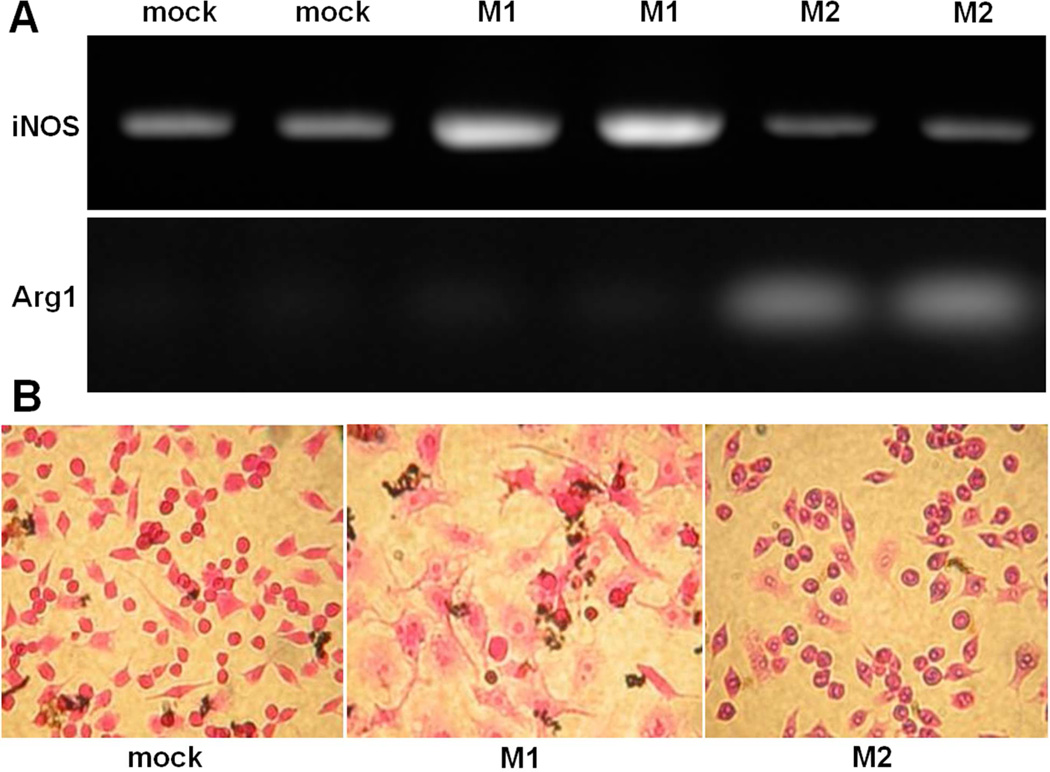
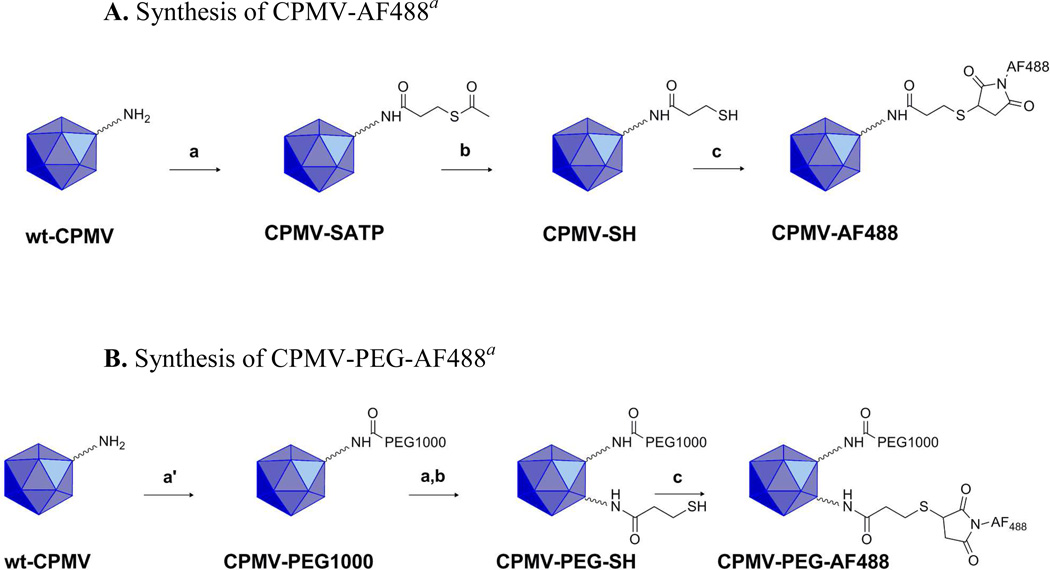
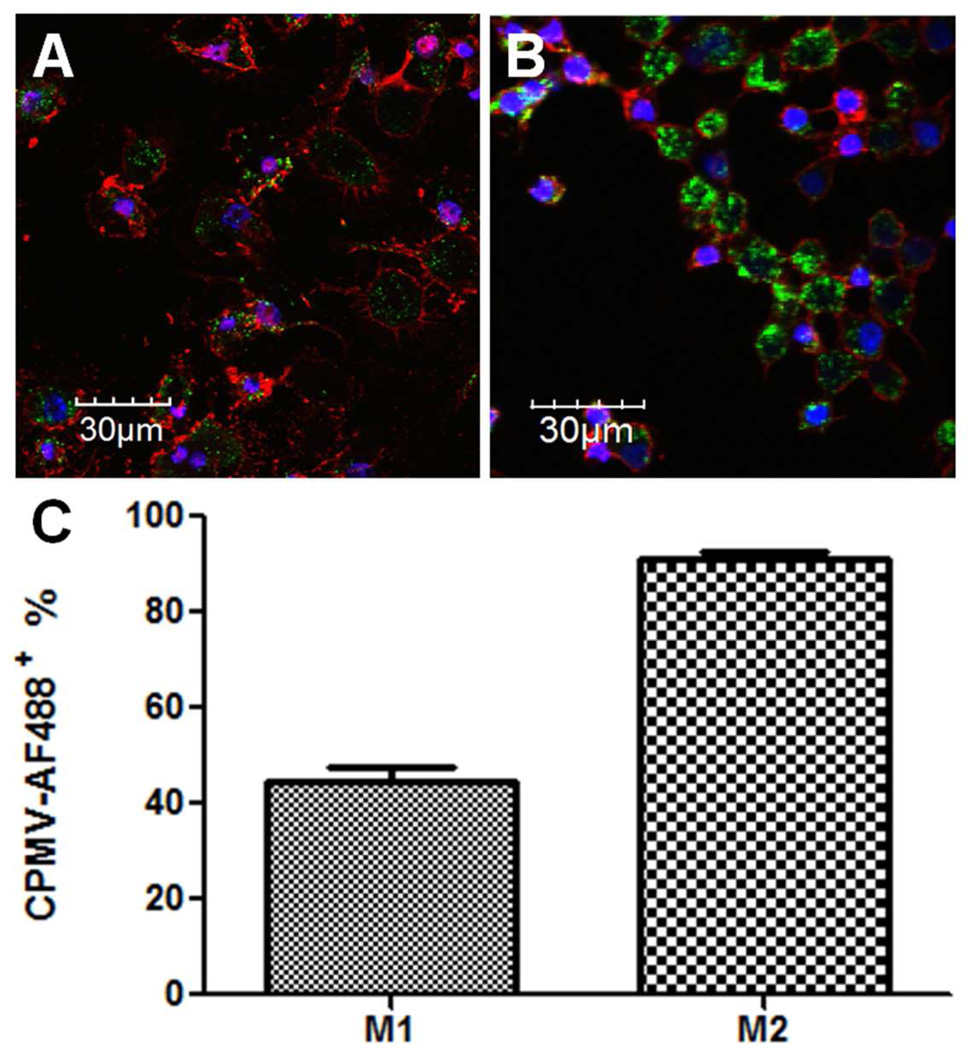
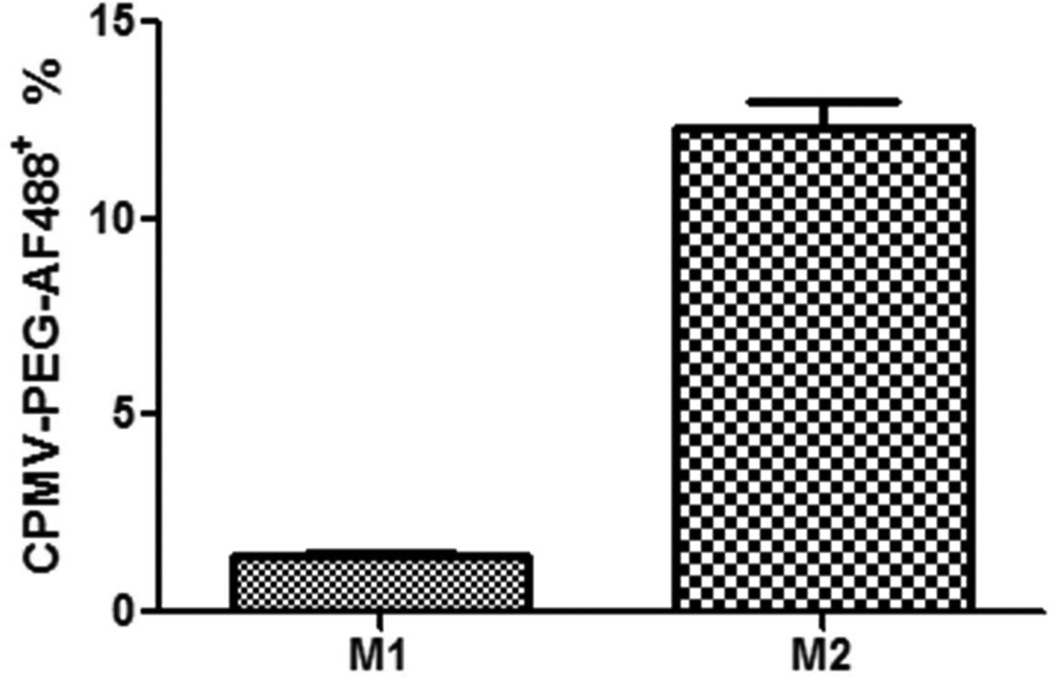
There remains a tremendous need to develop targeted therapeutics that can both image and localize the toxic effects of chemotherapeutics and antagonists on diseased tissue while reducing adverse systemic effects. These needs have fostered the development of a nanotechnology-based approach that can combine targeting and toxicity potential. In this study, CPMV nanoparticles were chemically modified with the dye Alexa Flour 488 and were also tandemly modified with PEG1000 followed by AF488; and the derivatized nanoparticles were subsequently added to macrophages stimulated with either LPS (M1) or IL-4 (M2). Previously published studies have shown that M1/M2 macrophages are both present in an inflammatory microenvironment (such as a tumor microenvironment and atherosclerosis) and play opposing yet balancing roles; M2 macrophages have a delayed and progressive onset in the tumor microenvironment (concomitant with an immunosuppression of M1 macrophages). In this study, we show higher uptake of CPMV-AF488 and CPMV-PEG-AF488 by M2 macrophages compared to M1 macrophages. M1 macrophages showed no uptake of CPMV-PEG-AF488. More specifically, M2 macrophages are known to be up-regulated in early atherosclerosis plaque. Indeed, previous work showed that M2 macrophages in plaque also correlate with CPMV internalization. These studies emphasize the potential effectiveness of CPMV as a tailored vehicle for targeting tumor macrophages involved in cancer metastasis or vascular inflammation and further highlight the potential of CPMV in targeted therapeutics against other diseases.
仍然需要开发靶向治疗药物,既能对疾病组织中的化疗药物和拮抗剂的毒性作用进行成像和定位,又能减少全身不良反应。这些需求促进了基于纳米技术的方法的发展,该方法可以结合靶向和毒性潜力。在这项研究中,CPMV 纳米颗粒用染料 Alexa Flour 488 进行化学修饰,并用 PEG1000 串联修饰,然后再修饰 AF488;然后将衍生的纳米颗粒添加到用 LPS(M1)或 IL-4(M2)刺激的巨噬细胞中。先前的研究表明,M1/M2 巨噬细胞都存在于炎症微环境中(如肿瘤微环境和动脉粥样硬化),并发挥相反但平衡的作用;M2 巨噬细胞在肿瘤微环境中出现延迟和渐进性(伴随着 M1 巨噬细胞的免疫抑制)。在这项研究中,我们发现 M2 巨噬细胞对 CPMV-AF488 和 CPMV-PEG-AF488 的摄取量高于 M1 巨噬细胞。M1 巨噬细胞对 CPMV-PEG-AF488 没有摄取。更具体地说,M2 巨噬细胞在早期动脉粥样硬化斑块中被上调。事实上,先前的工作表明,斑块中的 M2 巨噬细胞也与 CPMV 的内化相关。这些研究强调了 CPMV 作为一种针对参与癌症转移或血管炎症的肿瘤巨噬细胞的靶向载体的潜在有效性,并进一步突出了 CPMV 在针对其他疾病的靶向治疗中的潜力。