Department of Pharmacology, Korea University College of Medicine, Seoul, Republic of Korea.
Int J Obes (Lond). 2013 Jun;37(6):853-60. doi: 10.1038/ijo.2012.141. Epub 2012 Sep 11.
High-fat diets (HFDs) result in increased body weight. However, this is not uniform and determining the factors that make some animals or individual more susceptible to this diet-induced weight gain is a critical research question. The expansion of white adipose tissue (WAT) associated with weight gain requires high rates of angiogenesis to support the expanding tissue mass. We hypothesized that diet-induced obese (DIO) mice have a greater capacity for WAT angiogenesis and remodeling than diet-resistant (DR) mice at a young age, before age or DIO.
We measured body weight and body composition by nuclear magnetic resonance. We compared the expression of genes related to lipid metabolism, angiogenesis and inflammation by real-time, quantitative PCR and PCR arrays. WAT morphology and distribution of adipocyte size were analyzed. The level of hypoxia and vascular density was assessed by immunohistochemistry in WAT of young mice.
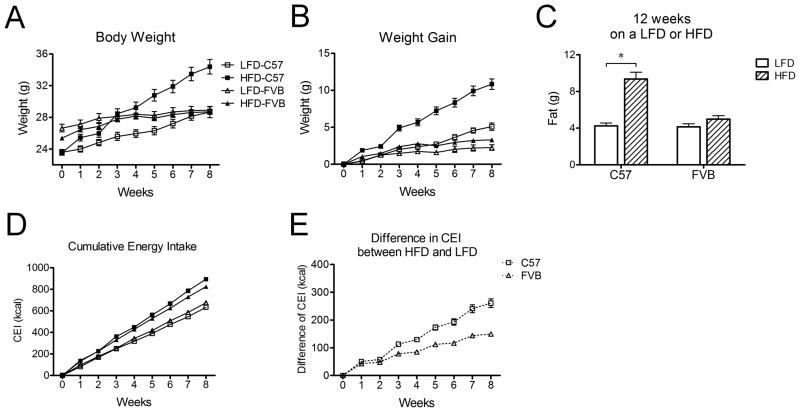
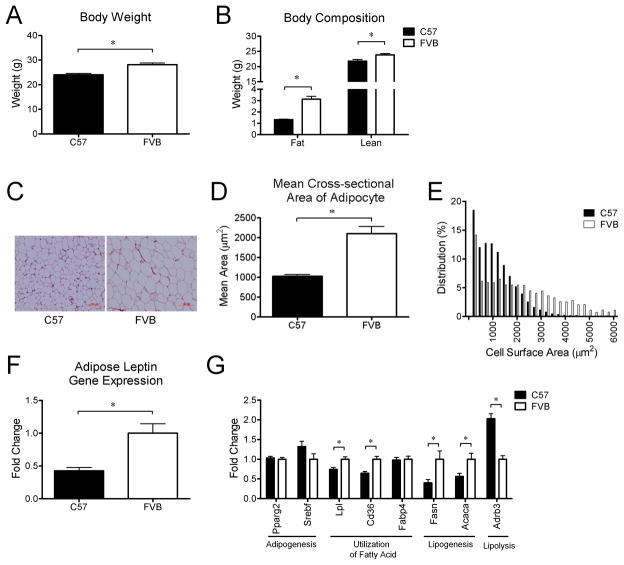
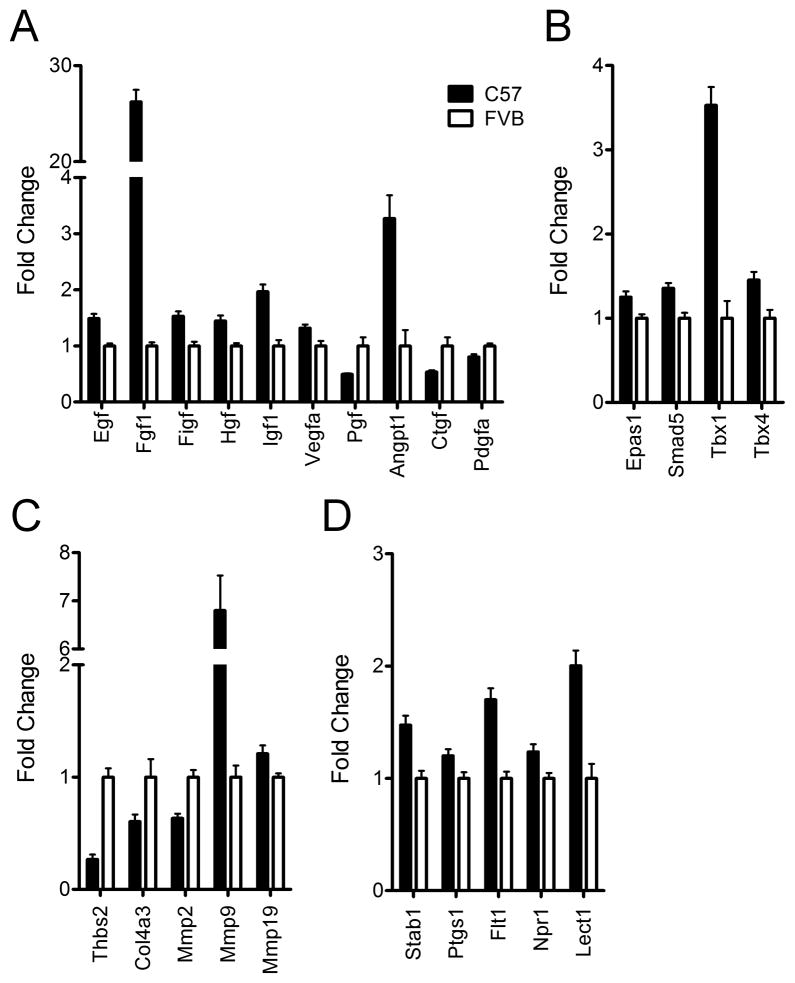
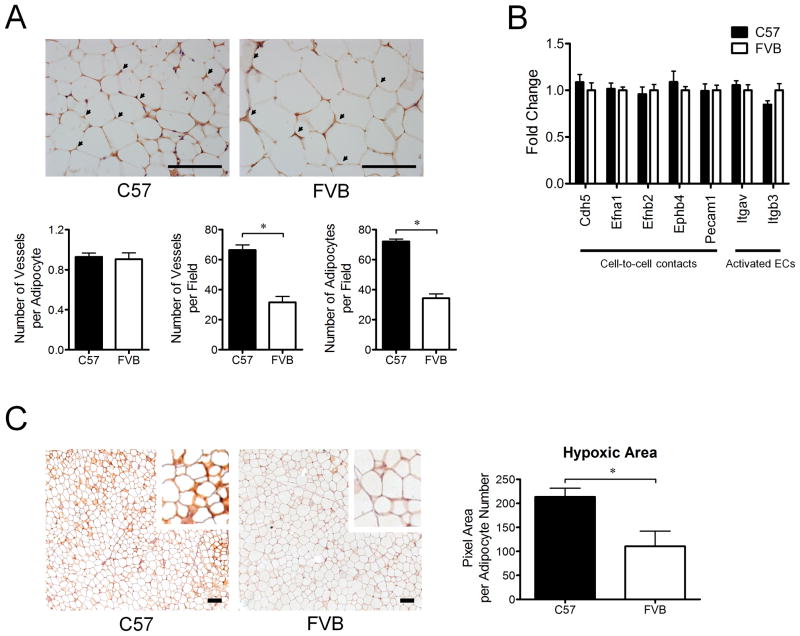
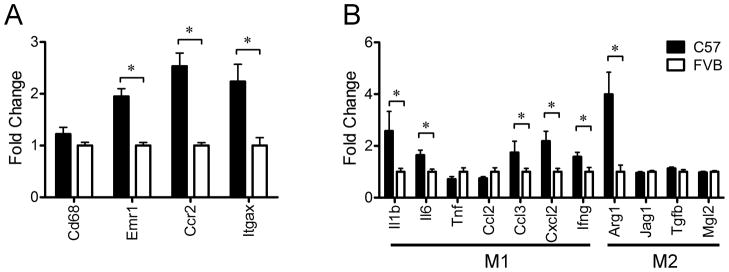
C57Bl/6 mice were DIO and FVB/N (FVB) mice DR after 8 weeks on a low-fat diet or HFD. However, C57Bl/6 mice had lower body weight, lower adiposity, smaller adipocytes and decreased leptin and lipogenic genes expression in adipose tissue than FVB mice at 9 weeks of age on a chow diet. Despite having smaller adipocytes, the level of hypoxia and the expression of pro-angiogenesis genes were higher in WAT of young C57Bl/6 mice than young FVB mice. In addition, expression of genes related to macrophages and their recruitment, and to proinflammatory cytokines, was significantly higher in WAT of young C57Bl/6 mice than young FVB mice.
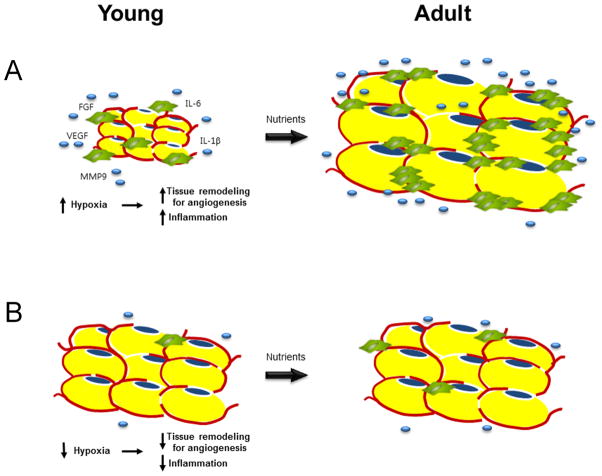
These data suggest that the potential for WAT remodeling in early period of growth is higher in C57Bl/6 mice as compared with FVB mice, and we hypothesize that it may contribute to the increased susceptibility to DIO of C57Bl/6 mice.
高脂肪饮食(HFD)会导致体重增加。然而,这并非普遍现象,确定哪些动物或个体更容易受到这种饮食引起的体重增加的影响是一个关键的研究问题。与体重增加相关的白色脂肪组织(WAT)的扩张需要高血管生成率来支持不断扩大的组织质量。我们假设,在年龄或 DIO 之前,与饮食抵抗(DR)小鼠相比,饮食诱导肥胖(DIO)小鼠在年轻时具有更大的 WAT 血管生成和重塑能力。
我们通过核磁共振测量体重和体成分。我们通过实时定量 PCR 和 PCR 阵列比较了与脂肪代谢、血管生成和炎症相关的基因表达。分析了 WAT 形态和脂肪细胞大小的分布。通过免疫组织化学评估年轻小鼠 WAT 中的缺氧水平和血管密度。
C57Bl/6 小鼠在低脂饮食或 HFD 上 8 周后成为 DIO,而 FVB/N(FVB)小鼠成为 DR。然而,在 Chow 饮食 9 周时,C57Bl/6 小鼠的体重、体脂率、脂肪细胞较小,脂肪组织中的瘦素和脂肪生成基因表达降低。尽管脂肪细胞较小,但年轻 C57Bl/6 小鼠的 WAT 中缺氧水平和促血管生成基因的表达较高。此外,年轻 C57Bl/6 小鼠的 WAT 中与巨噬细胞及其募集以及促炎细胞因子相关的基因表达明显高于年轻 FVB 小鼠。
这些数据表明,与 FVB 小鼠相比,C57Bl/6 小鼠在生长早期 WAT 重塑的潜力更高,我们假设这可能导致 C57Bl/6 小鼠对 DIO 的易感性增加。