Department of Internal Medicine, University of Cincinnati, Cincinnati, Ohio, USA.
Diabetes. 2010 Apr;59(4):907-15. doi: 10.2337/db09-1141. Epub 2010 Jan 26.
Because adipose tissue is highly vascularized, modifying adipose tissue vasculature may provide a novel method for reducing body fat. A peptide sequence that elicits apoptosis of endothelium in white fat potently reduced body weight. We sought to determine how inhibiting adipose tissue vasculature changes key aspects of energy balance regulation and the neuroendocrine system that maintains energy balance.
Lean and obese mice or rats were treated with proapoptotic peptide for 4 or 27 days. Daily energy intake and expenditure were measured in mice on a low- (LFD) or high-fat diet (HFD) and in rats on a HFD. A conditioned taste aversion test was performed to assess whether proapoptotic peptide produces visceral illness. Hypothalamic neuropeptide Y, agouti-related peptide, and proopiomelanocoritin (POMC) mRNA expression and plasma leptin levels were evaluated.
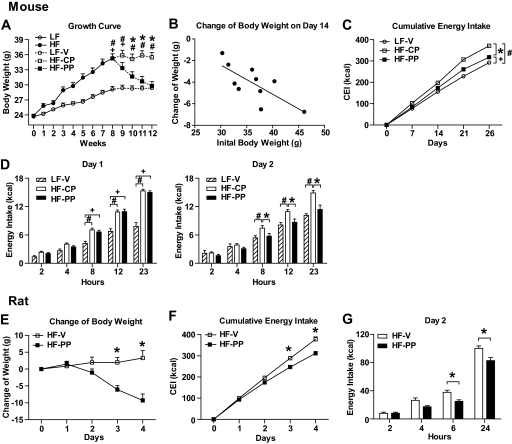
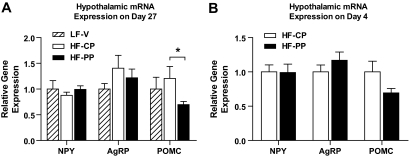
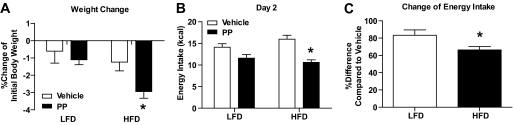
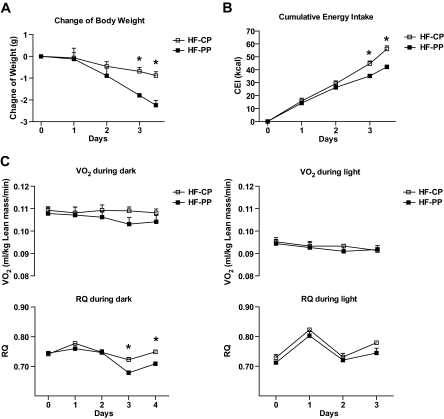
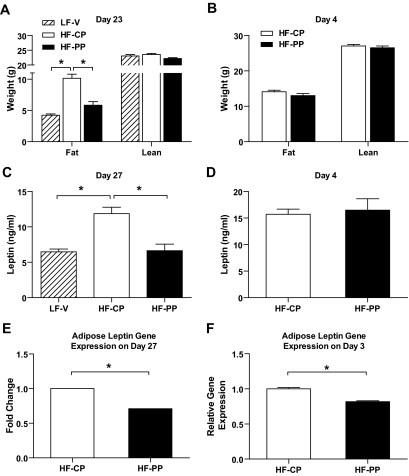
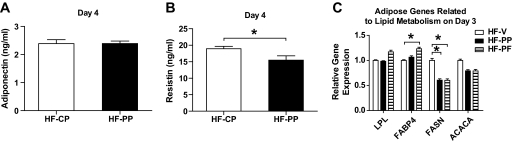
Proapoptotic peptide completely reversed HFD-induced obesity in mice and reduced body weight in mice and rats on a HFD but not in those on a LFD. Fat loss occurred with no change of energy expenditure but reduced food intake that occurred without signs of illness and despite reduced circulating leptin and reduced hypothalamic POMC gene expression, indicating that the decrease in food intake is independent of the action of leptin.
These experiments provide compelling evidence for a previously unknown relationship between the status of adipose tissue vasculature and the regulation of food intake.
由于脂肪组织具有高度血管化的特点,因此改变脂肪组织的血管结构可能是减少体脂的一种新方法。一种能够引发白色脂肪内皮细胞凋亡的肽序列能够显著降低体重。我们试图确定抑制脂肪组织血管结构如何改变维持能量平衡的关键方面,以及神经内分泌系统。
用促凋亡肽治疗瘦鼠和肥胖鼠 4 或 27 天。用低脂(LFD)或高脂肪饮食(HFD)喂养的小鼠以及 HFD 喂养的大鼠测量每日能量摄入和支出。进行条件性味觉厌恶测试,以评估促凋亡肽是否会引起内脏疾病。评估下丘脑神经肽 Y、肥胖相关肽和促黑激素原(POMC)mRNA 表达和血浆瘦素水平。
促凋亡肽完全逆转了 HFD 诱导的肥胖,减少了 HFD 喂养的小鼠和大鼠的体重,但对 LFD 喂养的动物没有影响。脂肪损失伴随着能量消耗没有变化,但食物摄入量减少,没有疾病迹象,尽管循环瘦素和下丘脑 POMC 基因表达减少,表明食物摄入量的减少与瘦素的作用无关。
这些实验为脂肪组织血管状态与食物摄入调节之间的未知关系提供了有力的证据。