Department of Oncology, Lombardi Comprehensive Cancer Center, Georgetown University, 3970 Reservoir Road NW, The Research Building, Room E407, Washington, District of Columbia 20057, USA.
Nat Commun. 2012;3:1053. doi: 10.1038/ncomms2058.
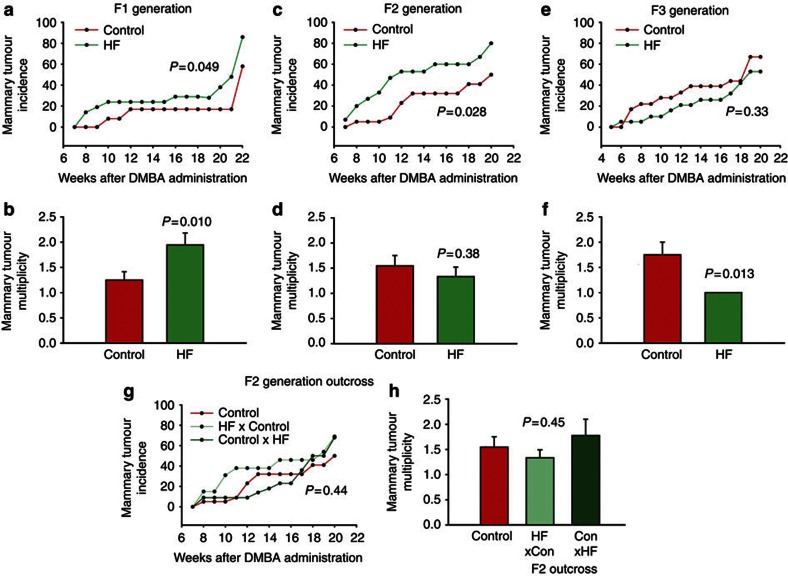
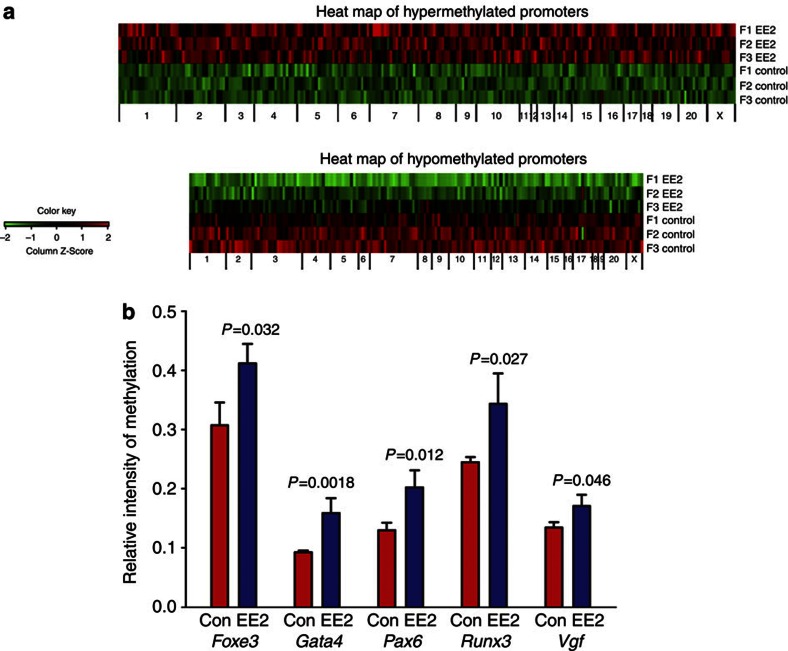
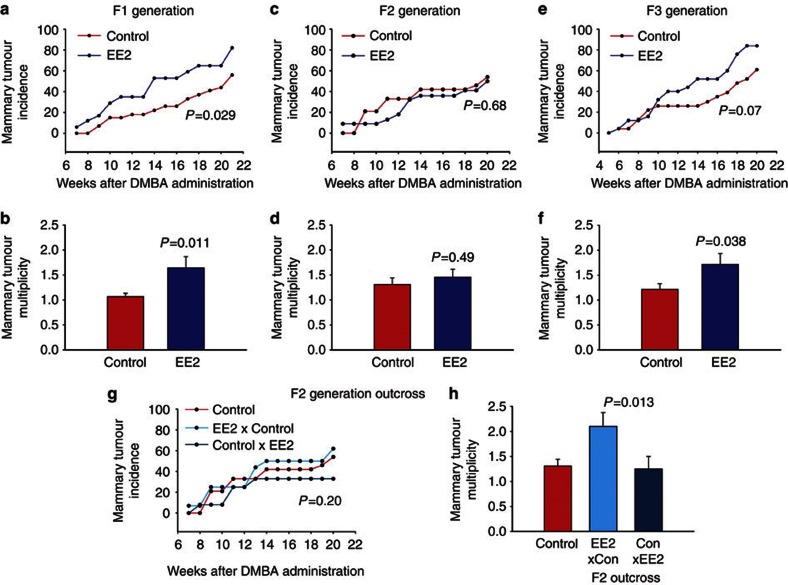
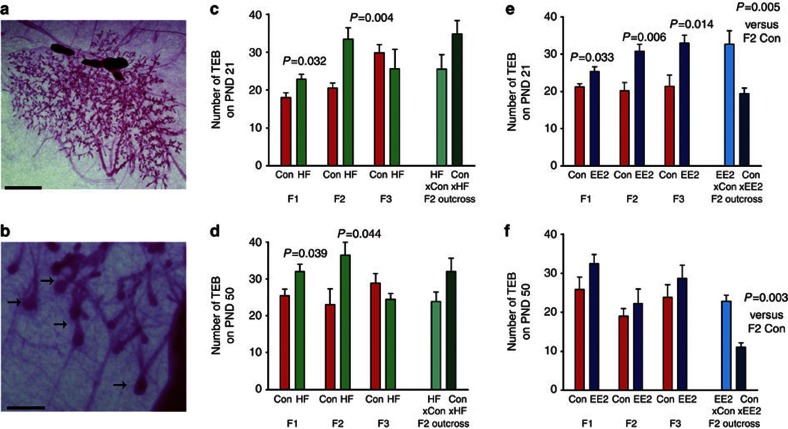
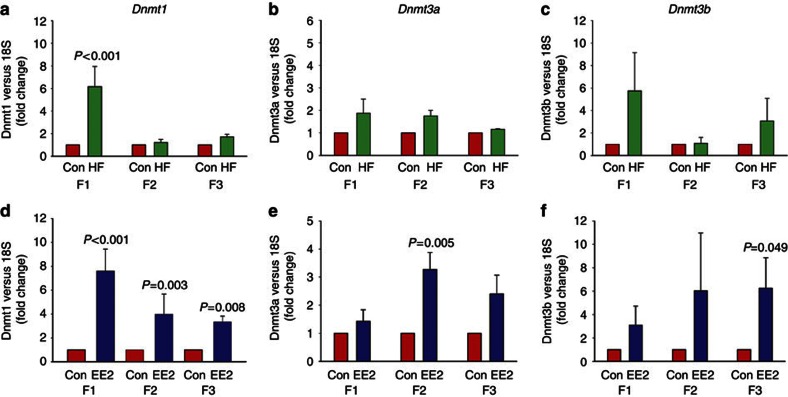
Maternal exposures to environmental factors during pregnancy influence the risk of many chronic adult-onset diseases in the offspring. Here we investigate whether feeding pregnant rats a high-fat (HF)- or ethinyl-oestradiol (EE2)-supplemented diet affects carcinogen-induced mammary cancer risk in daughters, granddaughters and great-granddaughters. We show that mammary tumourigenesis is higher in daughters and granddaughters of HF rat dams and in daughters and great-granddaughters of EE2 rat dams. Outcross experiments suggest that the increase in mammary cancer risk is transmitted to HF granddaughters equally through the female or male germ lines, but it is only transmitted to EE2 granddaughters through the female germ line. The effects of maternal EE2 exposure on offspring's mammary cancer risk are associated with changes in the DNA methylation machinery and methylation patterns in mammary tissue of all three EE2 generations. We conclude that dietary and oestrogenic exposures in pregnancy increase breast cancer risk in multiple generations of offspring, possibly through epigenetic means.
母亲在怀孕期间接触环境因素会影响后代许多成年后发病的慢性疾病的风险。在这里,我们研究了给怀孕的老鼠喂食高脂肪(HF)或己烯雌酚(EE2)补充饮食是否会影响致癌剂诱导的雌性后代、孙女和曾孙女的乳腺癌风险。我们发现 HF 组母鼠的雌性后代和孙女以及 EE2 组母鼠的雌性后代和曾孙女的乳腺肿瘤发生频率更高。杂交实验表明,HF 组雌性孙女的乳腺癌风险通过雌性或雄性生殖系等量传递,但 EE2 组雌性孙女的乳腺癌风险仅通过雌性生殖系传递。母体 EE2 暴露对后代乳腺癌风险的影响与所有三代 EE2 雌鼠乳腺组织中的 DNA 甲基化机制和甲基化模式的改变有关。我们得出结论,妊娠期间的饮食和雌激素暴露会通过表观遗传机制增加后代多个世代的乳腺癌风险。