Department of Molecular and Cellular Biology, Harvard University Cambridge, MA, USA.
Front Neural Circuits. 2012 Sep 4;6:59. doi: 10.3389/fncir.2012.00059. eCollection 2012.
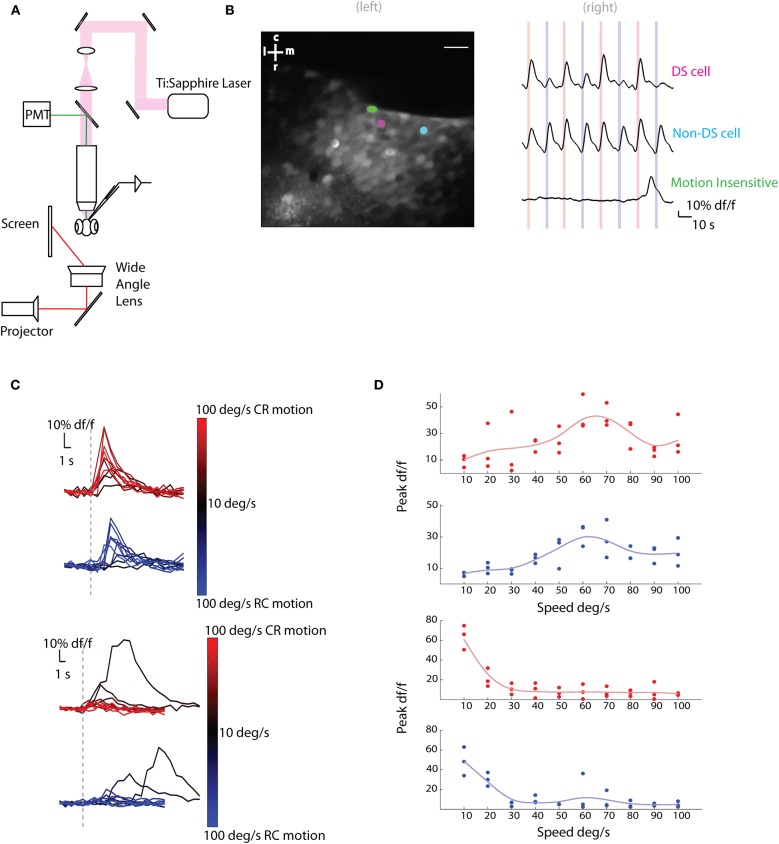
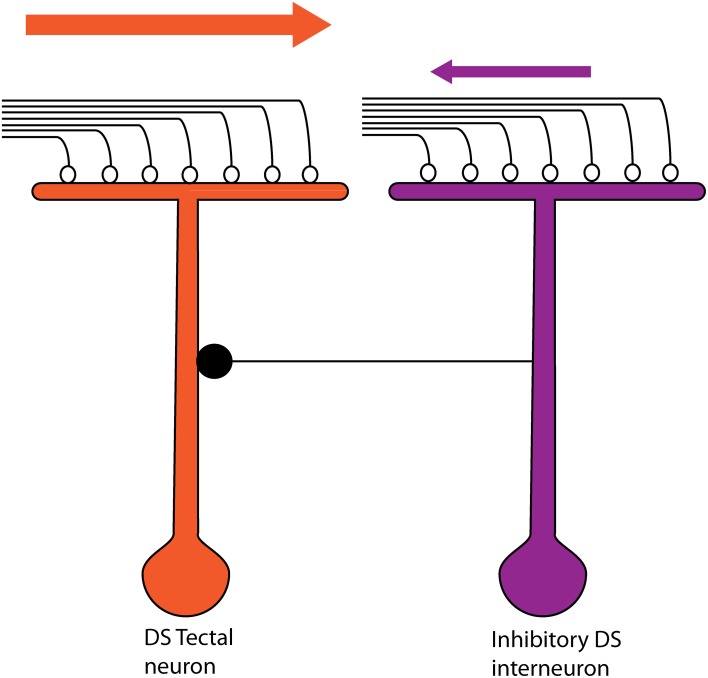
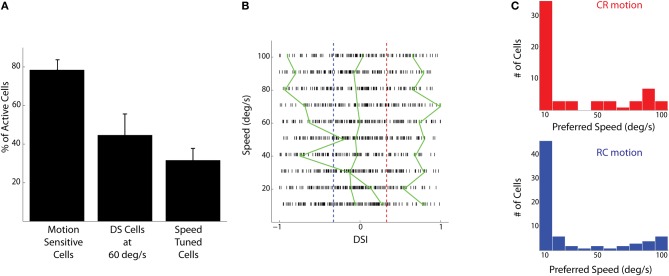
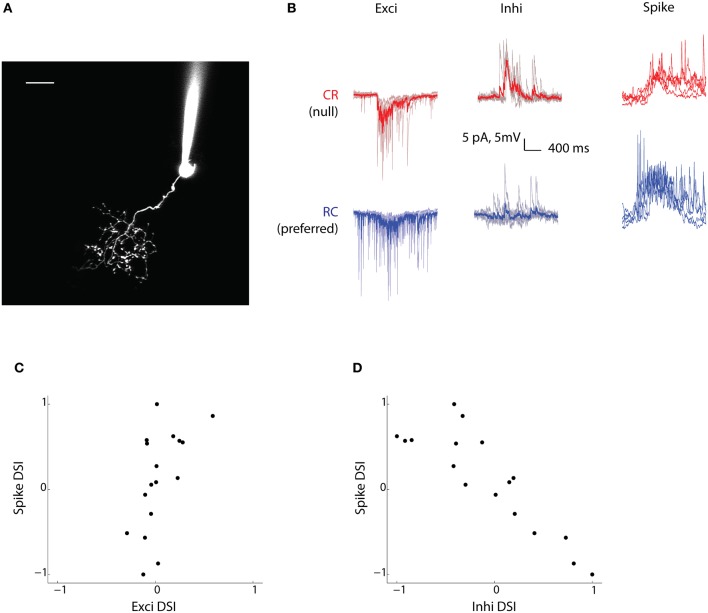
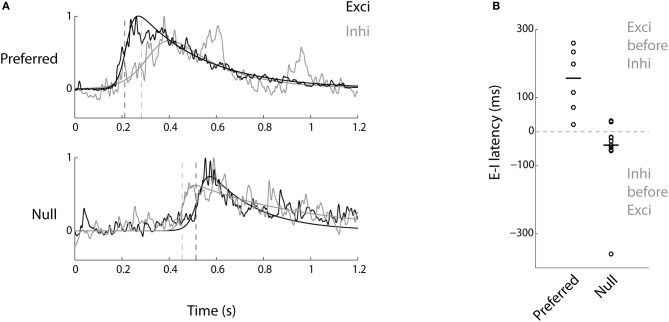
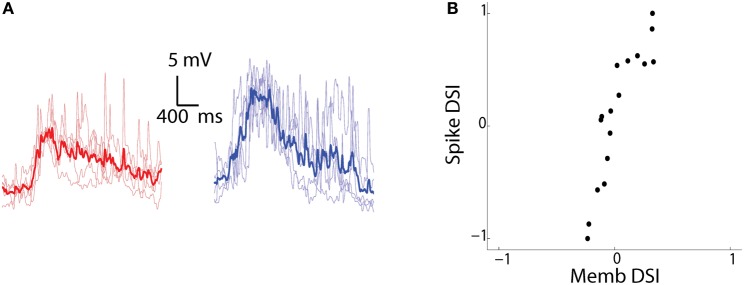
The extraction of the direction of motion is an important computation performed by many sensory systems and in particular, the mechanism by which direction-selective retinal ganglion cells (DS-RGCs) in the retina acquire their selective properties, has been studied extensively. However, whether DS-RGCs simply relay this information to downstream areas or whether additional and potentially de novo processing occurs in these recipient structures is a matter of great interest. Neurons in the larval zebrafish tectum, the largest retino-recipent area in this animal, show direction-selective (DS) responses to moving visual stimuli but how these properties are acquired is still unknown. In order to study this, we first used two-photon calcium imaging to classify the population responses of tectal cells to bars moving at different speeds and in different directions. Subsequently, we performed in vivo whole cell electrophysiology on these DS tectal neurons and we found that their inhibitory inputs were strongly biased toward the null direction of motion, whereas the excitatory inputs showed little selectivity. In addition, we found that excitatory currents evoked by a stimulus moving in the preferred direction occurred before the inhibitory currents whereas a stimulus moving in the null direction evoked currents in the reverse temporal order. The membrane potential modulations resulting from these currents were enhanced by the spike generation mechanism to generate amplified direction selectivity in the spike output. Thus, our results implicate a local inhibitory circuit in generating direction selectivity in tectal neurons.
运动方向的提取是许多感觉系统执行的一项重要计算,特别是视网膜中方向选择性神经节细胞(DS-RGC)获得其选择性特性的机制,已经得到了广泛的研究。然而,DS-RGC 是简单地将信息传递给下游区域,还是在这些接收结构中发生额外的、潜在的全新处理,这是一个非常有趣的问题。幼虫斑马鱼顶盖中的神经元对运动视觉刺激表现出方向选择性(DS)反应,这是该动物中最大的视网膜接收区域,但这些特性是如何获得的仍然未知。为了研究这个问题,我们首先使用双光子钙成像技术对不同速度和方向运动的棒状刺激下顶盖细胞的群体反应进行分类。随后,我们对这些 DS 顶盖神经元进行了体内全细胞电生理学研究,发现它们的抑制性输入强烈偏向于运动的零方向,而兴奋性输入则几乎没有选择性。此外,我们发现,在首选方向上运动的刺激会引起兴奋性电流,而在零方向上运动的刺激则会引起相反的电流。这些电流产生的膜电位调制通过尖峰生成机制得到增强,从而在尖峰输出中产生放大的方向选择性。因此,我们的结果表明,在顶盖神经元中,局部抑制性回路参与了方向选择性的产生。