Institut des Sciences de la Mer de Rimouski, Université du Québec à Rimouski, Rimouski, Québec, Canada.
PLoS One. 2012;7(9):e43966. doi: 10.1371/journal.pone.0043966. Epub 2012 Sep 6.
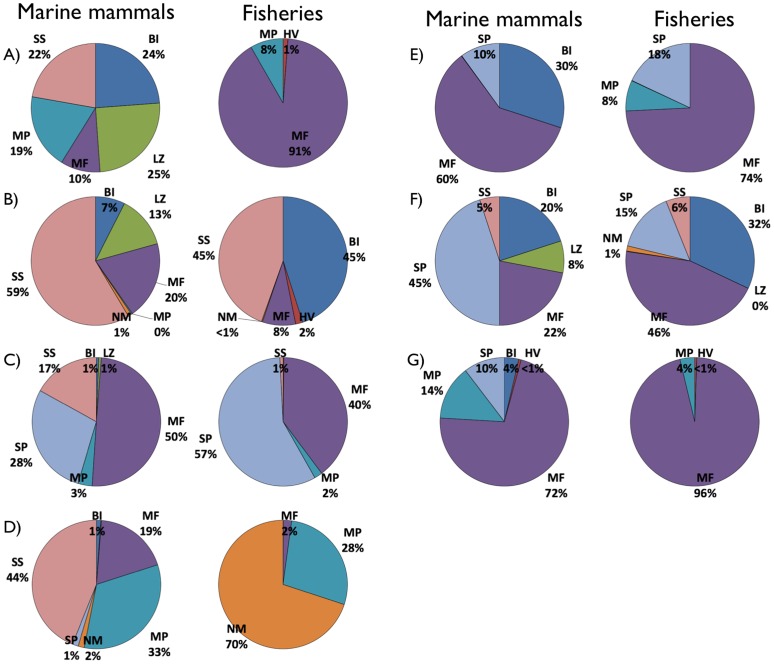
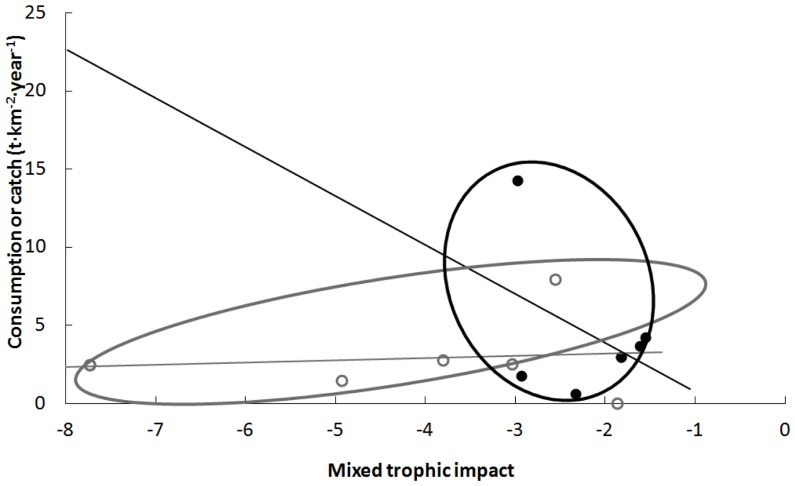
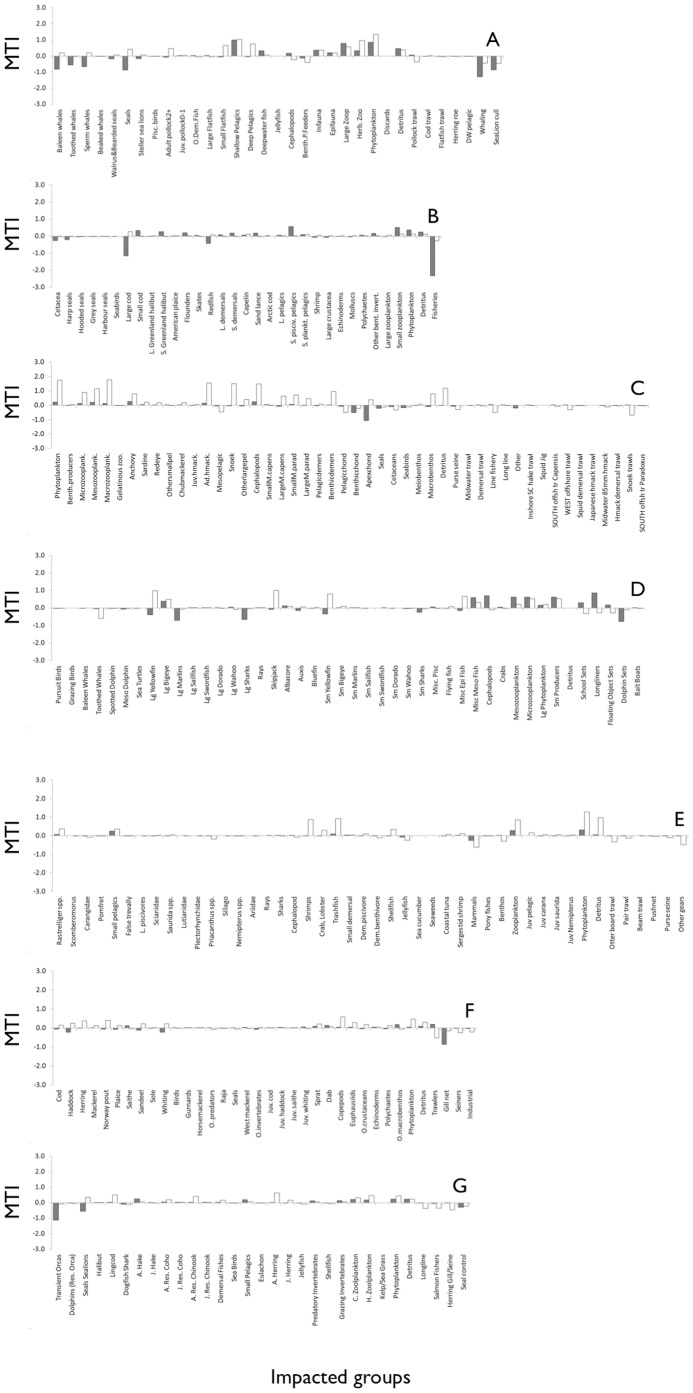
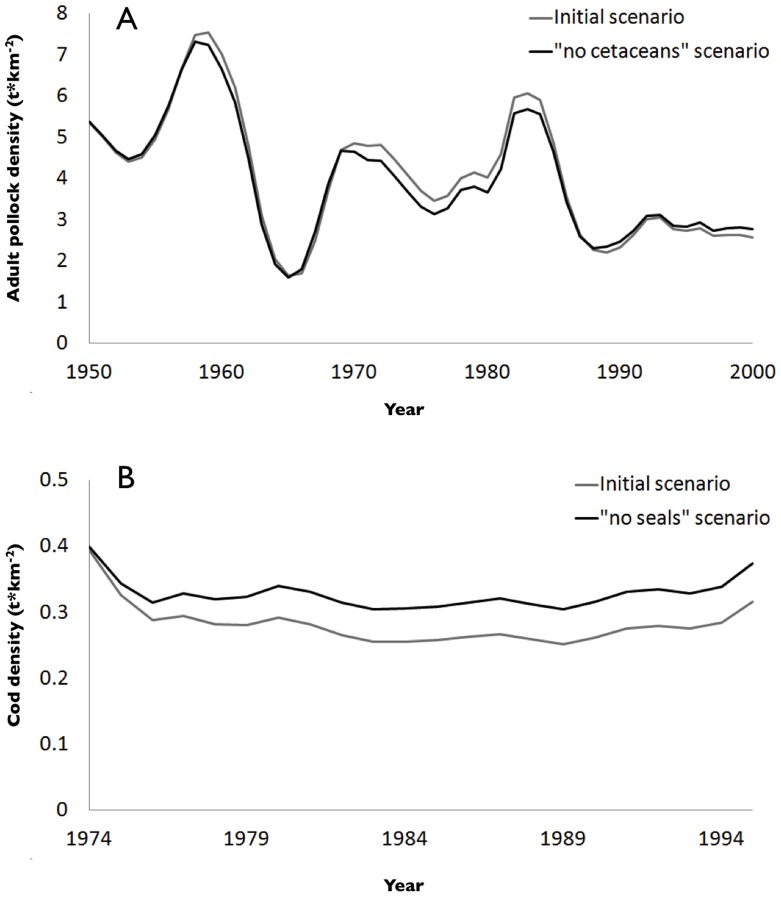
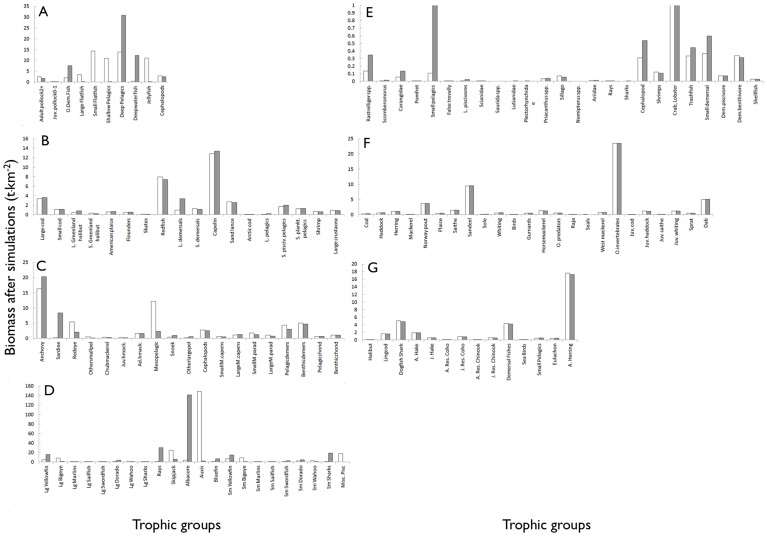
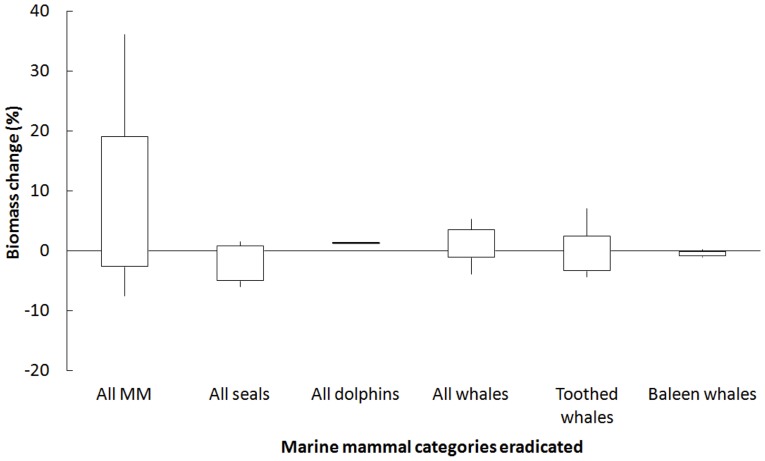
Competition between marine mammals and fisheries for marine resources-whether real or perceived-has become a major issue for several countries and in international fora. We examined trophic interactions between marine mammals and fisheries based on a resource overlap index, using seven Ecopath models including marine mammal groups. On a global scale, most food consumed by marine mammals consisted of prey types that were not the main target of fisheries. For each ecosystem, the primary production required (PPR) to sustain marine mammals was less than half the PPR to sustain fisheries catches. We also developed an index representing the mean trophic level of marine mammal's consumption (TL(Q)) and compared it with the mean trophic level of fisheries' catches (TL(C)). Our results showed that overall TL(Q) was lower than TL(C) (2.88 versus 3.42). As fisheries increasingly exploit lower-trophic level species, the competition with marine mammals may become more important. We used mixed trophic impact analysis to evaluate indirect trophic effects of marine mammals, and in some cases found beneficial effects on some prey. Finally, we assessed the change in the trophic structure of an ecosystem after a simulated extirpation of marine mammal populations. We found that this lead to alterations in the structure of the ecosystems, and that there was no clear and direct relationship between marine mammals' predation and the potential catch by fisheries. Indeed, total biomass, with no marine mammals in the ecosystem, generally remained surprisingly similar, or even decreased for some species.
海洋哺乳动物与渔业争夺海洋资源的竞争——无论是真实存在的还是被认为存在的——已经成为多个国家和国际论坛关注的主要问题。我们根据资源重叠指数,利用包括海洋哺乳动物群体在内的七个生态系统模型,研究了海洋哺乳动物和渔业之间的营养相互作用。在全球范围内,海洋哺乳动物消耗的大部分食物来自于不是渔业主要目标的猎物类型。对于每个生态系统,维持海洋哺乳动物所需的初级生产力(PPR)不到维持渔业捕捞量所需 PPR 的一半。我们还开发了一个代表海洋哺乳动物消费平均营养级(TL(Q))的指数,并将其与渔业捕捞的平均营养级(TL(C))进行了比较。我们的结果表明,总体而言 TL(Q)低于 TL(C)(2.88 对 3.42)。随着渔业越来越多地开发低营养级别的物种,与海洋哺乳动物的竞争可能会变得更加重要。我们使用混合营养影响分析来评估海洋哺乳动物的间接营养影响,在某些情况下发现对一些猎物有有益的影响。最后,我们评估了模拟海洋哺乳动物种群灭绝后生态系统的营养结构变化。我们发现,这导致了生态系统结构的改变,而且海洋哺乳动物的捕食和渔业潜在捕捞之间没有明确和直接的关系。事实上,没有海洋哺乳动物的生态系统的总生物量通常保持惊人的相似,甚至对某些物种来说还会减少。