Department of Biology, San Francisco State University, Hensill 534, 1600 Holloway Avenue, San Francisco, CA 94132, USA.
Division of Gastroenterology, Department of Medicine, University of California, San Francisco, San Francisco, CA 94143, USA.
Sci Transl Med. 2012 Sep 12;4(151):151ra124. doi: 10.1126/scitranslmed.3003783.
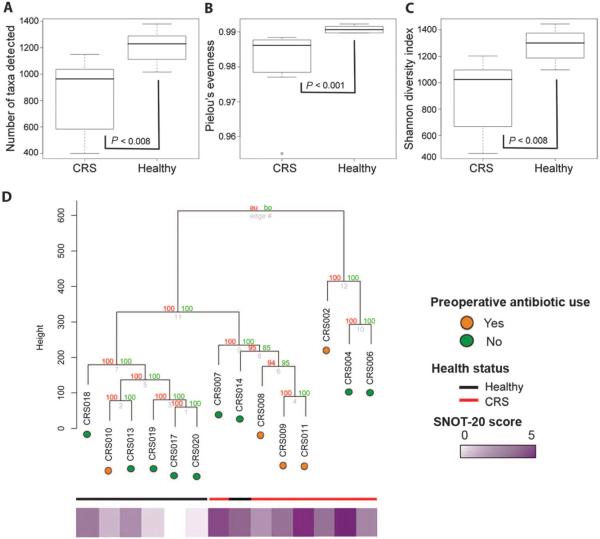
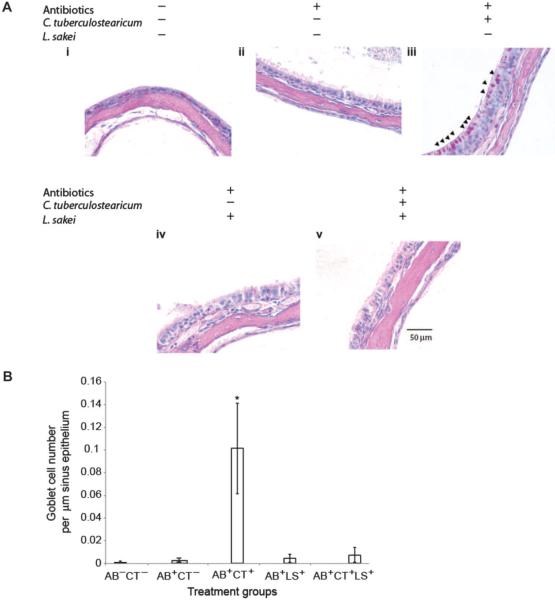
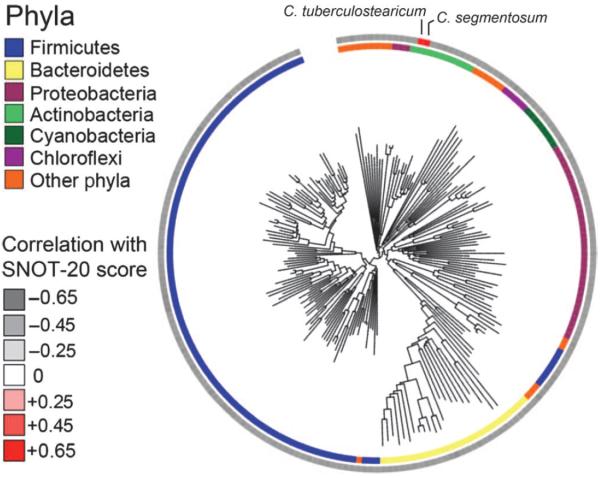
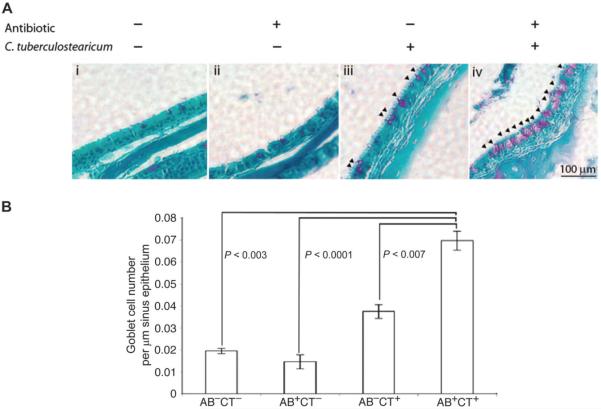
Persistent mucosal inflammation and microbial infection are characteristics of chronic rhinosinusitis (CRS). Mucosal microbiota dysbiosis is found in other chronic inflammatory diseases; however, the relationship between sinus microbiota composition and CRS is unknown. Using comparative microbiome profiling of a cohort of CRS patients and healthy subjects, we demonstrate that the sinus microbiota of CRS patients exhibits significantly reduced bacterial diversity compared with that of healthy controls. In our cohort of CRS patients, multiple, phylogenetically distinct lactic acid bacteria were depleted concomitant with an increase in the relative abundance of a single species, Corynebacterium tuberculostearicum. We recapitulated the conditions observed in our human cohort in a murine model and confirmed the pathogenic potential of C. tuberculostearicum and the critical necessity for a replete mucosal microbiota to protect against this species. Moreover, Lactobacillus sakei, which was identified from our comparative microbiome analyses as a potentially protective species, defended against C. tuberculostearicum sinus infection, even in the context of a depleted sinus bacterial community. These studies demonstrate that sinus mucosal health is highly dependent on the composition of the resident microbiota as well as identify both a new sino-pathogen and a strong bacterial candidate for therapeutic intervention.
持续性的黏膜炎症和微生物感染是慢性鼻-鼻窦炎(CRS)的特征。黏膜微生物群落失调也存在于其他慢性炎症性疾病中;然而,窦腔微生物群落组成与 CRS 之间的关系尚不清楚。通过对一组 CRS 患者和健康受试者的比较微生物组分析,我们证明与健康对照组相比,CRS 患者的窦腔微生物群落表现出明显降低的细菌多样性。在我们的 CRS 患者队列中,多种、系统发育上不同的乳酸菌同时减少,而单一物种 Corynebacterium tuberculostearicum 的相对丰度增加。我们在小鼠模型中重现了我们在人类队列中观察到的情况,并证实了 C. tuberculostearicum 的致病性潜力以及富含黏膜微生物群落对于预防这种物种的必要性。此外,从我们的比较微生物组分析中鉴定出的潜在保护物种 Lactobacillus sakei 可以抵御 C. tuberculostearicum 窦感染,即使在窦腔细菌群落耗竭的情况下也是如此。这些研究表明,鼻窦黏膜的健康高度依赖于常驻微生物群落的组成,并确定了一种新的鼻窦病原体和一种用于治疗干预的强候选细菌。