Olsson C-J, Hedlund M, Sojka P, Lundström R, Lindström B
Centre for Population Studies, Ageing and Living Conditions, Umeå University Umeå, Sweden.
Front Hum Neurosci. 2012 Sep 7;6:255. doi: 10.3389/fnhum.2012.00255. eCollection 2012.
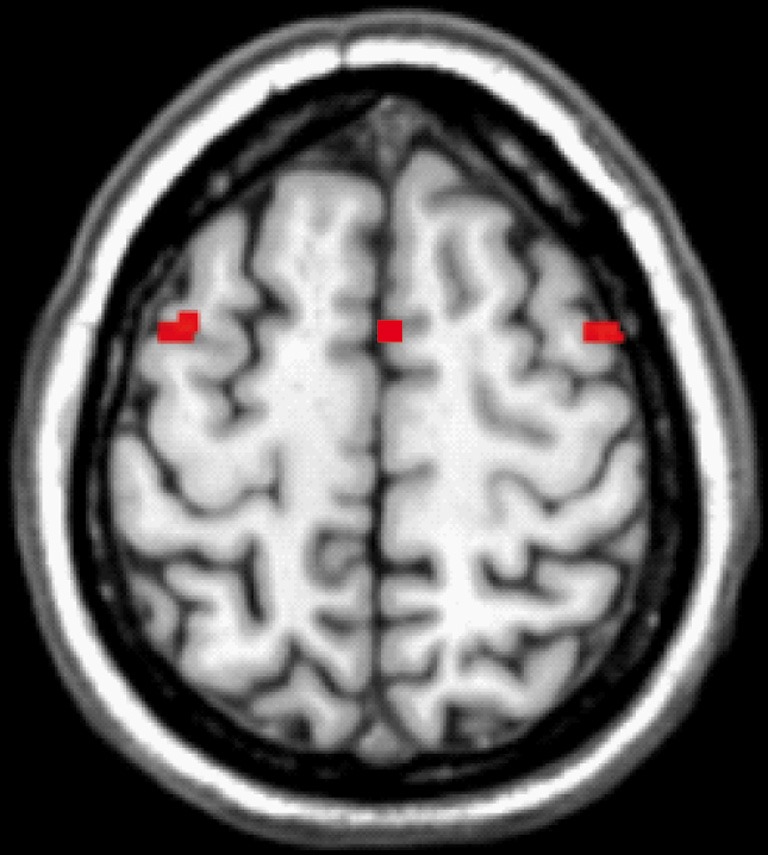
In this study we used functional magnetic resonance imaging (fMRI) to examine differences in recruited brain regions during the concentric and the eccentric phase of an imagined maximum resistance training task of the elbow flexors in healthy young subjects. The results showed that during the eccentric phase, pre-frontal cortex (BA44) bilaterally was recruited when contrasted to the concentric phase. During the concentric phase, however, the motor and pre-motor cortex (BA 4/6) was recruited when contrasted to the eccentric phase. Interestingly, the brain activity of this region was reduced, when compared to the mean activity of the session, during the eccentric phase. Thus, the neural mechanisms governing imagined concentric and eccentric contractions appear to differ. We propose that the recruitment of the pre-frontal cortex is due to an increased demand of regulating force during the eccentric phase. Moreover, it is possible that the inability to fully activate a muscle during eccentric contractions may partly be explained by a reduction of activity in the motor and pre-motor cortex.
在本研究中,我们使用功能磁共振成像(fMRI)来检查健康年轻受试者在想象的肘部屈肌最大阻力训练任务的向心和离心阶段所募集的脑区差异。结果显示,在离心阶段,与向心阶段相比,双侧前额叶皮质(BA44)被激活。然而,在向心阶段,与离心阶段相比,运动和运动前皮质(BA 4/6)被激活。有趣的是,与该时段的平均活动相比,该区域在离心阶段的脑活动减少。因此,控制想象的向心和离心收缩的神经机制似乎有所不同。我们认为,前额叶皮质的激活是由于在离心阶段调节力量的需求增加。此外,在离心收缩期间无法完全激活肌肉的情况,可能部分是由于运动和运动前皮质活动的减少。