Herold Fabian, Törpel Alexander, Schega Lutz, Müller Notger G
1Research Group Neuroprotection, German Center for Neurodegenerative Diseases (DZNE), Leipziger Str. 44, 39120 Magdeburg, Germany.
4Institute III, Department of Sport Science, Otto von Guericke University Magdeburg, Zschokkestr. 32, 39104 Magdeburg, Germany.
Eur Rev Aging Phys Act. 2019 Jul 10;16:10. doi: 10.1186/s11556-019-0217-2. eCollection 2019.
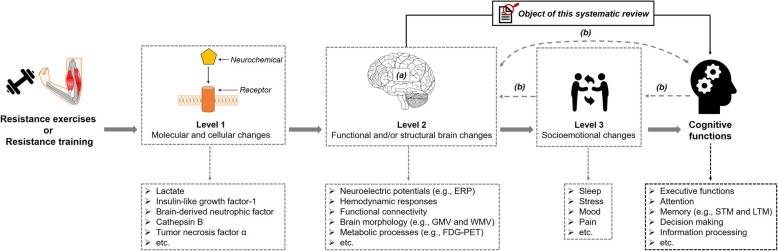
During the aging process, physical capabilities (e.g., muscular strength) and cognitive functions (e.g., memory) gradually decrease. Regarding cognitive functions, substantial functional (e.g., compensatory brain activity) and structural changes (e.g., shrinking of the hippocampus) in the brain cause this decline. Notably, growing evidence points towards a relationship between cognition and measures of muscular strength and muscle mass. Based on this emerging evidence, resistance exercises and/or resistance training, which contributes to the preservation and augmentation of muscular strength and muscle mass, may trigger beneficial neurobiological processes and could be crucial for healthy aging that includes preservation of the brain and cognition. Compared with the multitude of studies that have investigated the influence of endurance exercises and/or endurance training on cognitive performance and brain structure, considerably less work has focused on the effects of resistance exercises and/or resistance training. While the available evidence regarding resistance exercise-induced changes in cognitive functions is pooled, the underlying neurobiological processes, such as functional and structural brain changes, have yet to be summarized. Hence, the purpose of this systematic review is to provide an overview of resistance exercise-induced functional and/or structural brain changes that are related to cognitive functions.
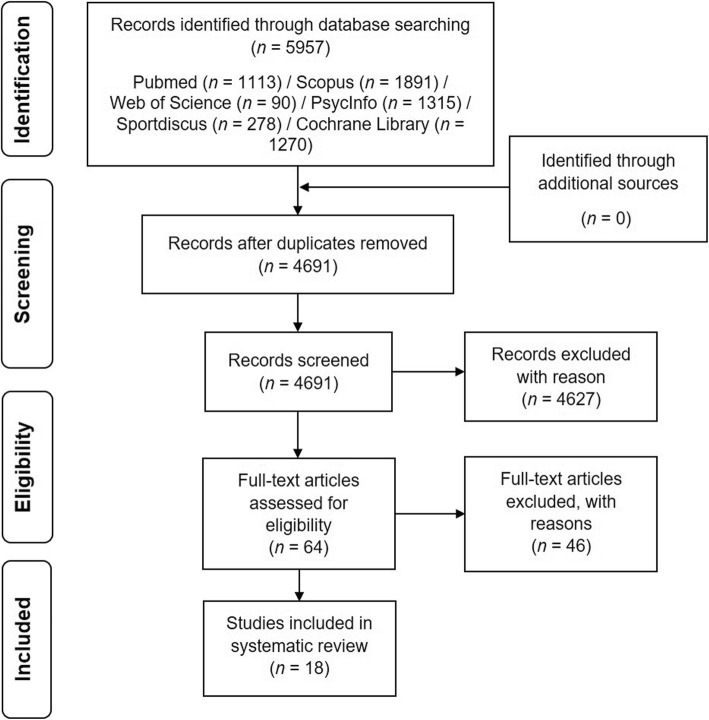
A systematic literature search was conducted by two independent researchers across six electronic databases; 5957 records were returned, of which 18 were considered relevant and were analyzed.
Based on our analyses, resistance exercises and resistance training evoked substantial functional brain changes, especially in the frontal lobe, which were accompanied by improvements in executive functions. Furthermore, resistance training led to lower white matter atrophy and smaller white matter lesion volumes. However, based on the relatively small number of studies available, the findings should be interpreted cautiously. Hence, future studies are required to investigate the underlying neurobiological mechanisms and to verify whether the positive findings can be confirmed and transferred to other needy cohorts, such as older adults with dementia, sarcopenia and/or dynapenia.
在衰老过程中,身体机能(如肌肉力量)和认知功能(如记忆力)会逐渐下降。就认知功能而言,大脑中显著的功能变化(如代偿性脑活动)和结构变化(如海马体萎缩)会导致这种下降。值得注意的是,越来越多的证据表明认知与肌肉力量和肌肉量的测量指标之间存在关联。基于这一新兴证据,有助于维持和增加肌肉力量及肌肉量的抗阻运动和/或抗阻训练,可能会引发有益的神经生物学过程,对于包括大脑和认知功能维持在内的健康衰老至关重要。与众多研究耐力运动和/或耐力训练对认知表现和脑结构影响的研究相比,关注抗阻运动和/或抗阻训练效果的研究要少得多。虽然关于抗阻运动引起的认知功能变化的现有证据已汇总,但潜在的神经生物学过程,如大脑的功能和结构变化,尚未得到总结。因此,本系统综述的目的是概述与认知功能相关的抗阻运动引起的大脑功能和/或结构变化。
两名独立研究人员在六个电子数据库中进行了系统的文献检索;共检索到5957条记录,其中18条被认为相关并进行了分析。
基于我们的分析,抗阻运动和抗阻训练引起了大脑显著的功能变化,尤其是额叶,同时执行功能也有所改善。此外,抗阻训练导致白质萎缩程度降低和白质病变体积减小。然而,基于现有研究数量相对较少,这些发现应谨慎解读。因此,未来需要进一步研究潜在的神经生物学机制,并验证这些积极发现是否能够得到证实,并推广到其他有需求的人群,如患有痴呆症、肌肉减少症和/或肌无力的老年人。