Kaese Sven, Verheule Sander
Division of Experimental and Clinical Electrophysiology, Department of Cardiology and Angiology, University Hospital Münster Münster, Germany.
Front Physiol. 2012 Sep 5;3:345. doi: 10.3389/fphys.2012.00345. eCollection 2012.
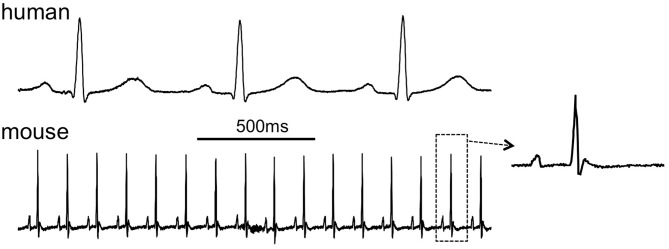
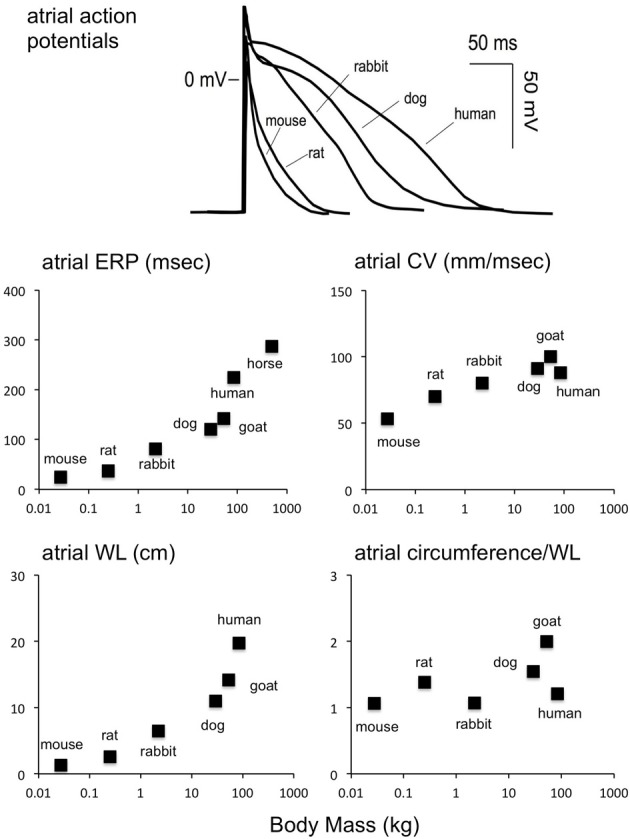
Over the last decade, mouse models have become a popular instrument for studying cardiac arrhythmias. This review assesses in which respects a mouse heart is a miniature human heart, a suitable model for studying mechanisms of cardiac arrhythmias in humans and in which respects human and murine hearts differ. Section I considers the issue of scaling of mammalian cardiac (electro) physiology to body mass. Then, we summarize differences between mice and humans in cardiac activation (section II) and the currents underlying the action potential in the murine working myocardium (section III). Changes in cardiac electrophysiology in mouse models of heart disease are briefly outlined in section IV, while section V discusses technical considerations pertaining to recording cardiac electrical activity in mice. Finally, section VI offers general considerations on the influence of cardiac size on the mechanisms of tachy-arrhythmias.
在过去十年中,小鼠模型已成为研究心律失常的常用工具。本综述评估了小鼠心脏在哪些方面是人类心脏的缩影,是研究人类心律失常机制的合适模型,以及人类和小鼠心脏在哪些方面存在差异。第一部分考虑了哺乳动物心脏(电)生理学与体重的比例问题。然后,我们总结了小鼠和人类在心脏激活方面的差异(第二部分)以及小鼠工作心肌动作电位的基础电流(第三部分)。第四部分简要概述了心脏病小鼠模型中心脏电生理学的变化,而第五部分讨论了与记录小鼠心脏电活动相关的技术考虑因素。最后,第六部分对心脏大小对快速性心律失常机制的影响进行了总体考虑。