Univ Lille Nord de France Lille, France.
Front Endocrinol (Lausanne). 2012 Sep 11;3:100. doi: 10.3389/fendo.2012.00100. eCollection 2012.
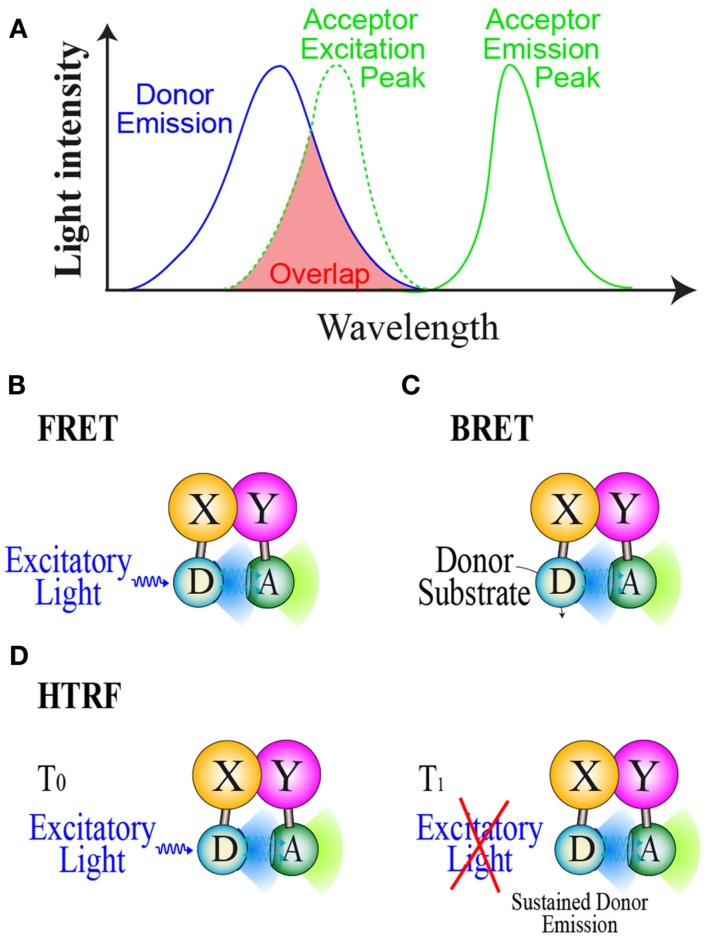
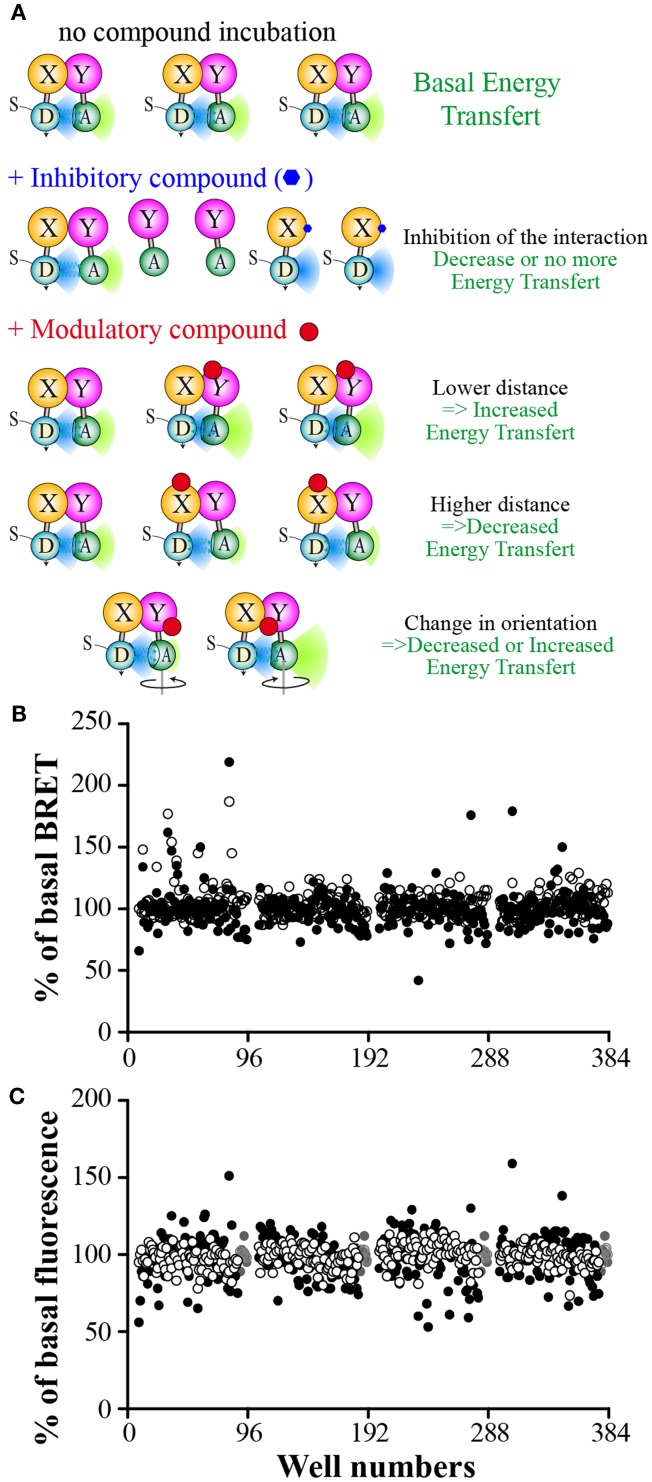
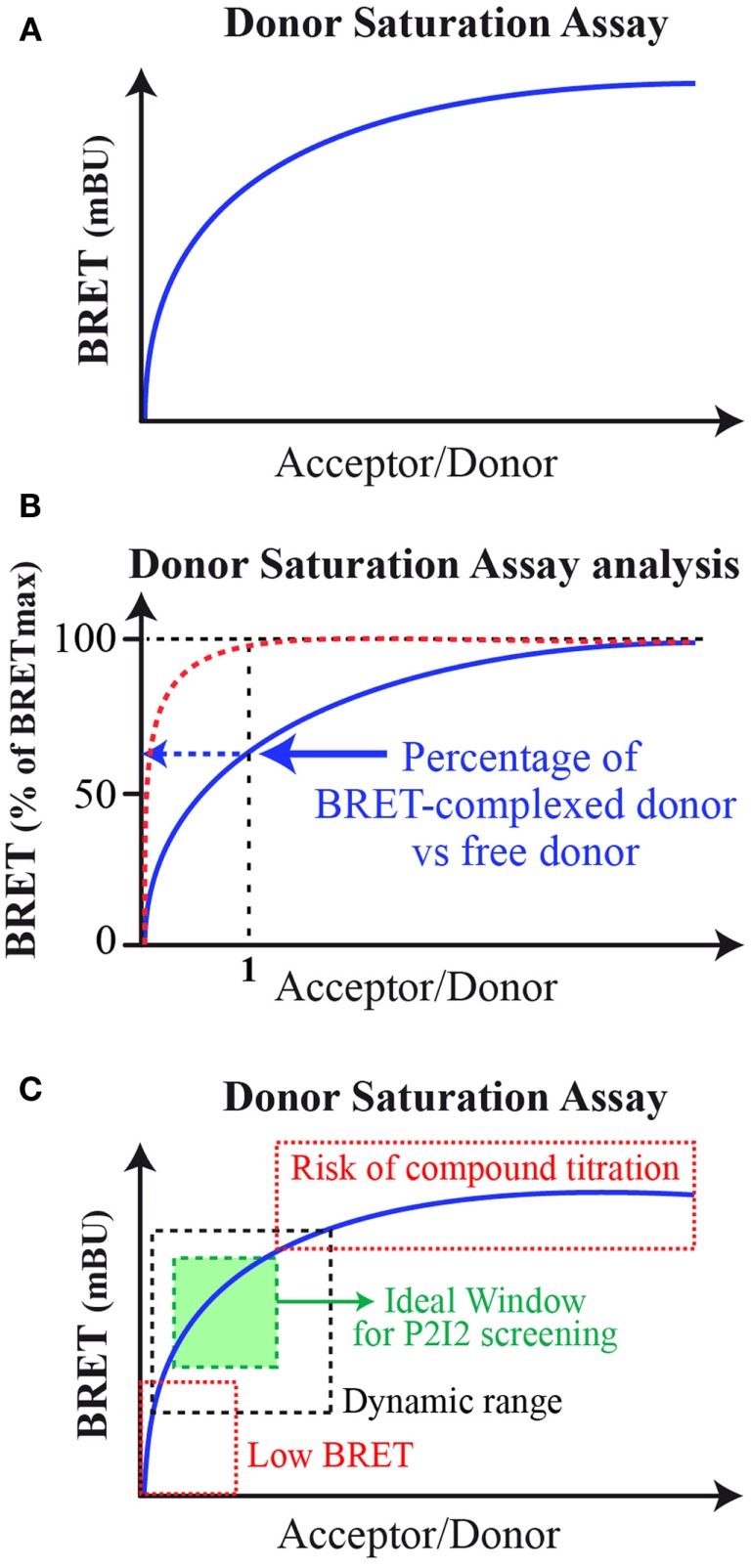
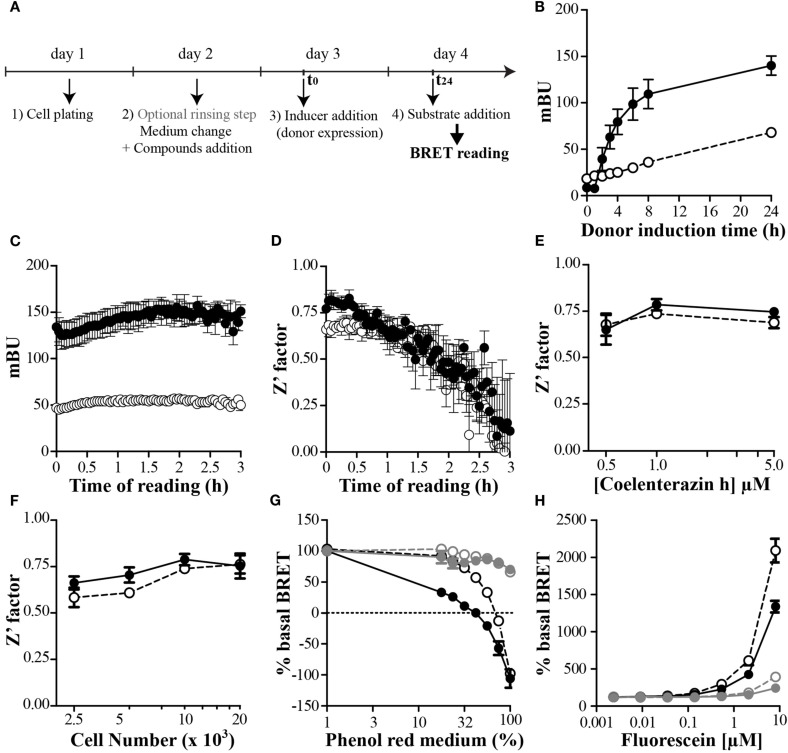
Each step of the cell life and its response or adaptation to its environment are mediated by a network of protein/protein interactions termed "interactome." Our knowledge of this network keeps growing due to the development of sensitive techniques devoted to study these interactions. The bioluminescence resonance energy transfer (BRET) technique was primarily developed to allow the dynamic monitoring of protein/protein interactions (PPI) in living cells, and has widely been used to study receptor activation by intra- or extra-molecular conformational changes within receptors and activated complexes in mammal cells. Some interactions are described as crucial in human pathological processes, and a new class of drugs targeting them has recently emerged. The BRET method is well suited to identify inhibitors of PPI and here is described why and how to set up and optimize a high throughput screening assay based on BRET to search for such inhibitory compounds. The different parameters to take into account when developing such BRET assays in mammal cells are reviewed to give general guidelines: considerations on the targeted interaction, choice of BRET version, inducibility of the interaction, kinetic of the monitored interaction, and of the BRET reading, influence of substrate concentration, number of cells and medium composition used on the Z' factor, and expected interferences from colored or fluorescent compounds.
细胞生命的每一个步骤及其对环境的反应或适应都是由一个被称为“互作组”的蛋白质/蛋白质相互作用网络介导的。由于开发了专门用于研究这些相互作用的敏感技术,我们对这个网络的了解不断增加。生物发光共振能量转移(BRET)技术最初是为了允许在活细胞中动态监测蛋白质/蛋白质相互作用(PPI)而开发的,并且已经广泛用于研究受体通过受体和激活复合物内的分子内或分子间构象变化的激活,在哺乳动物细胞中。一些相互作用被描述为人类病理过程中的关键,最近出现了一类针对它们的新药。BRET 方法非常适合识别 PPI 的抑制剂,这里描述了为什么以及如何建立和优化基于 BRET 的高通量筛选测定法,以寻找这种抑制性化合物。综述了在哺乳动物细胞中开发这种 BRET 测定法时需要考虑的不同参数,以提供一般指导原则:考虑目标相互作用、BRET 版本的选择、相互作用的诱导性、监测相互作用的动力学以及 BRET 读数、底物浓度、使用的细胞数量和培养基成分对 Z'因子的影响,以及有色或荧光化合物的预期干扰。